Tribal Tattoos: Meaning, Origins and Types
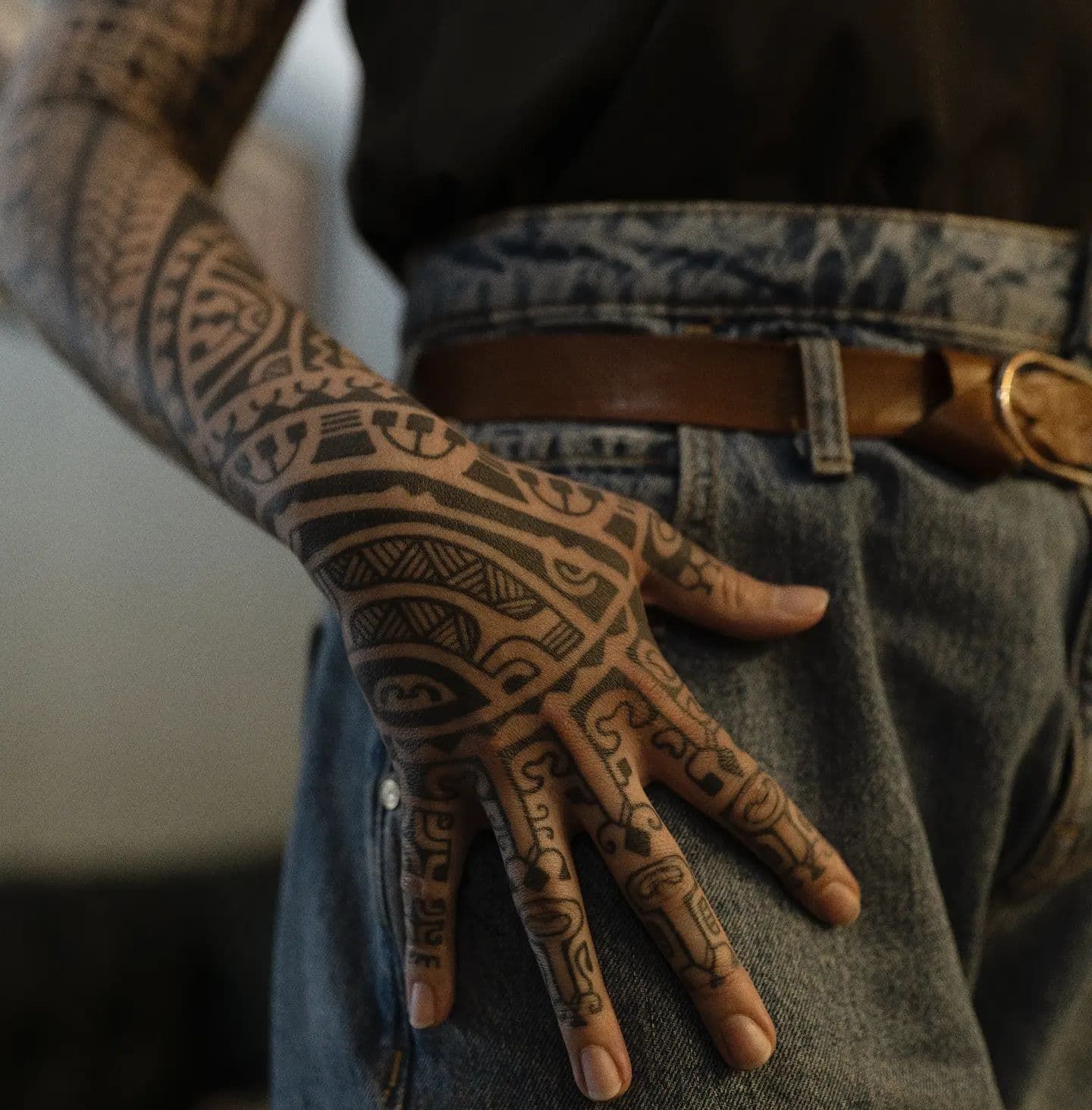
Samoan tatau, Māori tā moko, Kalinga batok and the other traditions “tribal” lumps together, what their marks meant, and how modern and neo-tribal work differs.
Related galleries
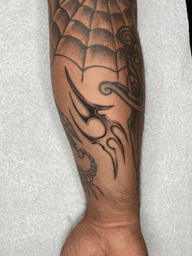
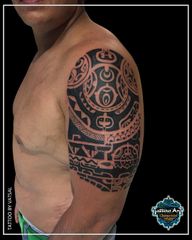
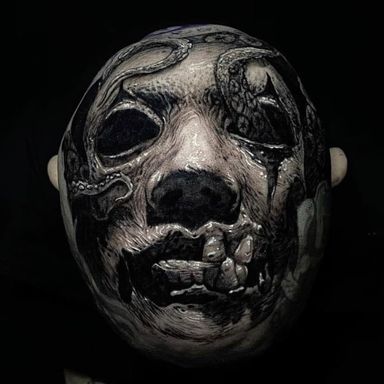
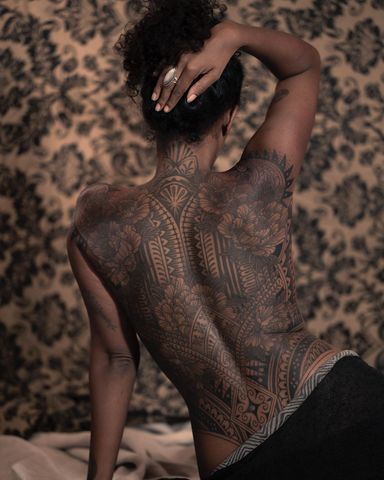
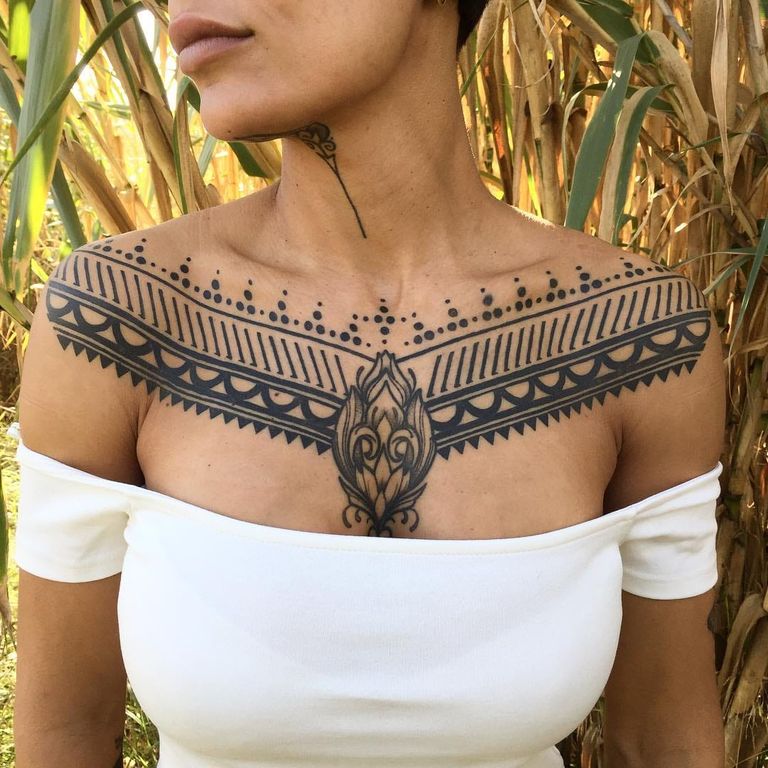
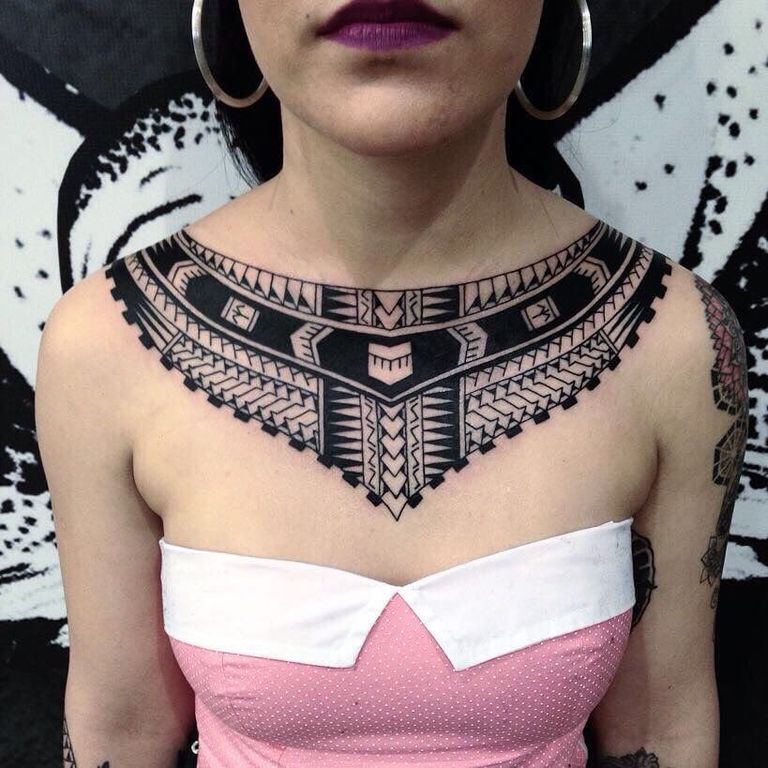
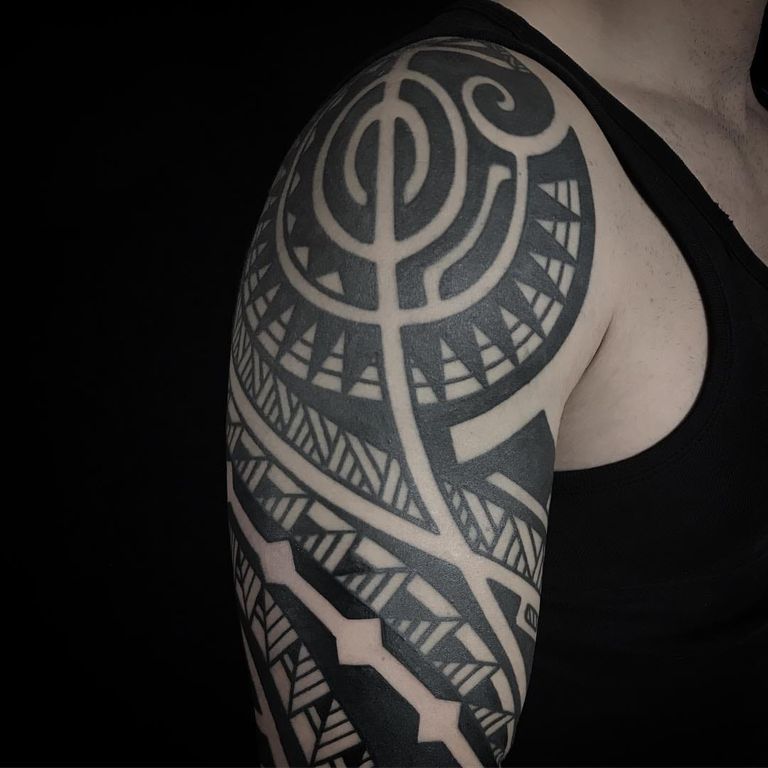
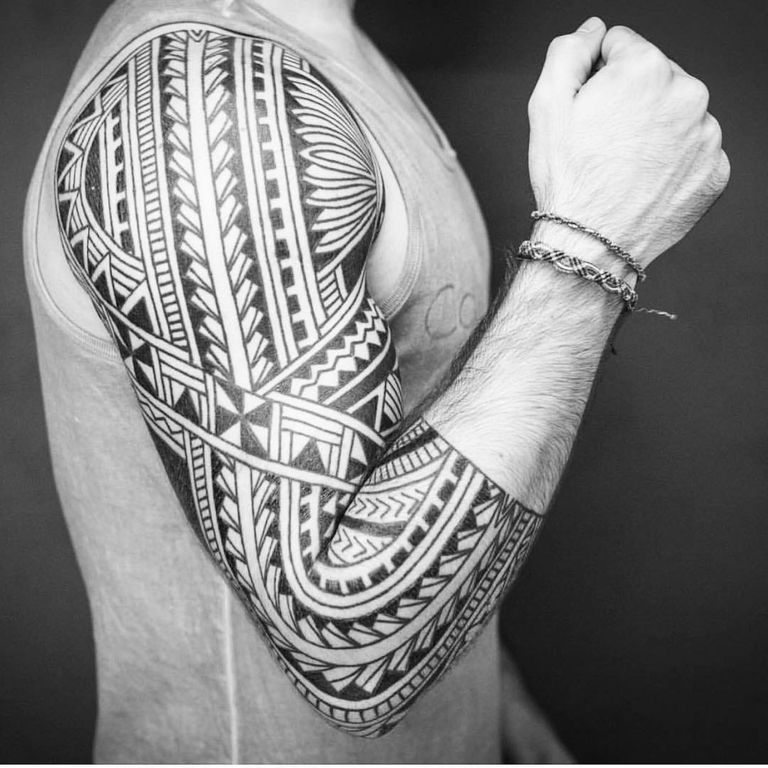
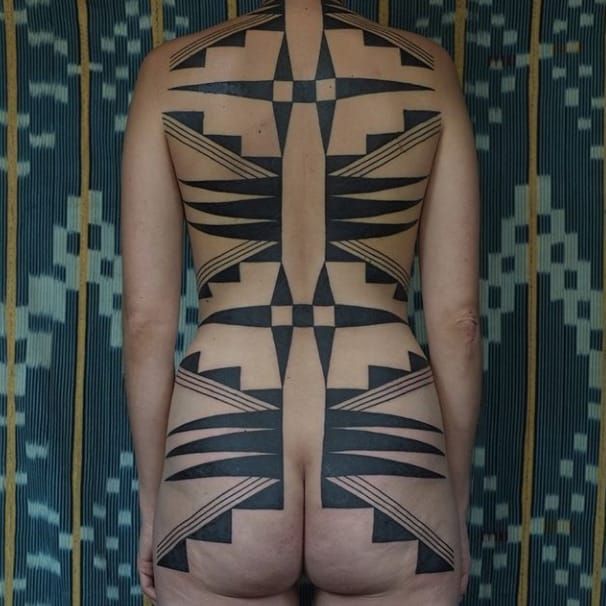
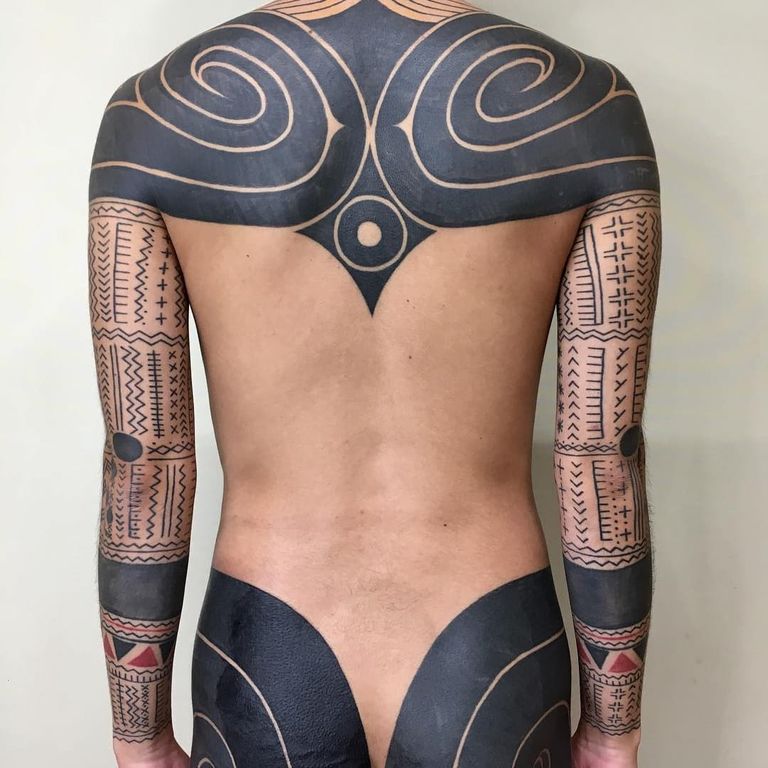
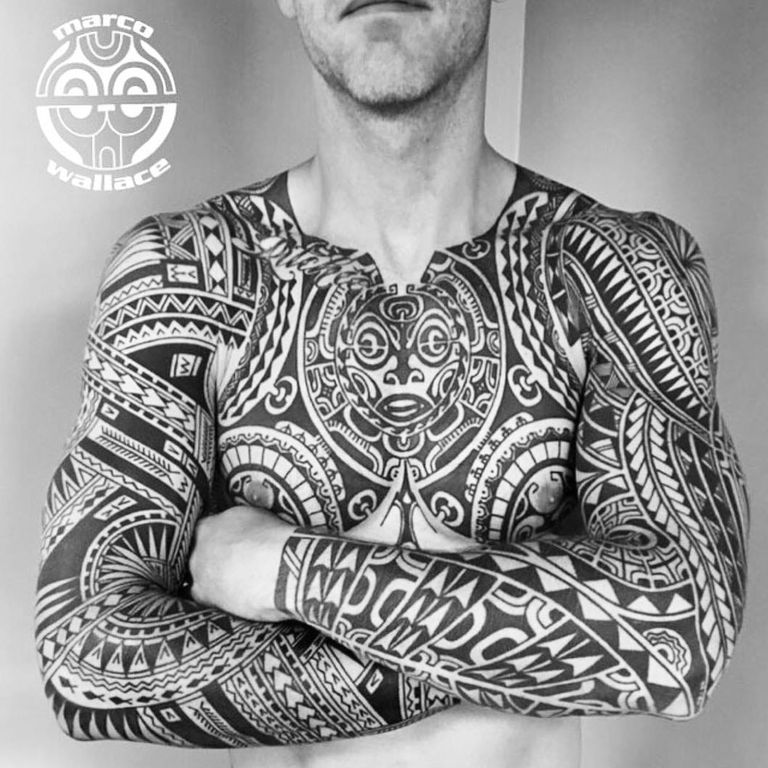
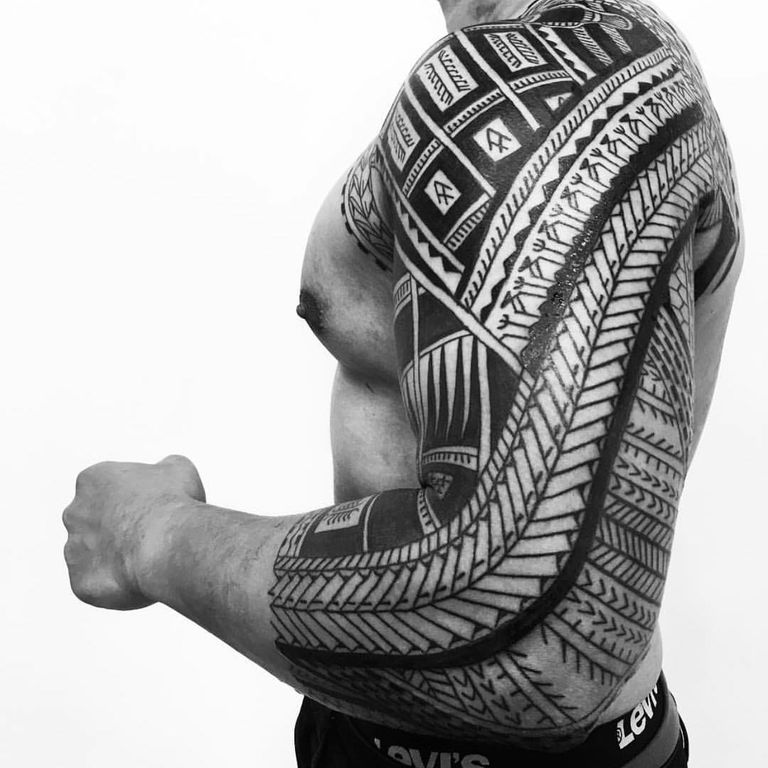
Tribal tattoos are bold designs in solid black ink: thick lines, sharp points, curves and bands, placed to follow the muscles. “Tribal” is a Western catch-all. It covers Indigenous traditions with their own names, mainly from Polynesia, Borneo and the Philippines. It also covers the black style Western artists built from them in the 1980s. What a tribal tattoo means depends on which of these it is.
Summary
- Samoan, Māori, Hawaiian and Kalinga tattooing are separate traditions, each with its own rules.
- The 1990s armbands were Western designs, and their shapes carry no fixed meaning.
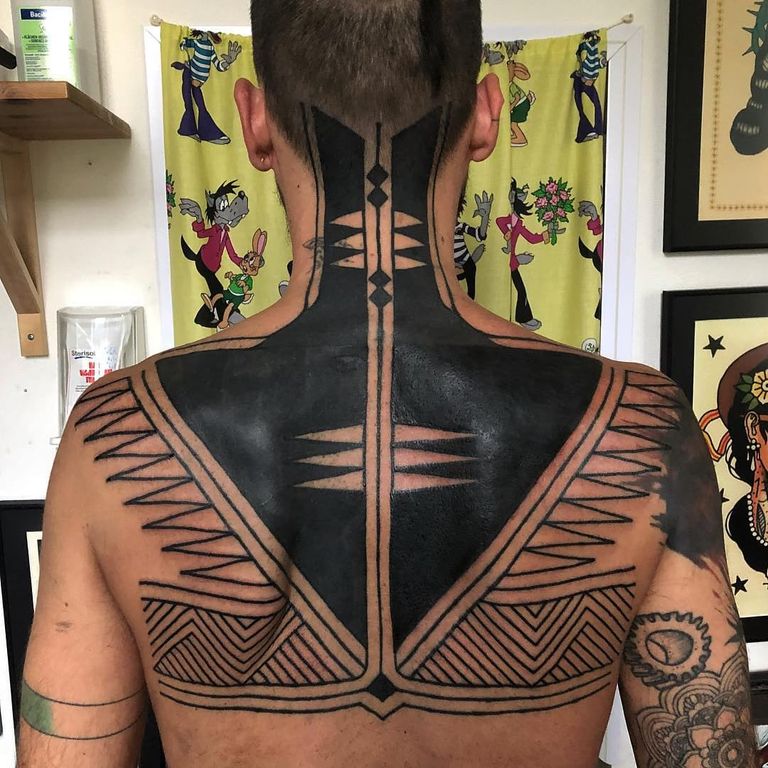
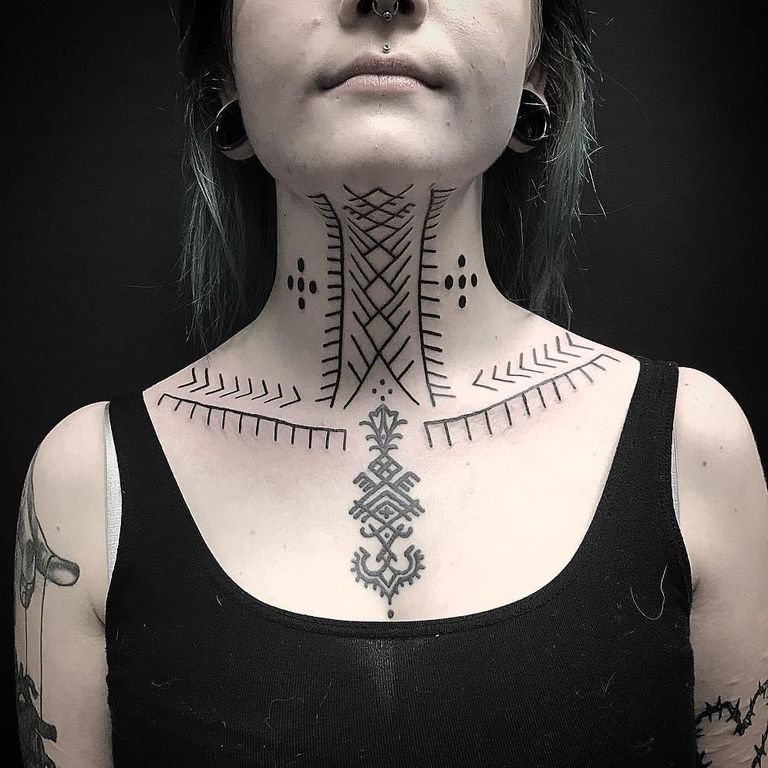
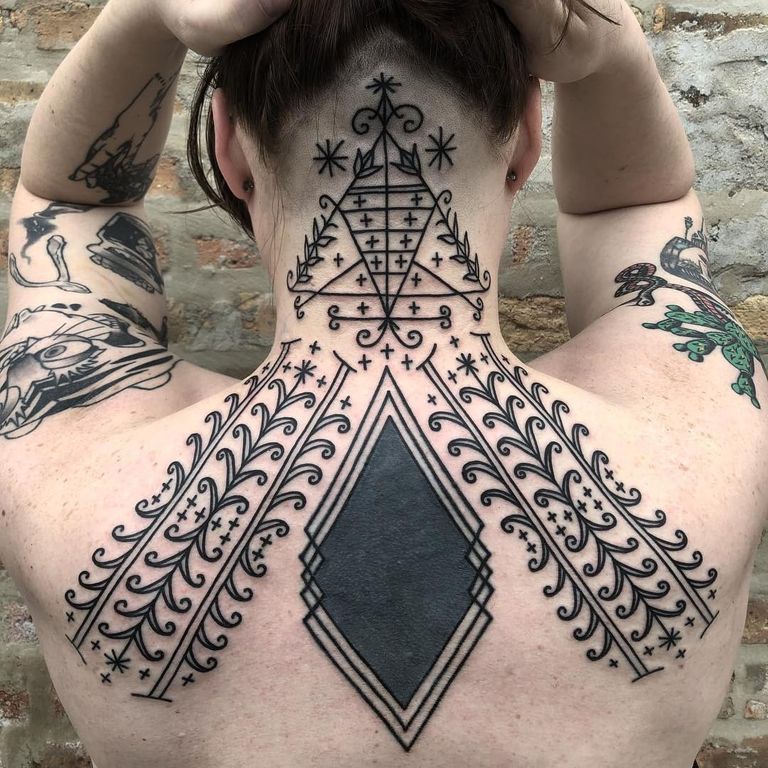
What makes a tattoo look tribal?
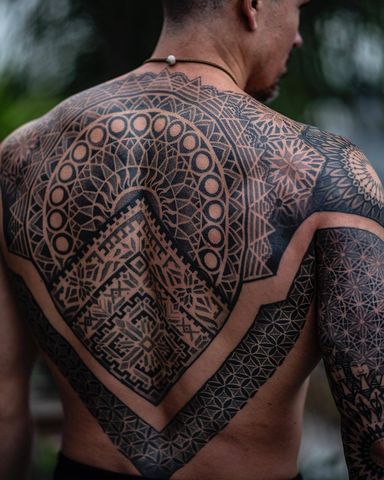
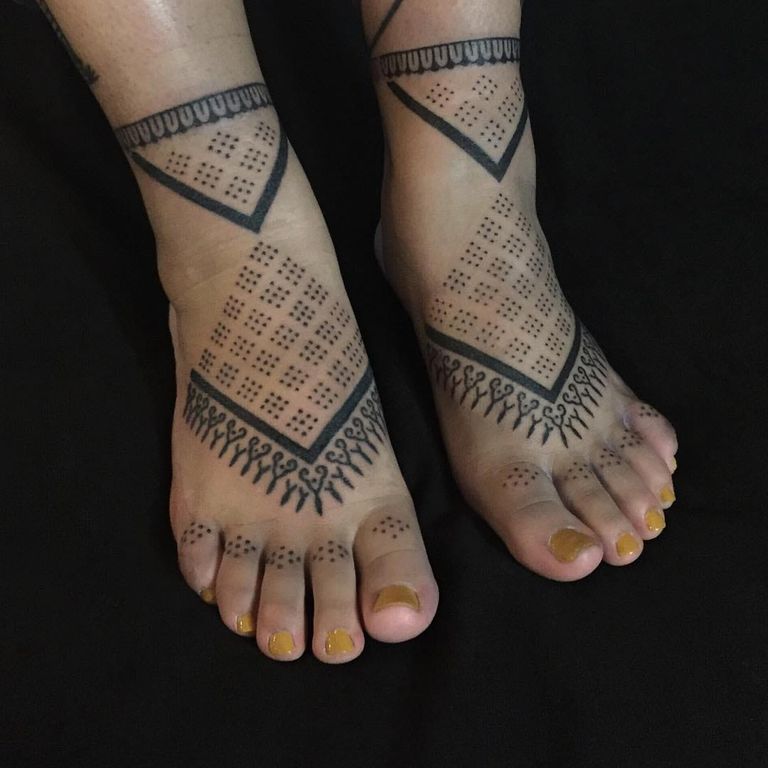
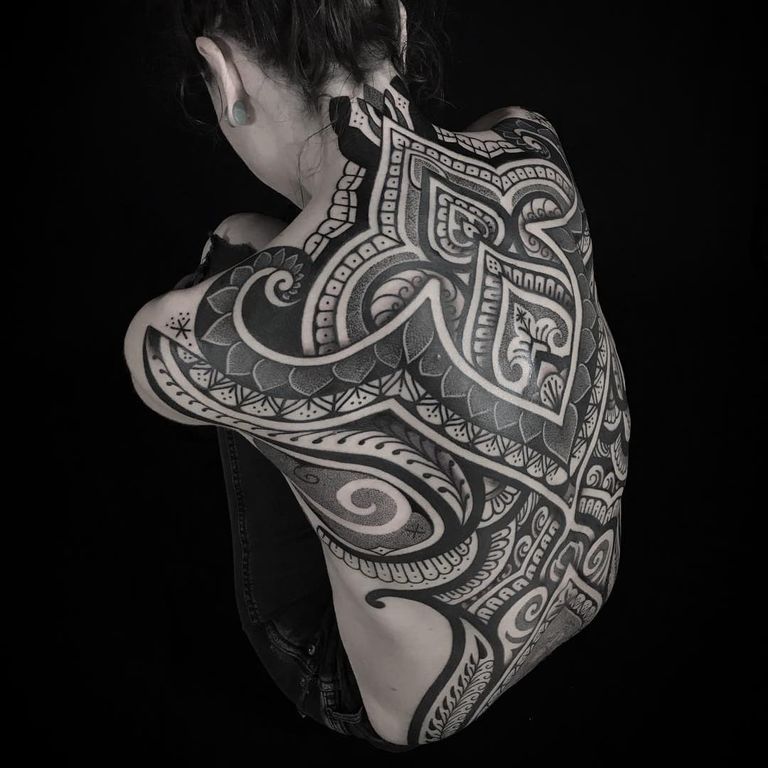
The ink is black and packed solid, with no grey shading. The shapes are flat: points, crescents, spirals, rows of dots. The bare skin between them matters as much as the black, because the gaps keep a design readable.
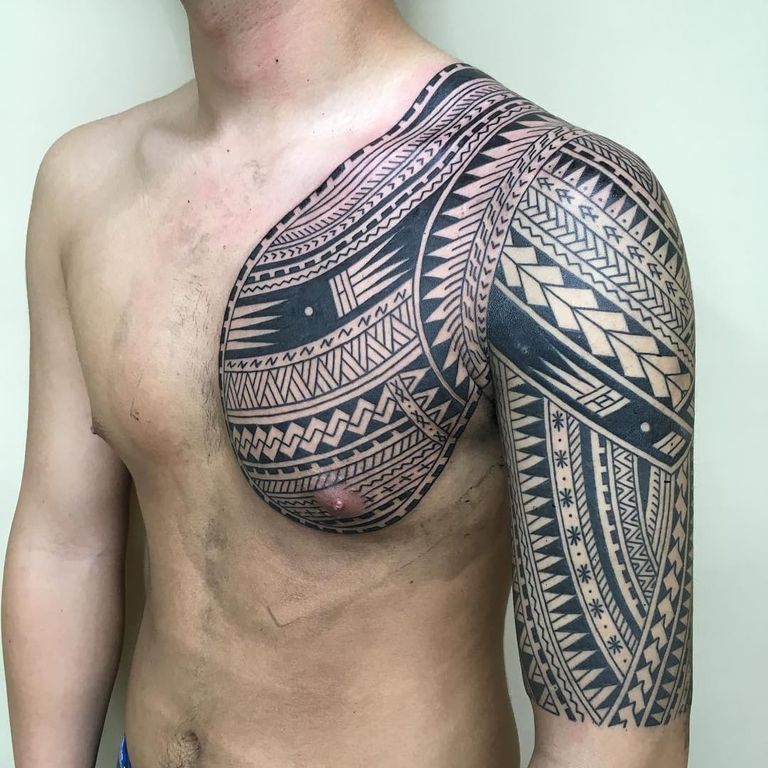
Placement is the other key trait. A tribal design is drawn for one part of the body. It wraps a shoulder or runs down a spine instead of sitting on the skin like a sticker. Most tribal work today is done by machine, but some artists still work by hand (see our handpoke tattoo guide).
What do tribal tattoos mean?
Traditional tattoos: meaning tied to a person
In the cultures the style borrows from, a tattoo said something specific about its wearer. A Samoan pe‘a shows a man has come through a long, painful process and is ready to serve his family. The meaning came from who the wearer was and who tattooed them. The shapes alone don’t carry it.
So be wary of lists that give each shape one meaning. Motifs were read as part of a whole design.
Western tribal: meaning you choose
Western tribal borrowed the look of these traditions but none of their rules. So its shapes have no fixed meaning. People chose them for the look, or because heavy black felt like strength. That meaning is yours to decide.
Where tribal tattoos come from
The traditions behind tribal style are living ones. These are the ones people most often mean.
Samoan tatau: the pe‘a and the malu
Samoan tattooing, tatau, is one of the few Polynesian traditions that never broke. Men receive the pe‘a, dense black work from waist to knees. Women receive the malu, lighter patterning on the thighs. A master tattooist taps both in with boar-tusk combs and a mallet. An unfinished pe‘a is a mark of shame, so starting one is a serious commitment. The English word tattoo comes from the Polynesian word tatau.
Māori tā moko
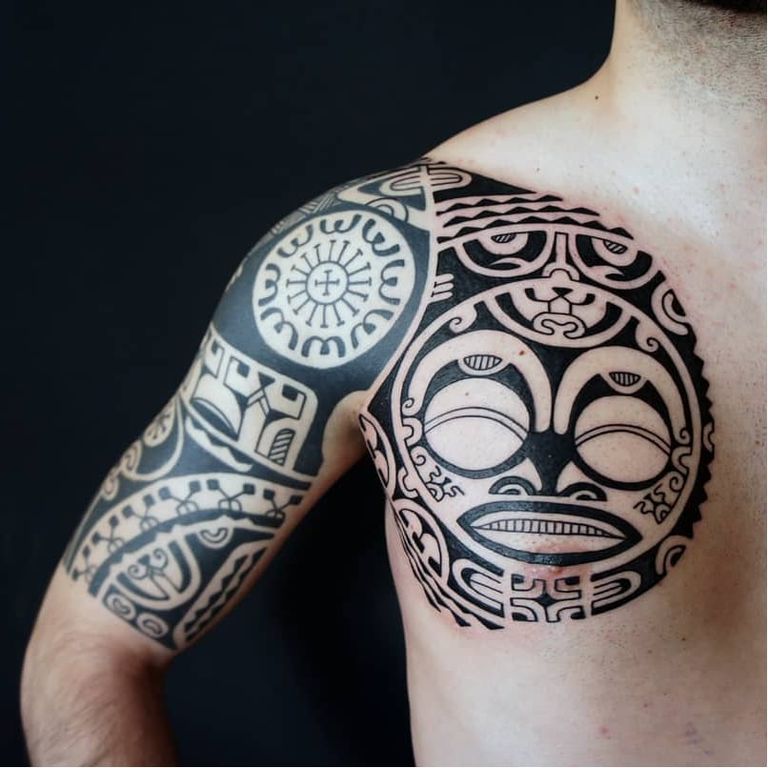
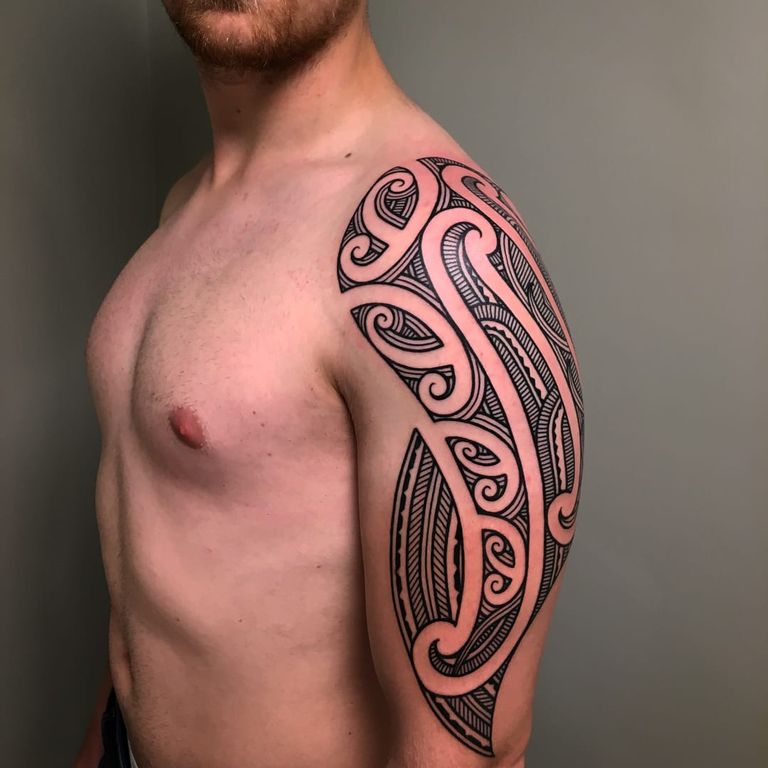
Tā moko is the tattooing of the Māori of Aotearoa New Zealand. It was carved with chisels, which left grooves in the skin. A full facial moko sets out the wearer’s genealogy, tribal ties and status, so each one belongs to one person. It declined under colonization and has made a strong return in recent decades.
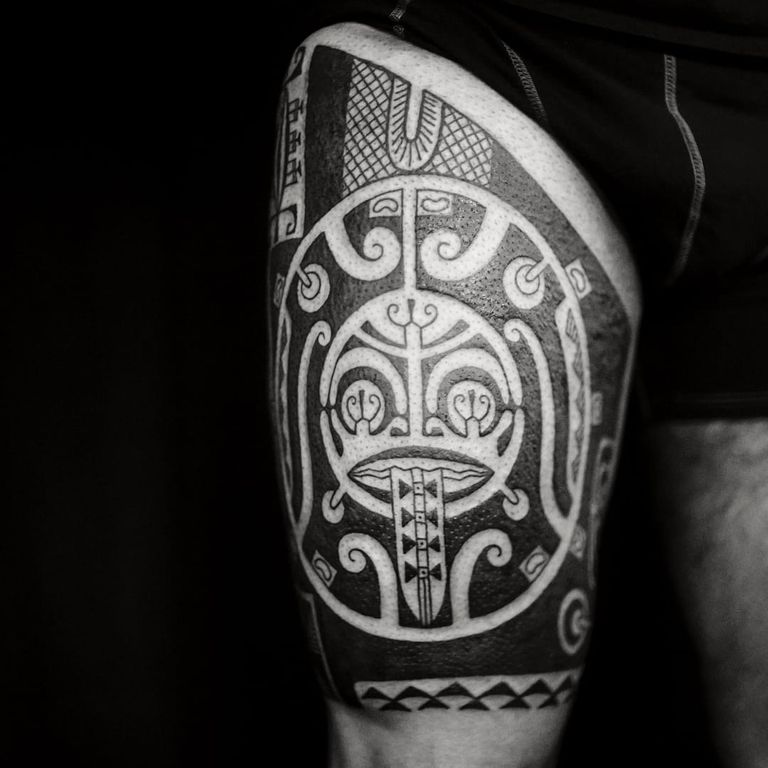
Hawaiian kākau
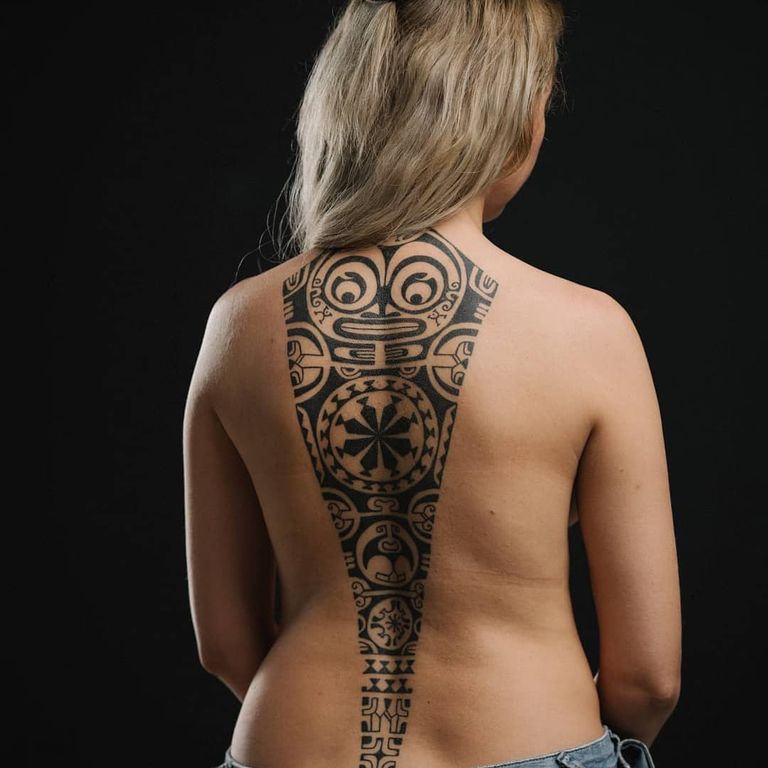
Kākau is the Hawaiian practice of tapping ink into the skin with bone tools. In the revival of kākau, some practitioners ask each person about their ancestry before deciding whether and where to tattoo them.
Borneo: Iban tattooing
The Iban of Borneo are known for the bunga terung, or eggplant flower. It’s a rosette with a spiral at its center, tattooed on the front of each shoulder. It’s often among a young man’s first tattoos and tied to coming of age.
Kalinga batok in the Philippines
In the mountains of northern Luzon, the Kalinga tap tattoos in with a citrus thorn on a bamboo stick. They call it batok. Historically, men earned tattoos as warriors, while women’s tattoos marked beauty and family wealth.
The 1990s tribal trend and neo-tribal today
Leo Zulueta, an American tattooer, began working in 1981. He drew on Bornean and Polynesian designs to build an abstract, all-black style. Through the 1990s it went mainstream and got simpler: armbands, sun shapes and lower-back pieces with no link to any culture.
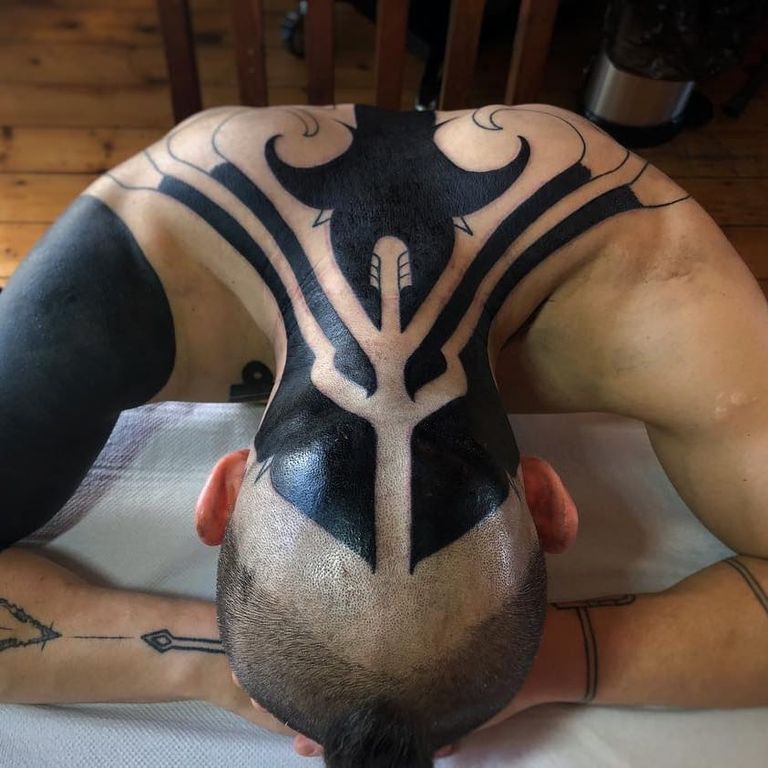
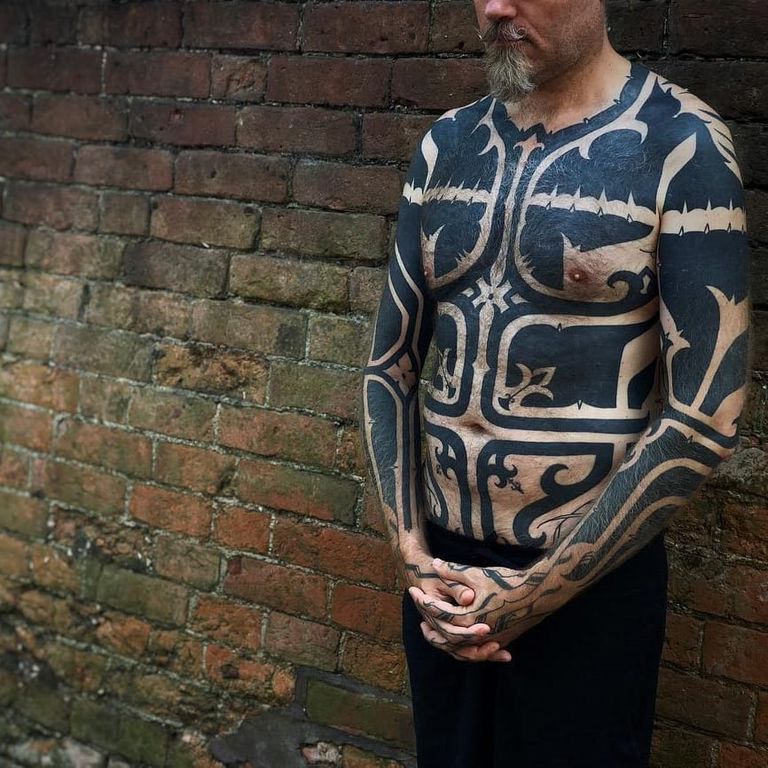
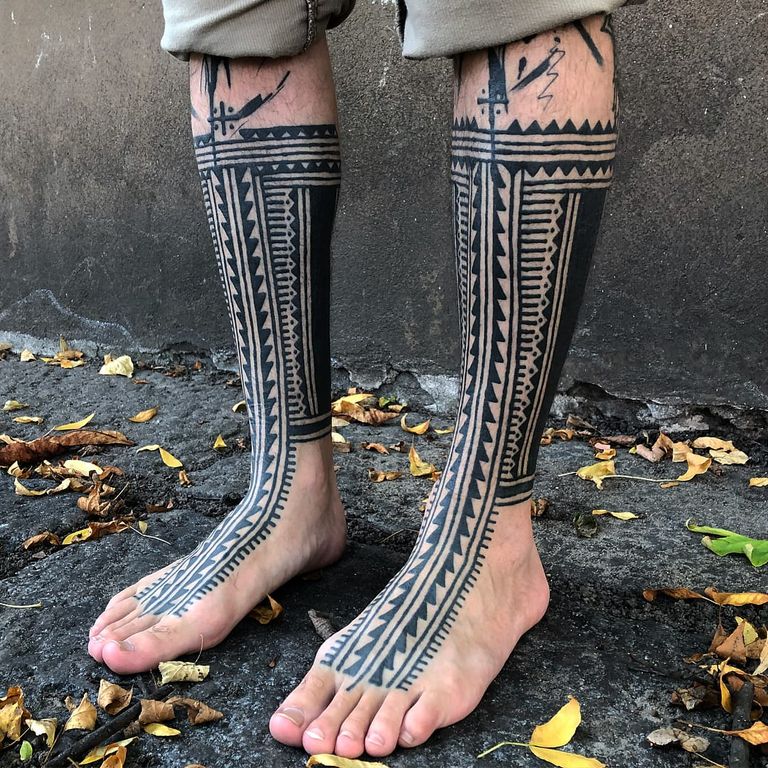
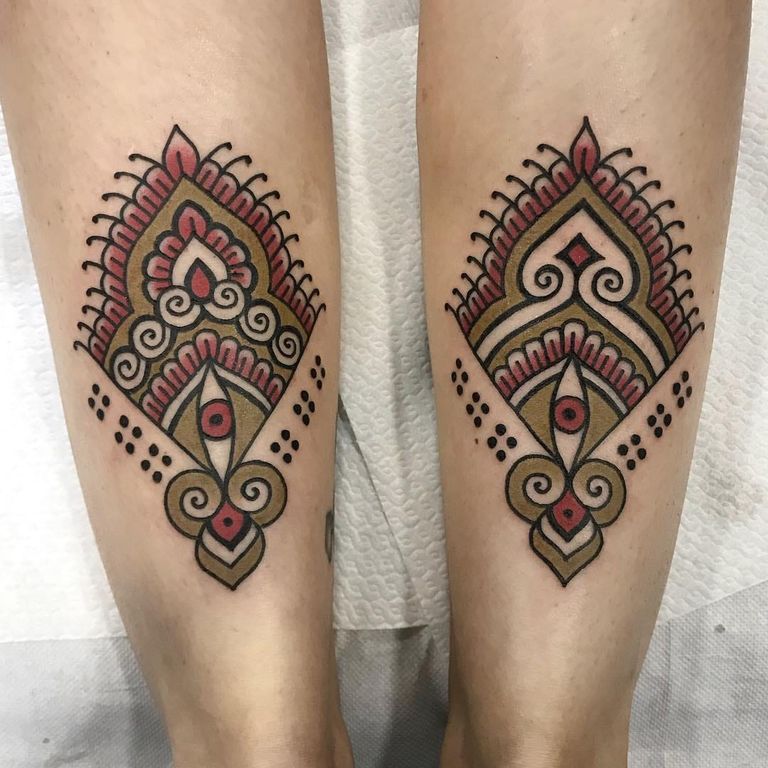
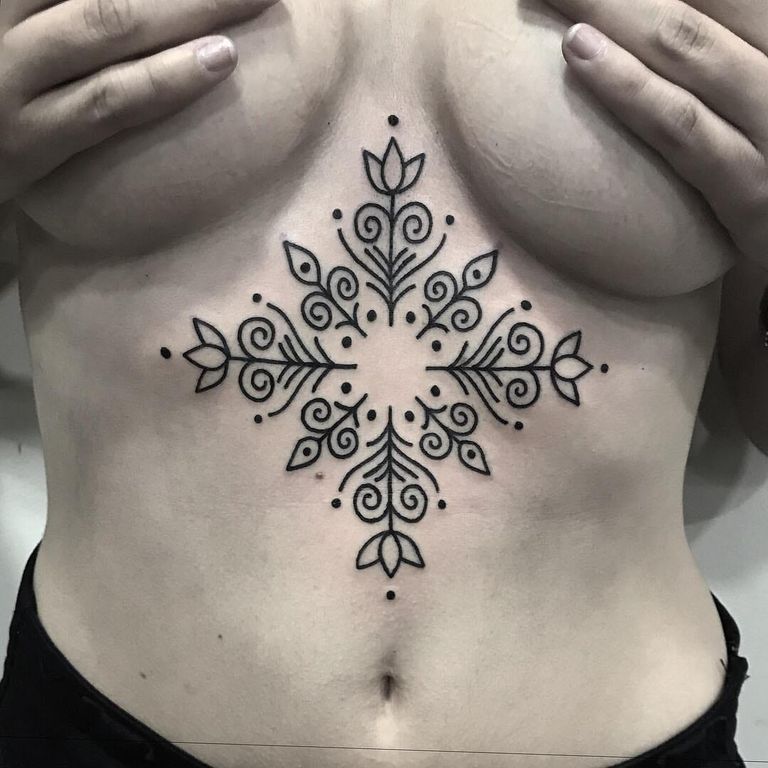
Neo-tribal is the current form. It keeps the solid black and the flow along the body. But it draws on folk art, ornament, geometry and shapes the artist invents. It overlaps heavily with blackwork tattoos.
Is it disrespectful to get a tribal tattoo?
It can be. It depends on what you copy and who tattoos you.
Copying a design that sets out someone else’s family is the clearest problem. Many Māori see a copied moko as taking something that isn’t yours. The face is the firmest line. Cody Hollis, a Māori tattooist, told TVNZ’s Re: News that the traditional face tattoo “should only be for Māori”. For non-Māori, many Māori artists tattoo kirituhi (“skin writing”). These use Māori art forms without claiming a genealogy.
If you want work from a specific tradition, go to a practitioner from it, or one trained and accepted within it. Let them decide what suits you. Sometimes the answer is a smaller design, a different spot or no. A Western tribal design raises fewer of these questions.
How tribal tattoos age, and where they work best
Black is the most stable ink, so good tribal work stays readable for decades. What changes is the edges. Narrow gaps close up and small details blur. So go bold, and leave wider gaps than look necessary on day one. Large areas of solid black also swell more, heal slower and often need a touch-up.
Tribal works best large, on shoulders, upper arms, the upper back, chest, ribs and calves. Wrists and fingers have little room for the gaps. Hands and feet blur faster from friction, so plan on touch-ups there.
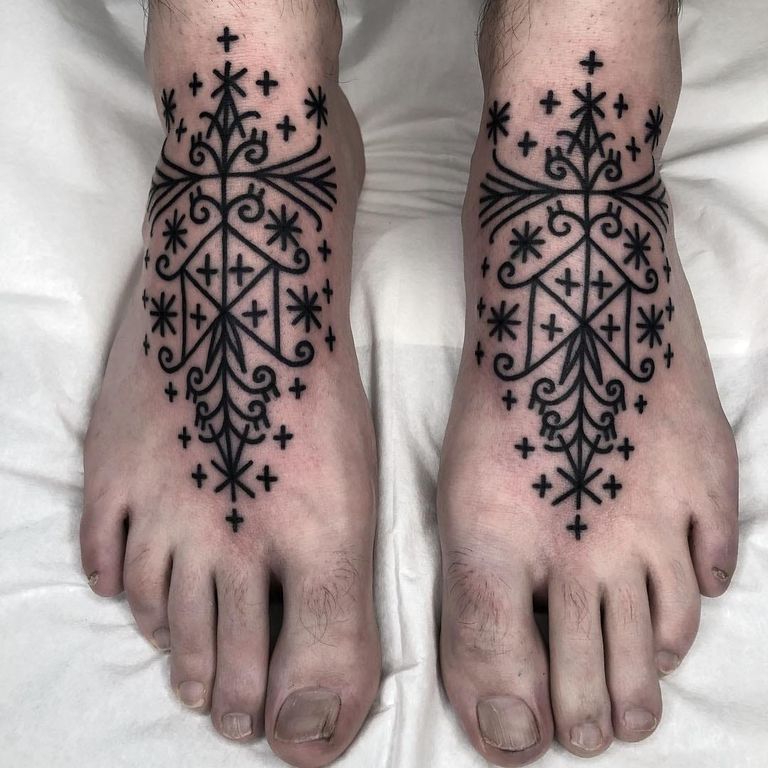
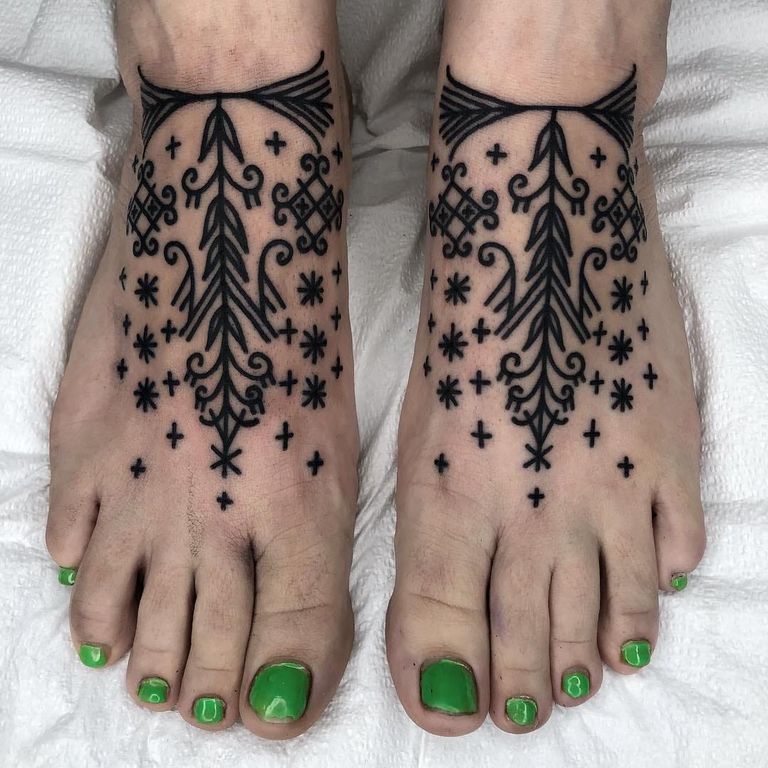
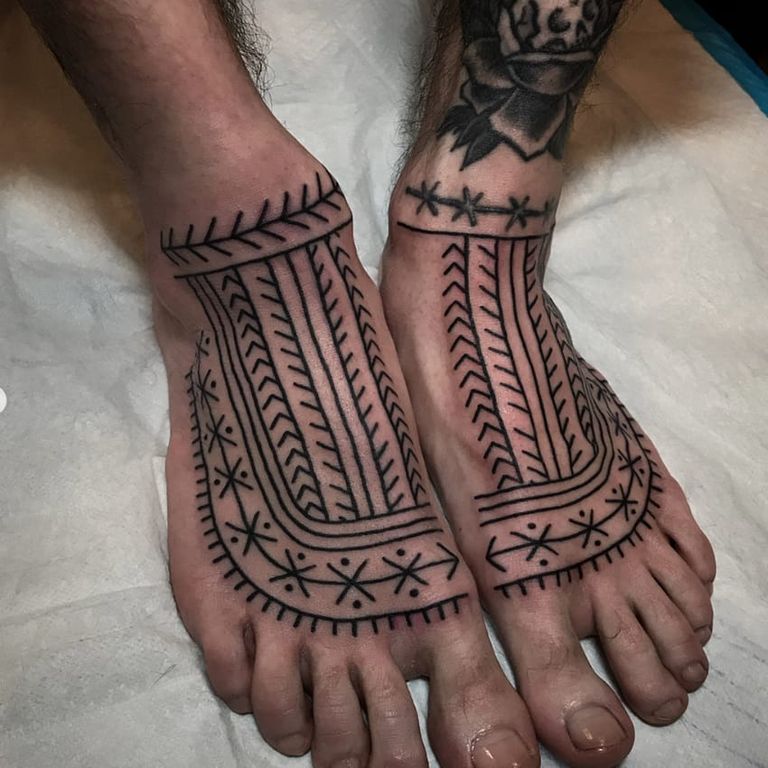
Solid black is hard to cover with anything lighter. If you’ve outgrown an old tribal piece, read our guide to cover-up tattoos first.
Choosing an artist for tribal work
For Western or neo-tribal work, look for a portfolio full of large, clean black work. Then ask:
- Which tradition, if any, does this design draw on?
- Have you trained in it, and with whom?
- Can I see healed photos of your solid black work?
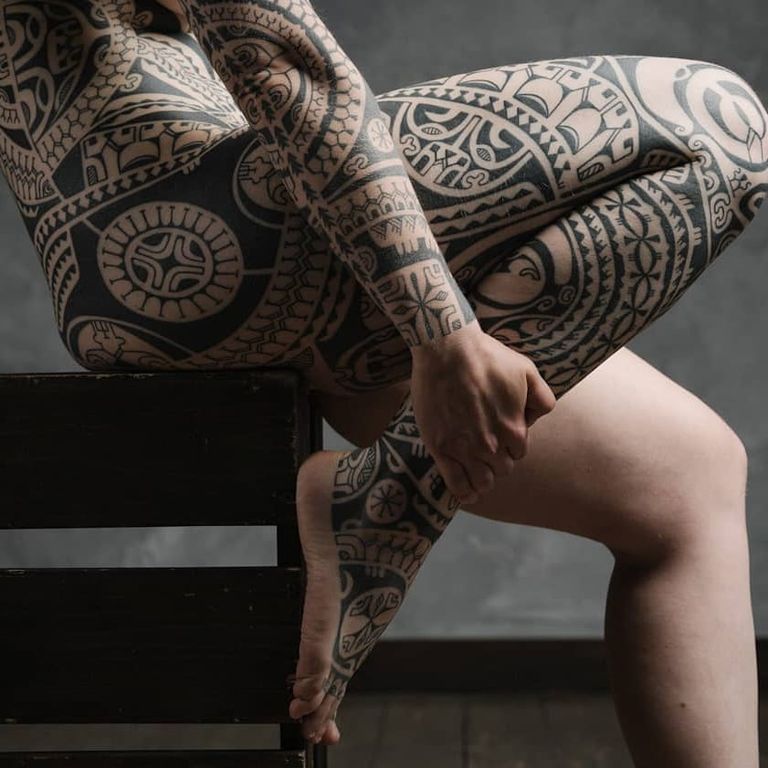
To find someone near you, describe your idea in the artist finder and say whether you want a traditional or a Western tribal piece. For designs to bring along, browse these tribal tattoo ideas.