Biomechanical Tattoos: Biomech vs Bio-Organic and Giger Origins
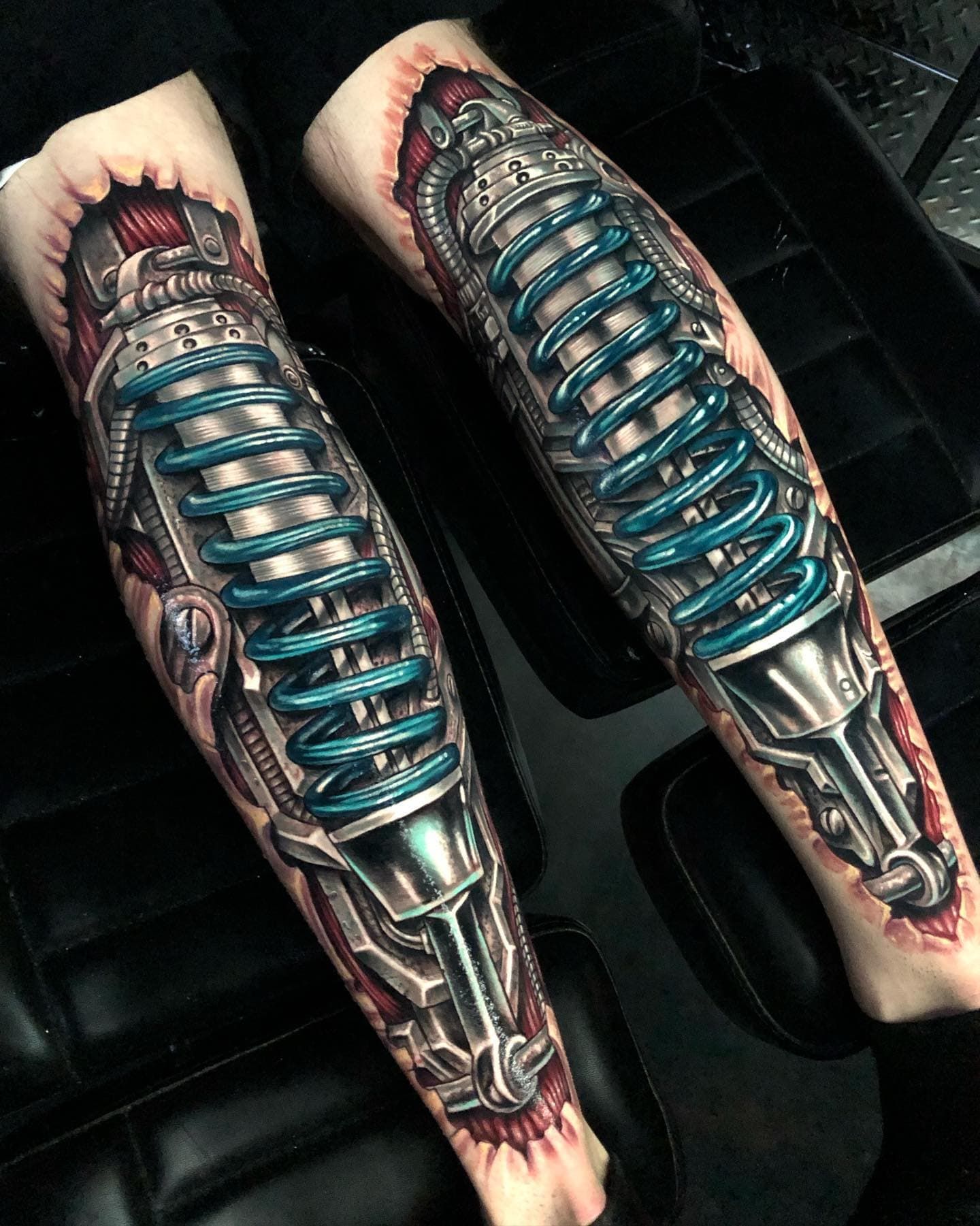
Biomech and bio-organic tattoos: H.R. Giger’s influence, how the designs follow the muscles underneath, and what to ask before a sleeve or back piece.
Related galleries
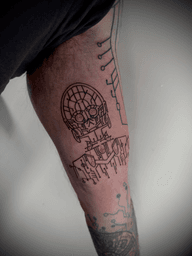
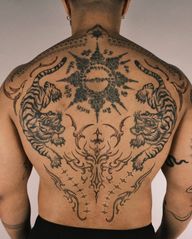
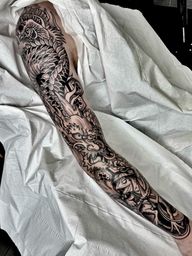
A biomechanical tattoo shows machinery under the skin: pistons, cables, gears and ribbed metal fused with muscle and bone. It’s often framed by what looks like torn flesh. Much of it is black and grey with smooth gradients and hard highlights, though color is common too. The style grew out of H.R. Giger’s designs for the 1979 film Alien.
Summary
- Biomech mixes machine parts with anatomy. Bio-organic drops the machinery for bone, sinew and shell.
- A good piece follows the muscles underneath, so it suits sleeves, calves and backs better than small spots.
- It’s custom work, often drawn freehand on the body. Expect several sessions for a sleeve.
- Solid blacks hold up best. Soft greys and white highlights fade first.
What defines a biomechanical tattoo
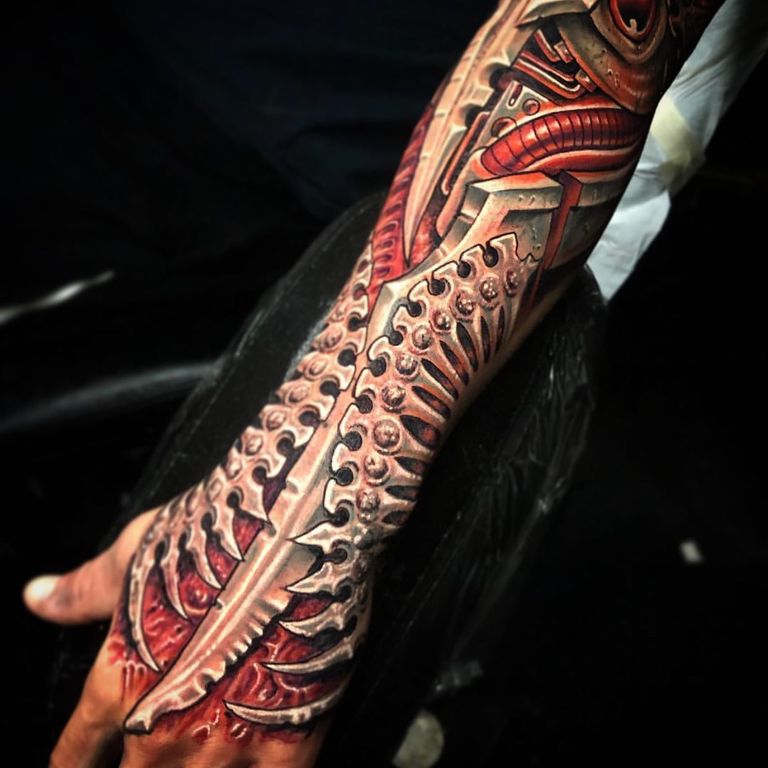
Three things make a tattoo read as biomech. The first is the subject: machine parts woven through living anatomy. Think pistons where tendons would be and cables running like veins. The second is depth. The artist builds layers from the darkest shadows up to bright highlights, so the parts seem to sit inside the body. The third is the frame. Many pieces use a skin rip, with ragged edges peeled back. Others skip the rip and cover the whole area.
A “bionic” or “mechanical” tattoo usually means a robot limb inside a skin rip. Biomech goes further. It blends the machine into the body until you can’t tell where one stops and the other starts.
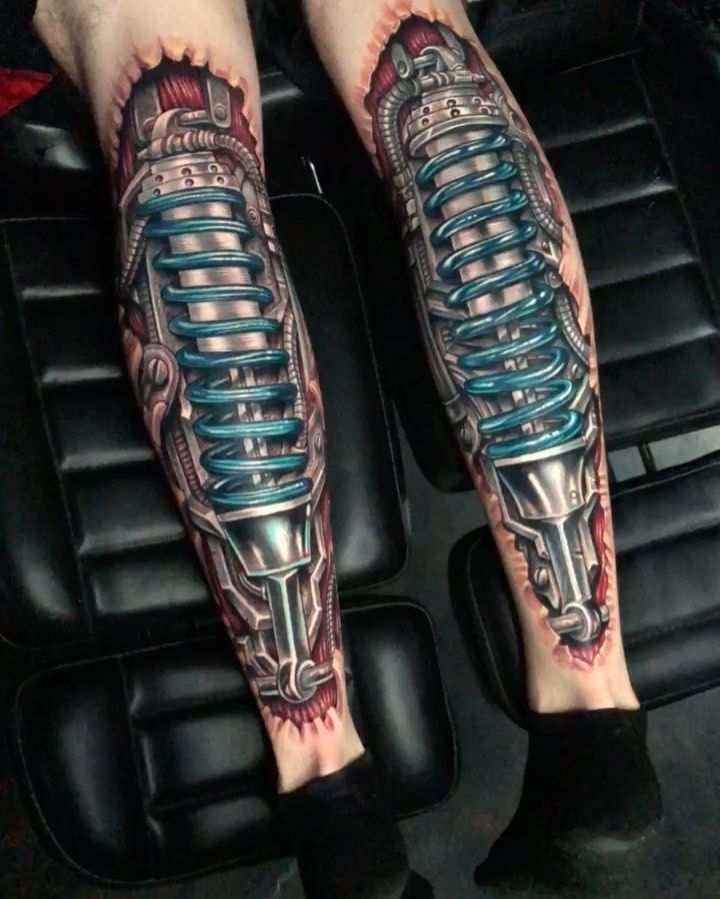
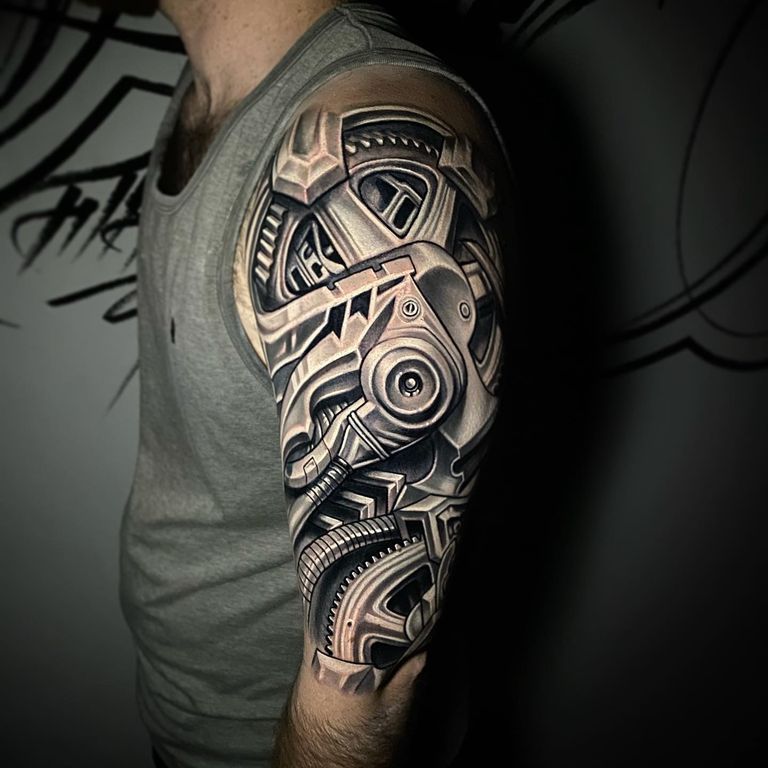
Biomech vs bio-organic: what’s the difference?
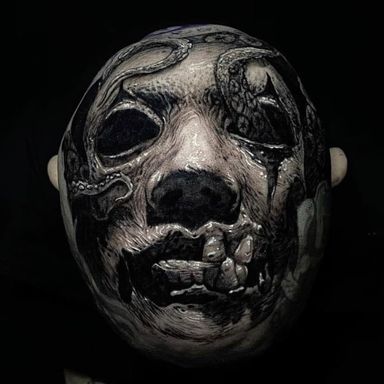
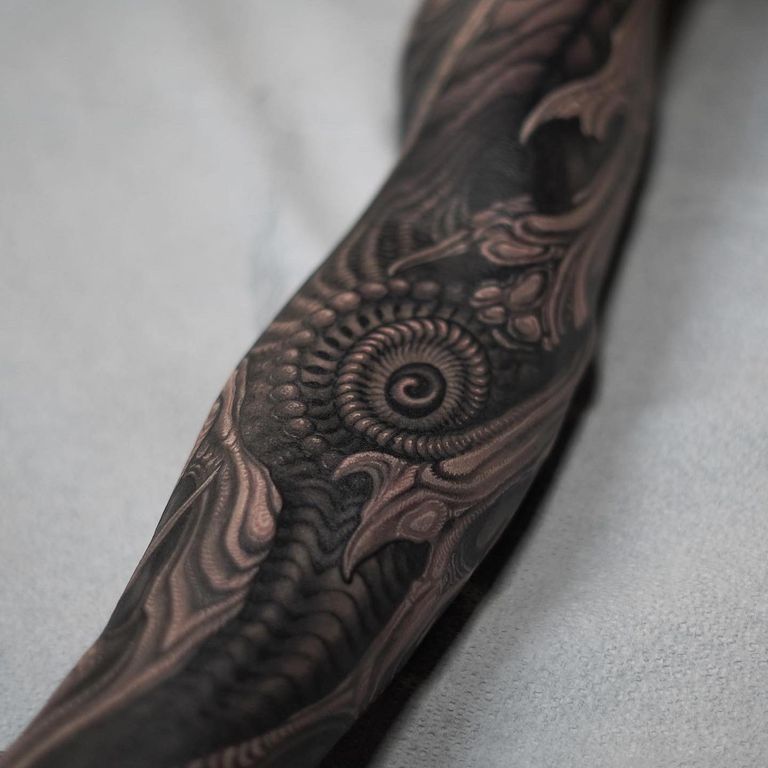
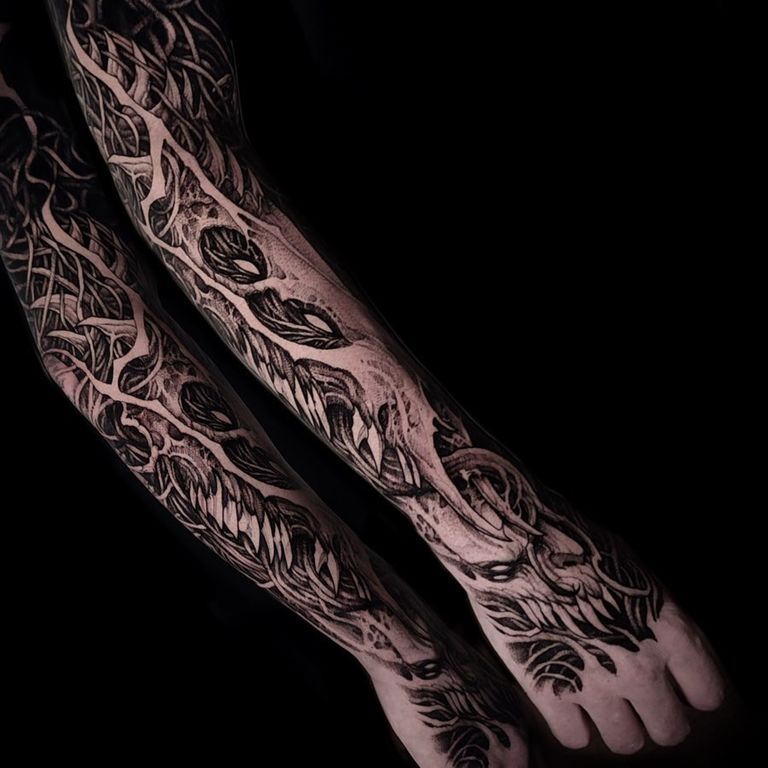
Bio-organic (or bioorganic) has the same layered depth and the same flow along the body, but no machine. Instead of steel and gears you get bone, sinew, shell, spines and tissue that looks grown, not built. Some of it looks alien.
The line between the two is loose, and many artists mix both in one sleeve. If you can spot a bolt, a cable or a piston, most tattooers would call it biomech.
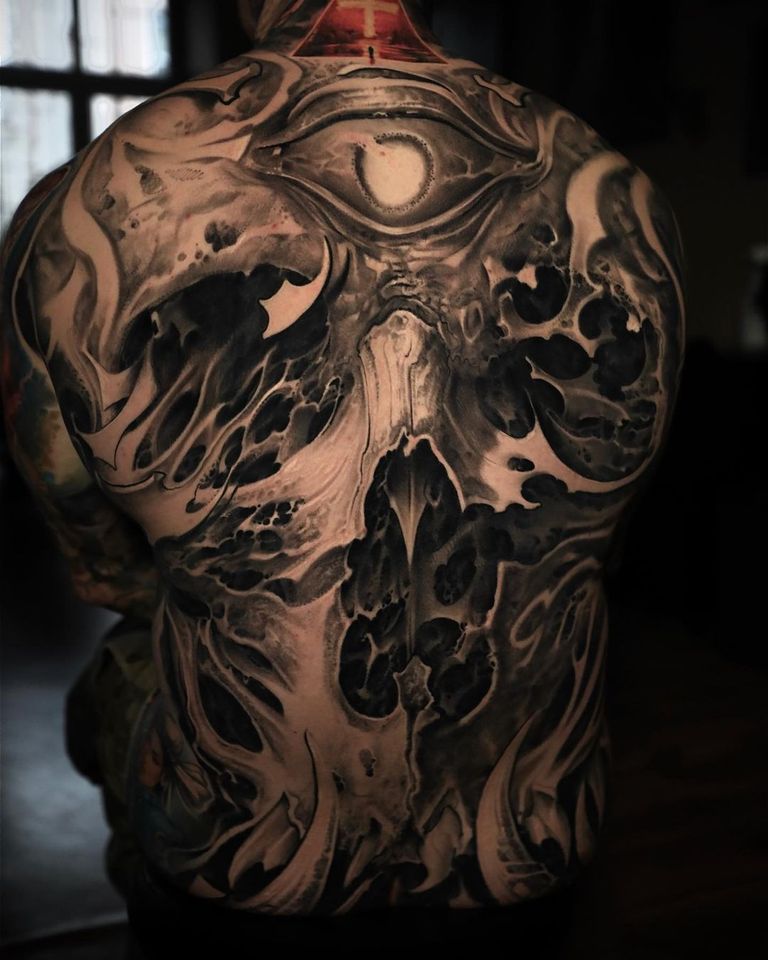
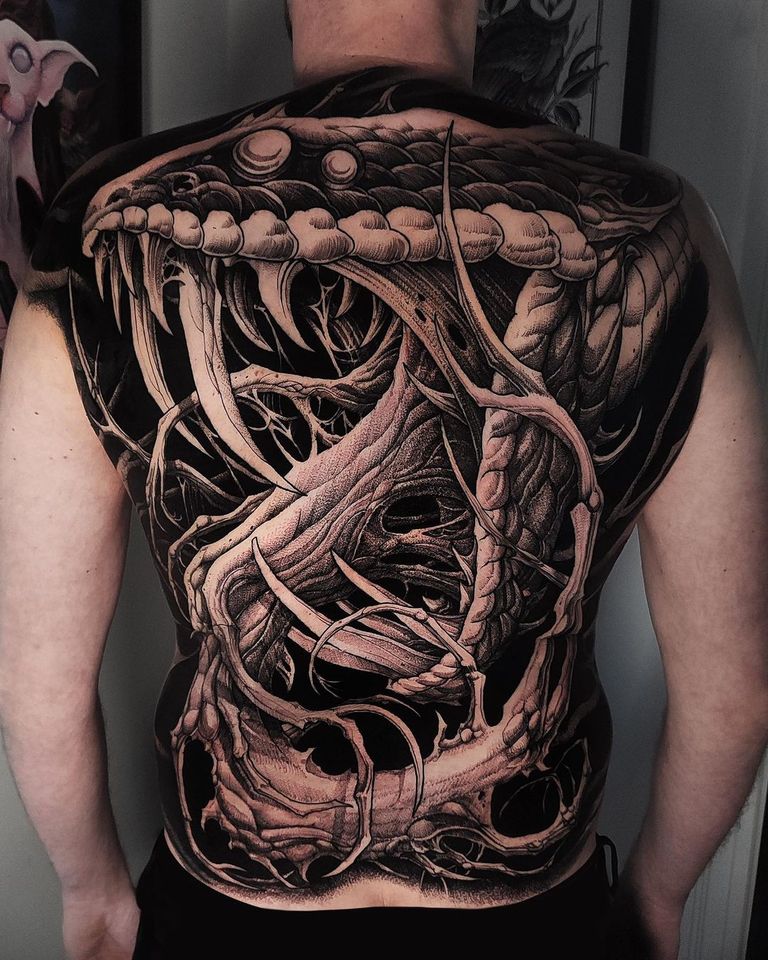
Where biomechanical tattoos come from
The look starts with H.R. Giger, a Swiss painter who called his fusions of bodies and machines “biomechanics”. He designed the creature and the ship for Alien. Tattooers started copying images from the film soon after. By the late 1980s and 1990s, they were drawing their own biomechanical art to fit each client’s body instead. If it’s the creature itself you want, browse these alien tattoo ideas.
Why biomech follows the muscles underneath
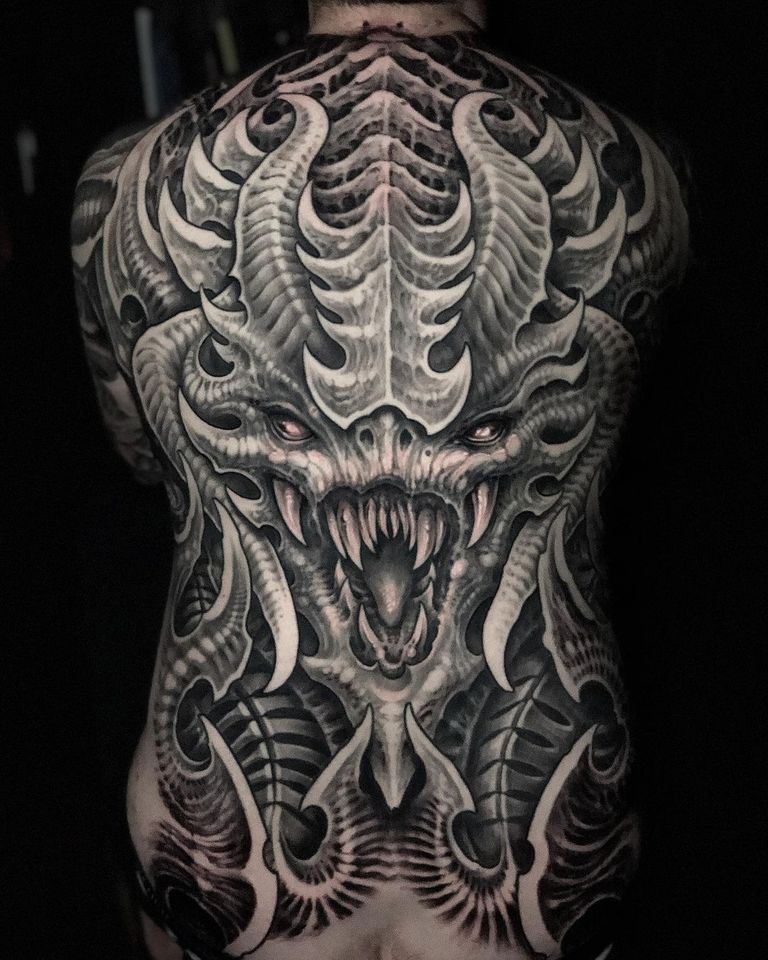
Biomech is meant to look like part of you. Artists line up cables and pistons with the muscle and put machine joints over real joints. Ribbed sections wrap around the curve of a forearm or calf. When you move, the machinery looks like it’s working. That’s why many biomech artists draw the layout freehand on your skin. It follows muscles a flat stencil can’t.
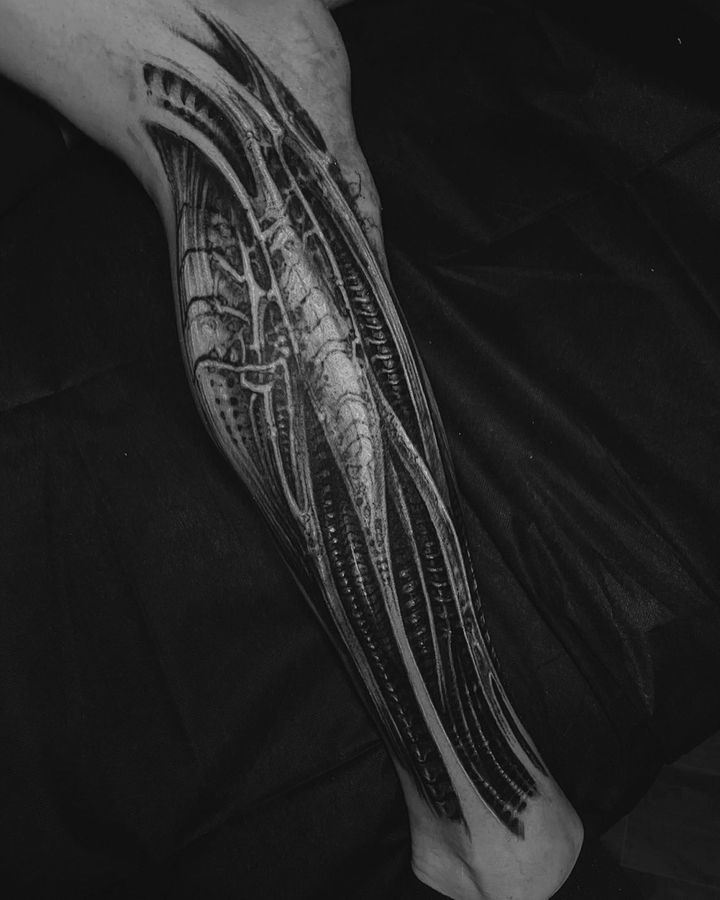
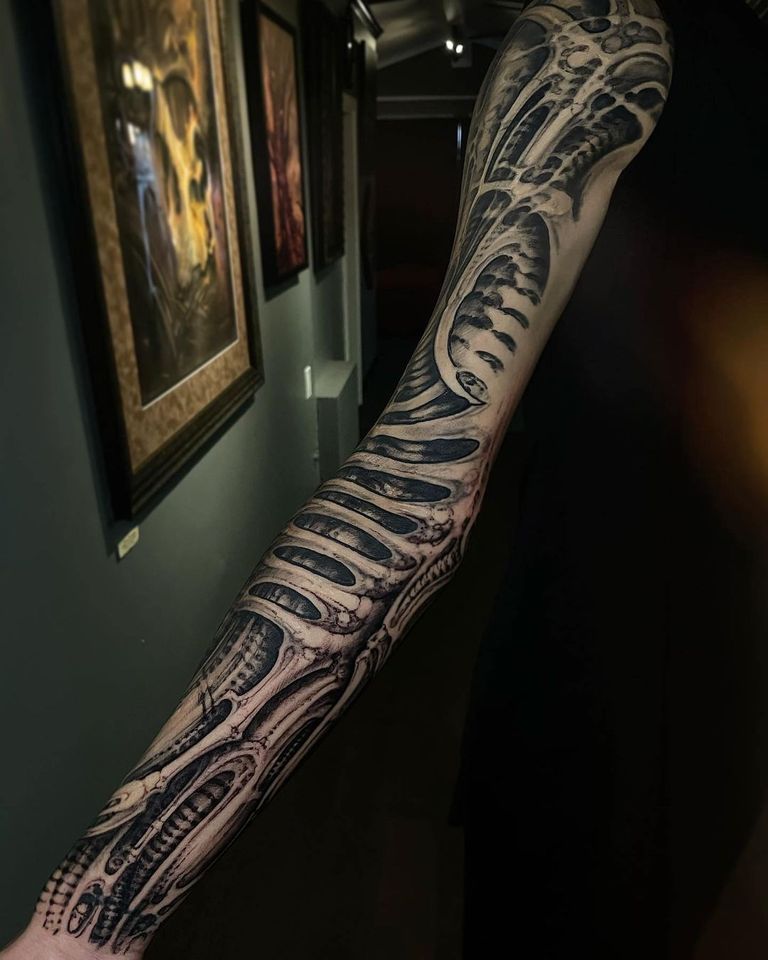
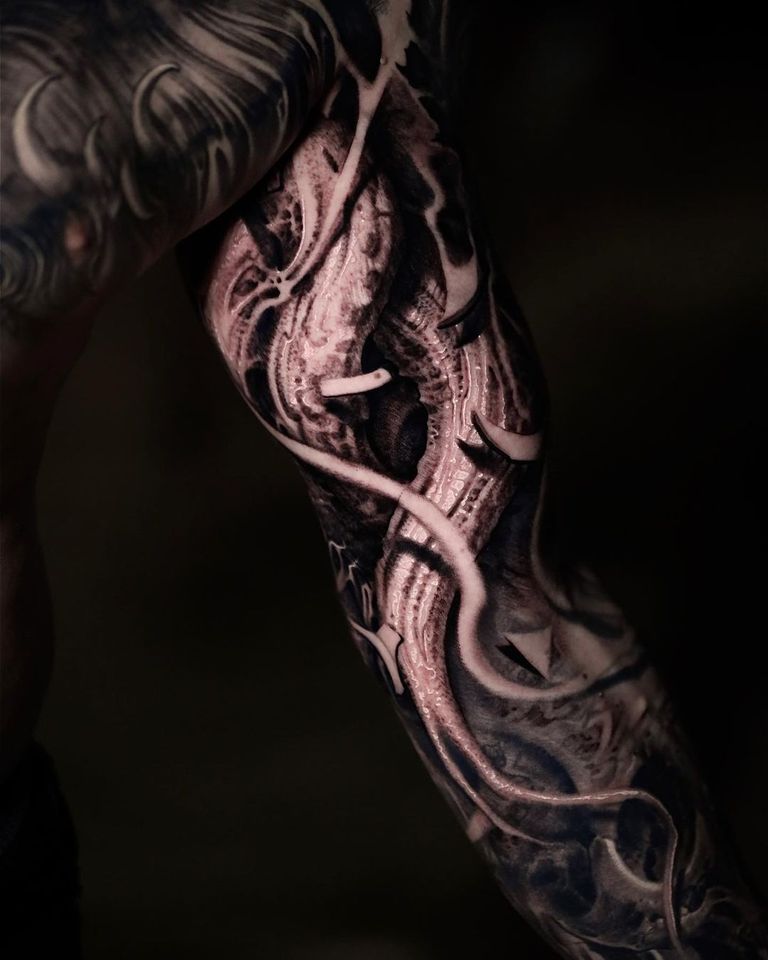
It’s also why the style needs space. A palm-sized piece has no muscle to follow, so it tends to look like a sticker. Long, curved placements work best: forearm, full sleeve, calf, thigh, back and ribs. Hands and feet work as the end of a sleeve or leg piece.
Color or black and grey?
Giger painted in muted, near-monochrome tones, and black and grey biomech is closest to his work: cold, metallic and heavy on shadow. Color biomech often sets red muscle against chrome or steel blue. Many pieces split the difference with a grey base and one accent color.
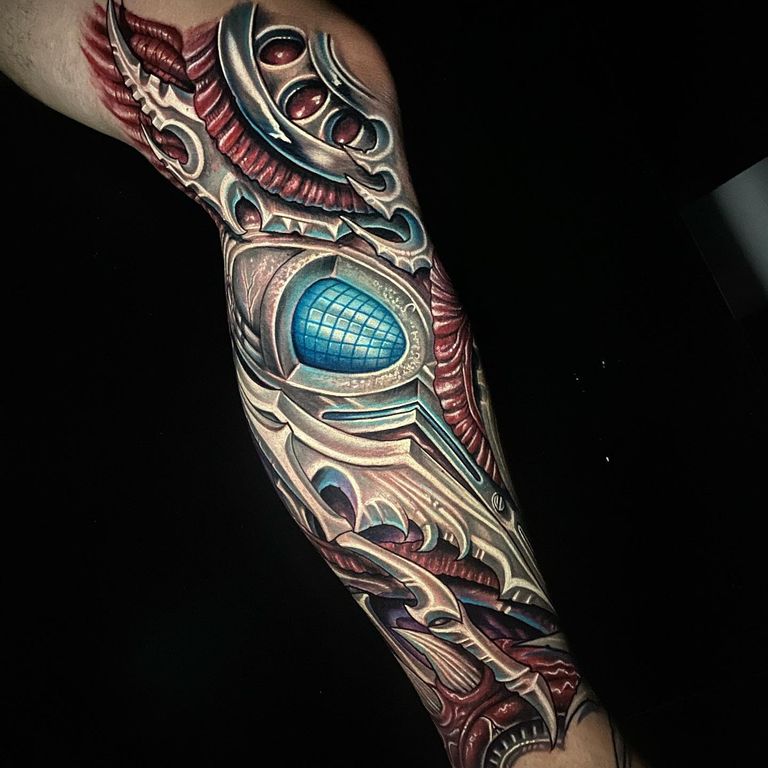
Black and grey sits easily next to other tattoos and tends to hold its contrast longer. Color stands out more on day one and needs more sun care to stay that way.
How biomechanical tattoos age
Biomech depends on contrast. As a piece ages, highlights soften and tight gradients blur first. Pieces with big areas of solid black and highlights left as bare skin keep their 3D effect longest. White ink highlights are usually the first thing to go. Ask your artist how a sleeve will look in ten years.
How to choose a biomechanical tattoo artist
Look for a portfolio full of large, custom biomech or bio-organic work. Check that the lines bend with the forearm or curve around the calf. A flat design sitting on top of a limb was drawn on paper. Before the first session, ask:
- Do you draw freehand on the body, or work from a stencil?
- How many sessions will this take, and do you charge by the hour or by the day?
- Can I see healed pieces that are a few years old? They show whether the highlights held.
- Can you plan it to connect with tattoos I already have, or ones I might add later?
Biomech is drawn for one body, so it takes longer than flash of the same size, and the price reflects that. Our guide to how much a tattoo costs explains how hourly and day rates work, and our guide on how to talk art with your tattoo artist helps you get the consultation right.
If you like the darker, creature-heavy side of bio-organic, read our dark art tattoo guide next. To book, use the artist finder and shortlist artists whose portfolios show finished biomech sleeves and back pieces.