American Traditional Tattoos: History, Motifs and Meaning
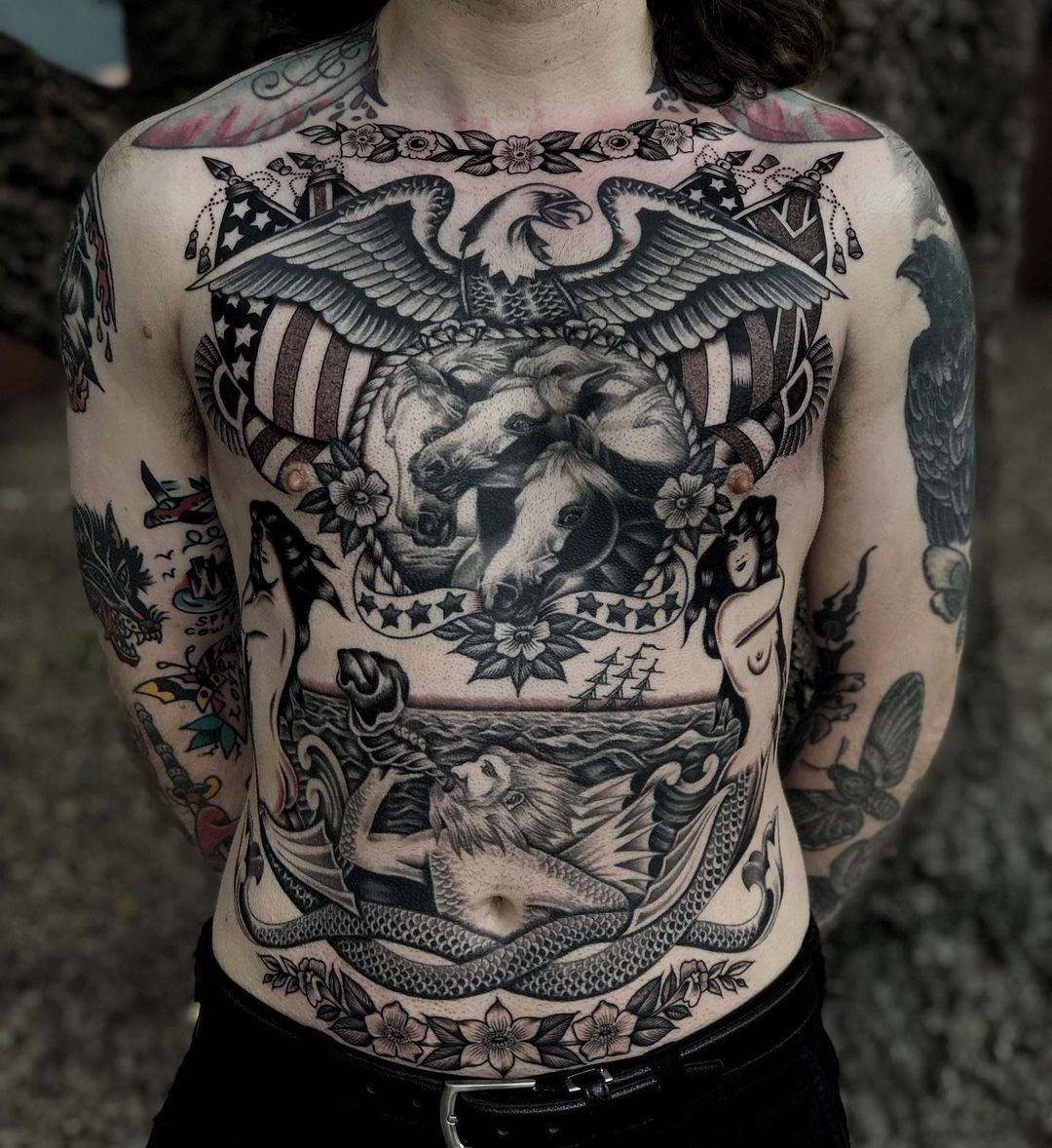
How American traditional tattooing grew out of sailor shops and traveling shows, what swallows, anchors and daggers meant, and why bold lines age so well.
Related galleries
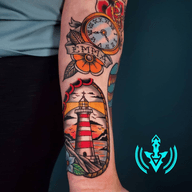
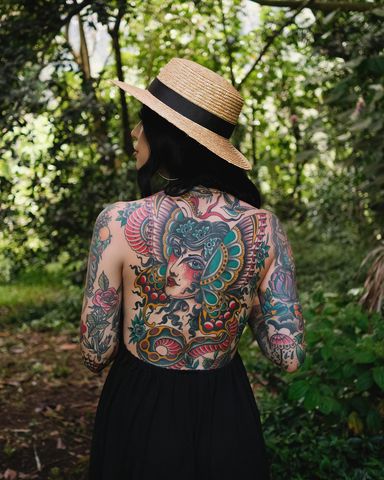
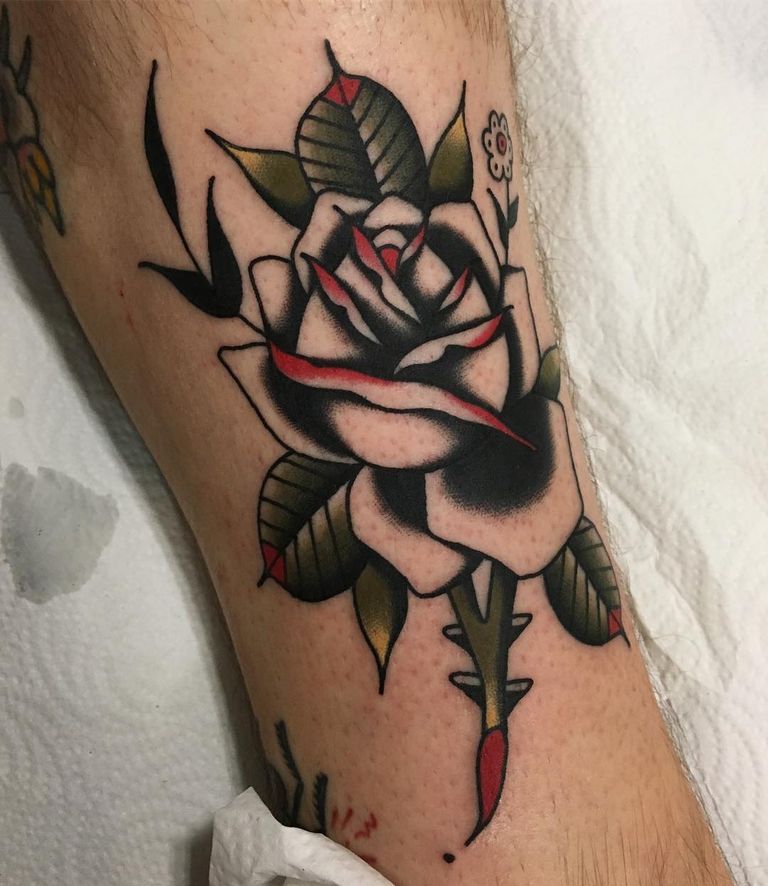
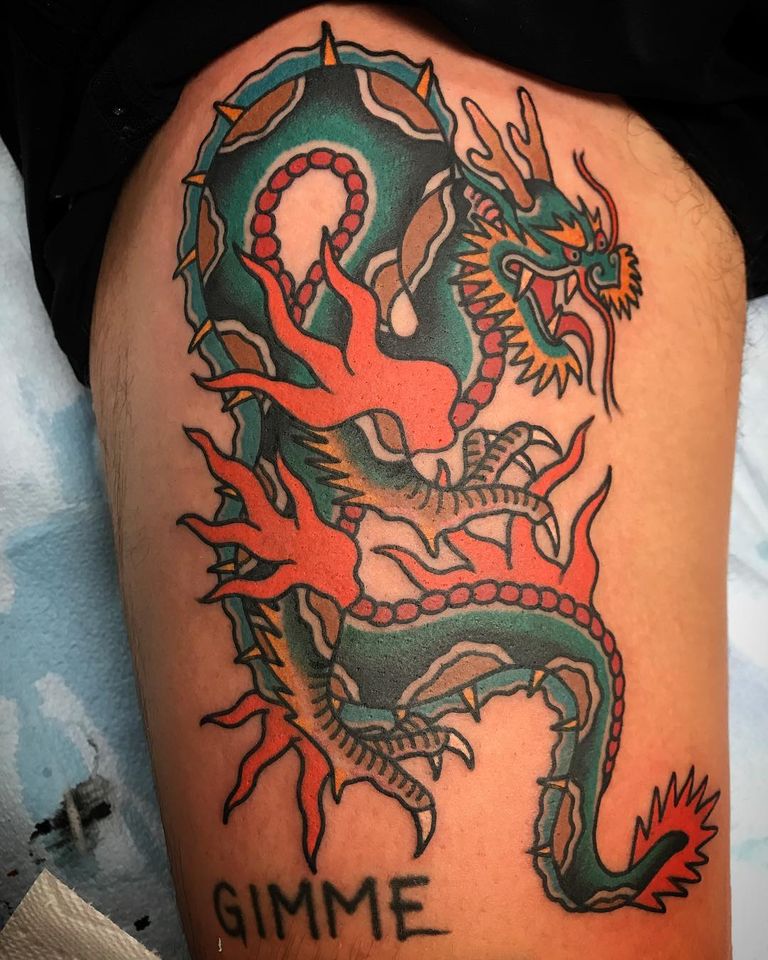
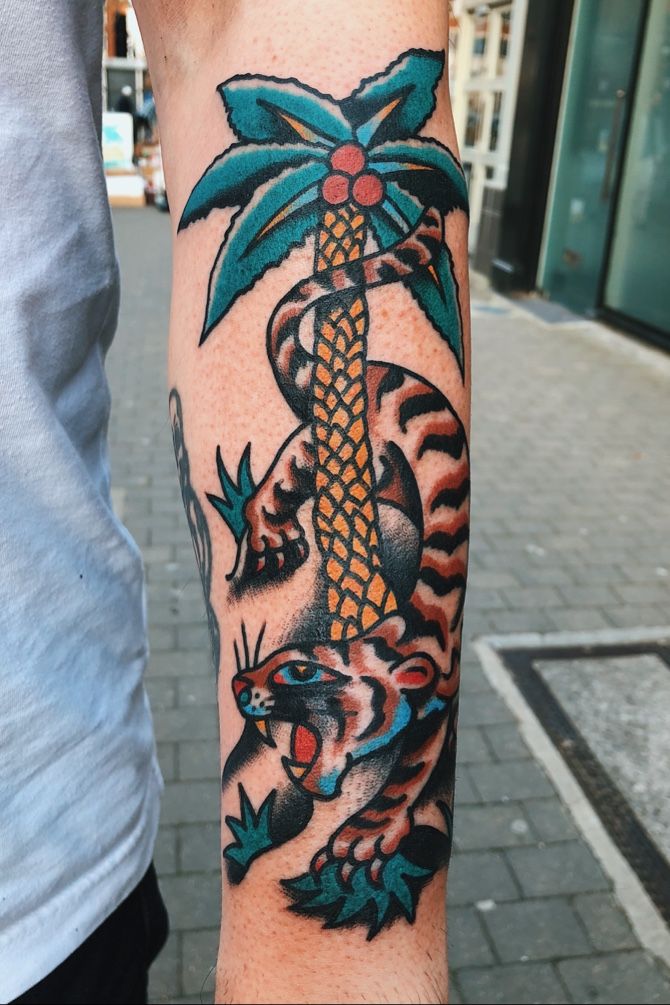
American traditional tattoos, also called old school or trad, are the classic Western tattoo style. They have heavy black outlines, solid red, green and yellow fills, simple black shading and plenty of bare skin. The usual subjects are swallows, roses, daggers, anchors, eagles, panthers and pin-up girls. The style took shape in American port towns in the early 1900s. Tattooers worked from sheets of ready-drawn designs called flash.
Summary
- Many traditional shops still tattoo designs straight from the flash on the wall.
- Thick lines and solid black keep their shape for decades. Shops say “bold will hold”.
- Most classic motifs began as sailor or soldier symbols.
What defines American traditional
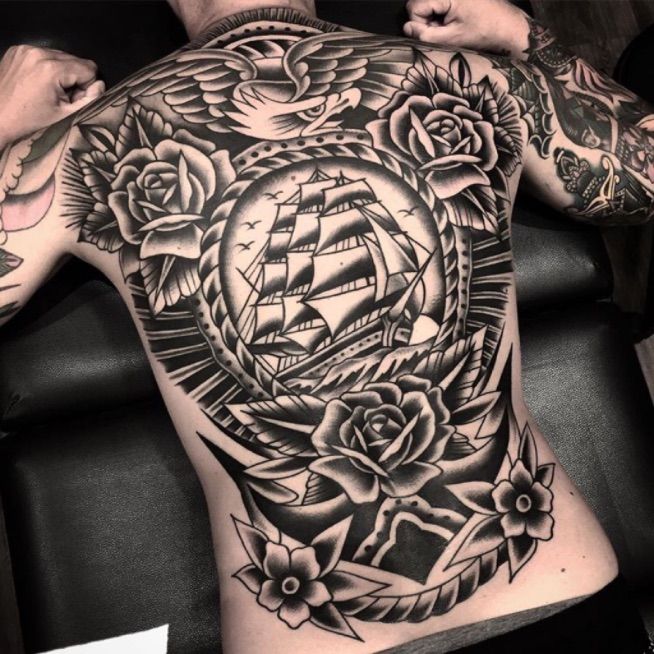
A traditional tattoo is meant to read at a glance, even from across a room. Artists in the style follow a fairly strict set of rules:
- Thick, even black outlines.
- A short palette. Red, green and yellow carry most designs.
- Color packed in solid, with no blending.
- Shading in black only, fading out into bare skin.
- Simple drawing. A rose is a handful of petals.
Tattooers use the three names interchangeably. American traditional is the full name, old school is common in shop talk, and trad is the shorthand.
Where American traditional came from
Sailors were the style’s first big customers. Port towns had shops where a sailor on shore leave could pick a design off the wall and walk out with it the same day. Swallows, anchors and ships became the core of the style. Traveling circuses and sideshows were the other early home, and many tattooers learned the trade on the road.
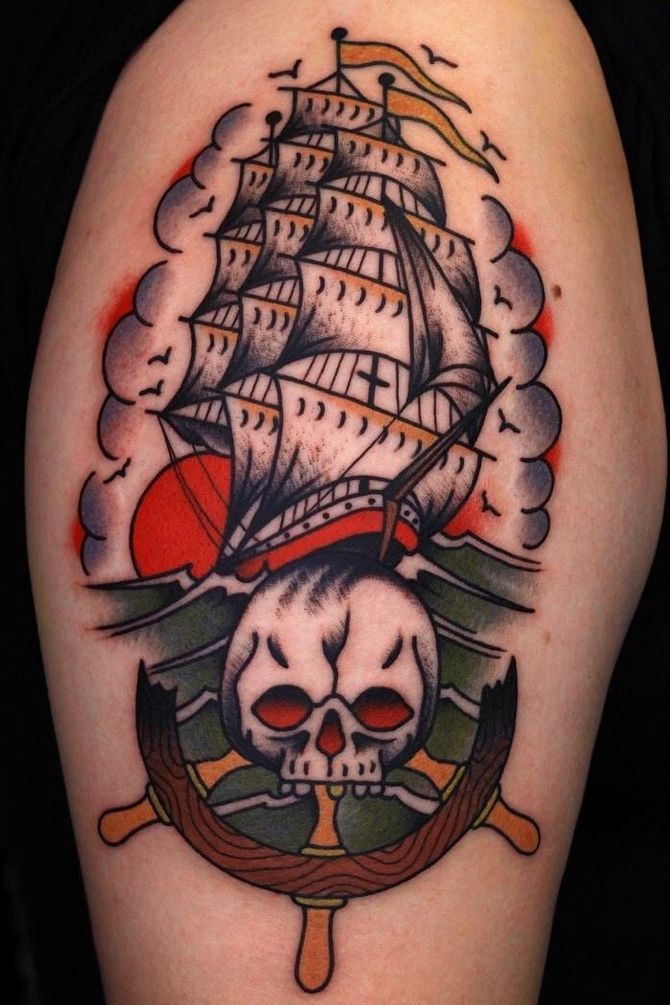
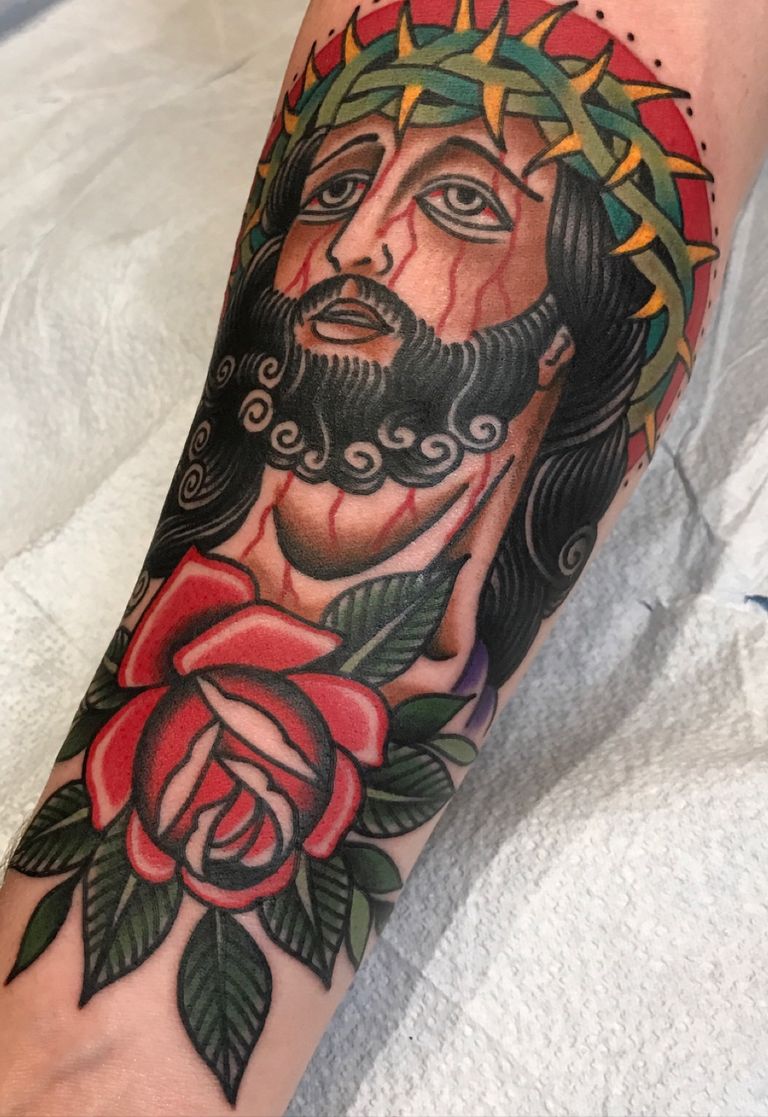
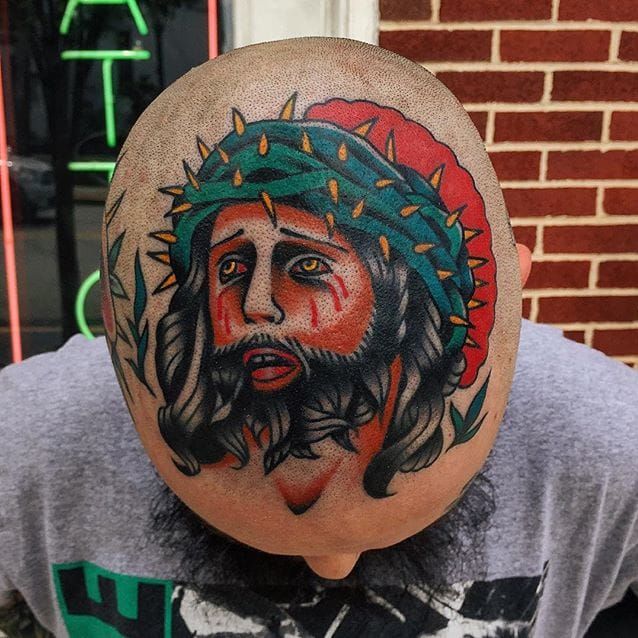
The electric tattoo machine, patented in 1891, made tattooing fast enough for walk-in trade. Shops hung flash on their walls so customers could point at what they wanted. Sheets were copied and traded between shops. That’s how the same roses and eagles turned up on both coasts.
The artists who shaped the style
Norman Collins, known as Sailor Jerry, is the name most people know. He tattooed sailors in Honolulu for most of his career. He mixed his own pigments, which widened his colors, and reworked American flash with ideas from Japanese tattooing. Ed Hardy, who studied in Japan in the early 1970s, later pushed American tattooing toward custom work.
Classic motifs and what they meant
Most motifs began as sailor or soldier symbols. These meanings were passed on by word of mouth, so the details change with who’s telling them.
- A swallow marked 5,000 nautical miles at sea. Swallows return home every year, so it also meant making it home.
- An anchor is said to have marked an Atlantic crossing. Today it means steadiness.
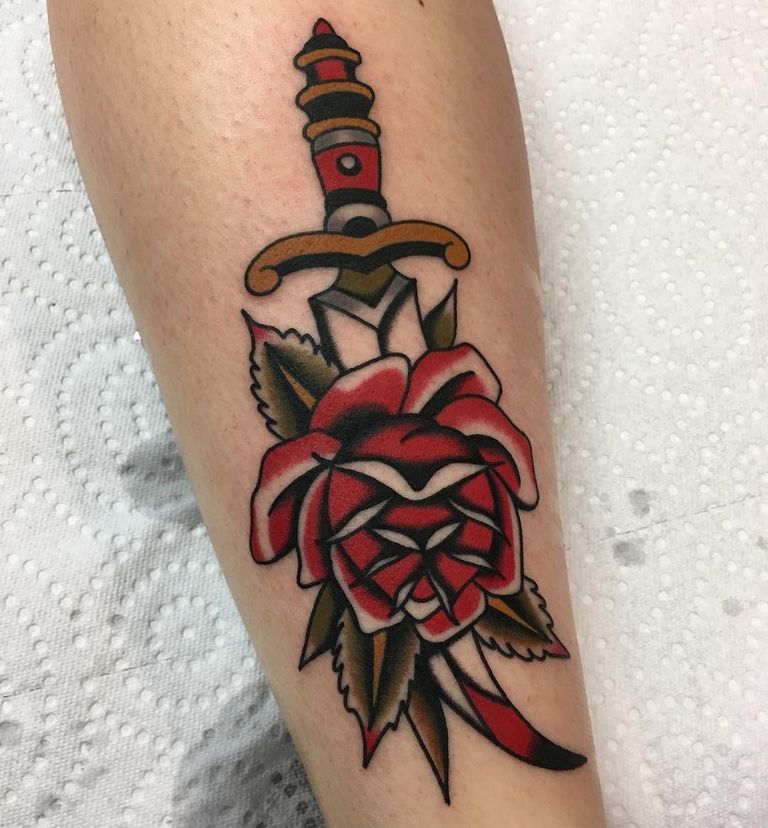
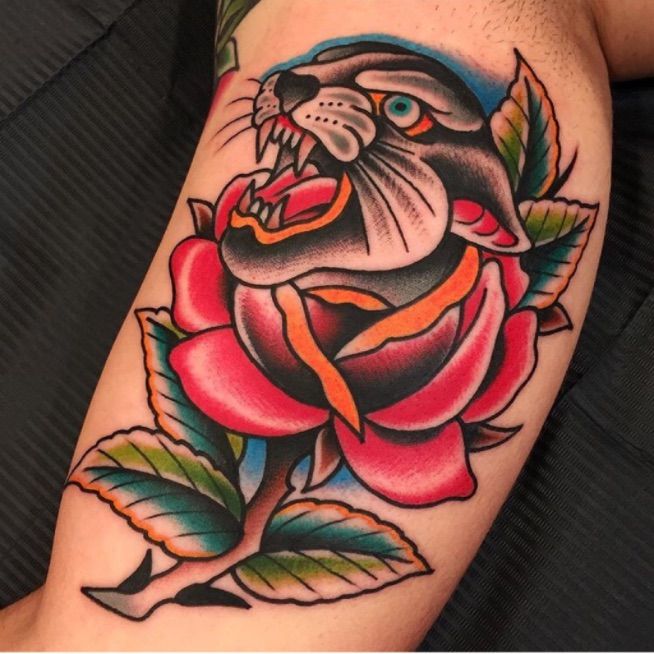
- A rose meant love, often for a mother or a sweetheart.
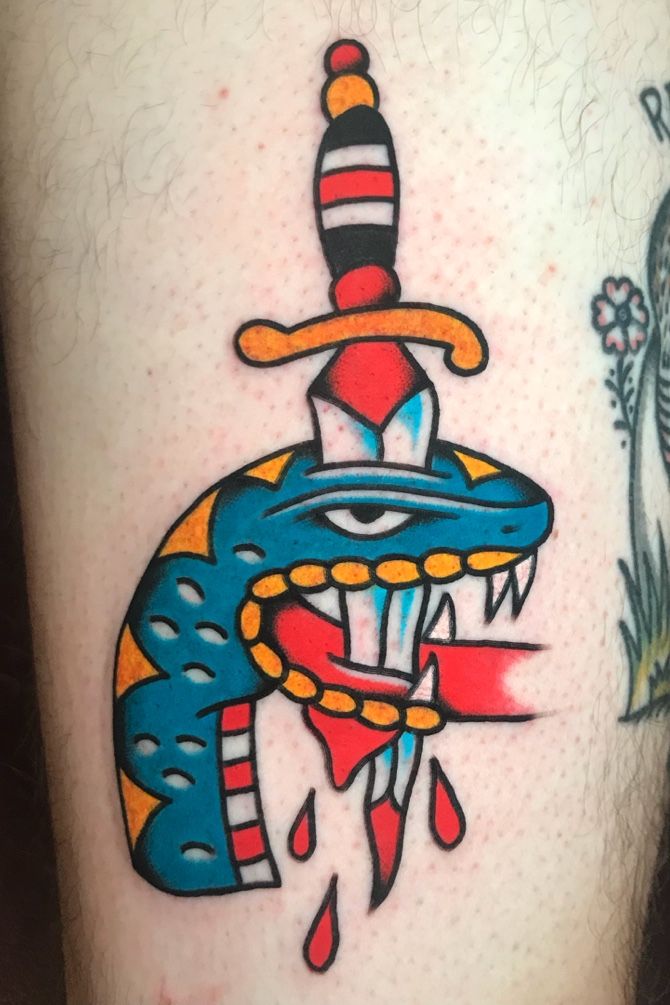
- A dagger meant courage. Driven through a rose or heart, it pairs love with pain.
- A panther meant toughness, and an eagle meant patriotism.
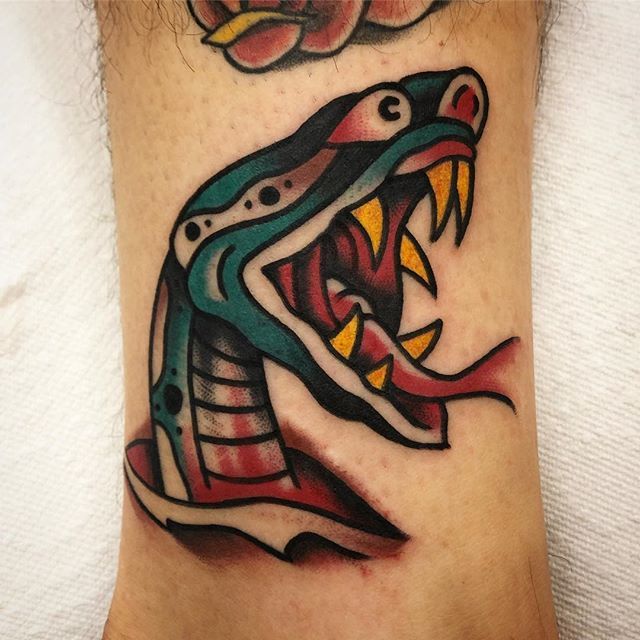
How a traditional tattoo is made
The outline goes in first, pulled in one smooth pass so the line keeps the same weight. Black shading comes next. It’s often whip shading, where the needle flicks out at the end of each stroke and leaves a peppered fade. Color goes in last, packed until no skin shows through.
The drawing stays simple on purpose. Petals and feathers are suggested with a few black strokes. That’s why the style works for subjects far from the old sailor list, from a monkey on an apple to a mountain scene.
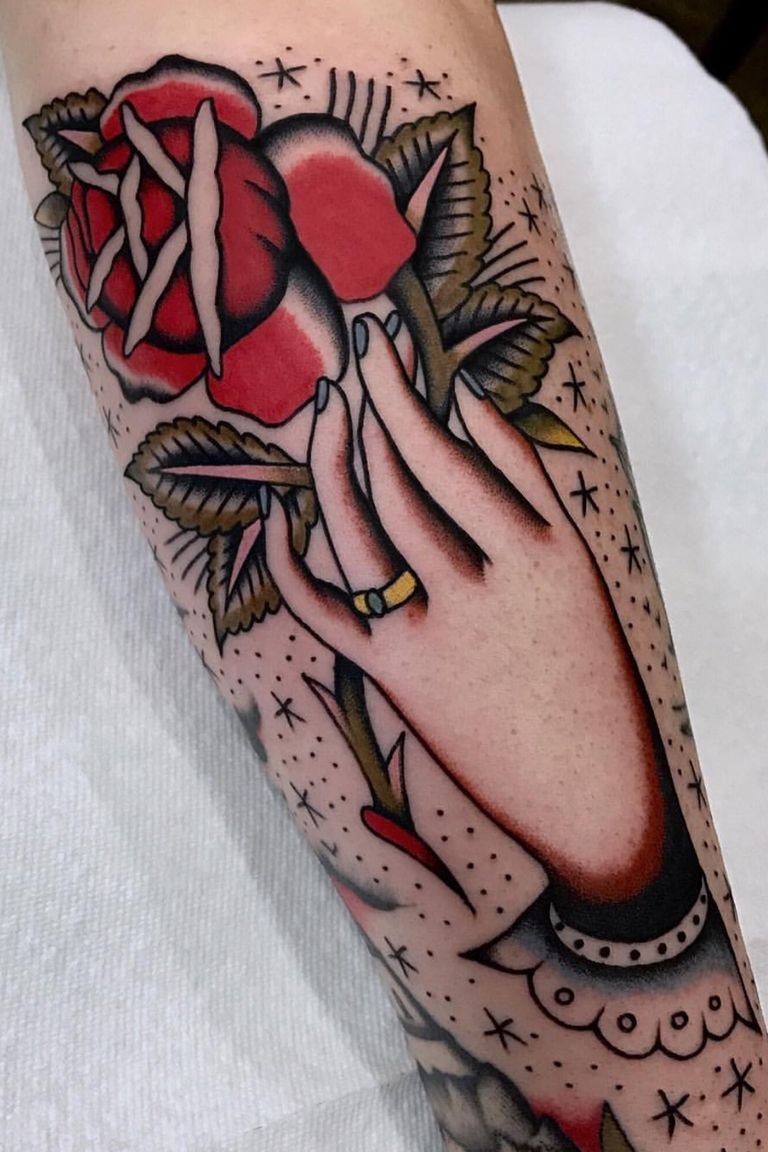
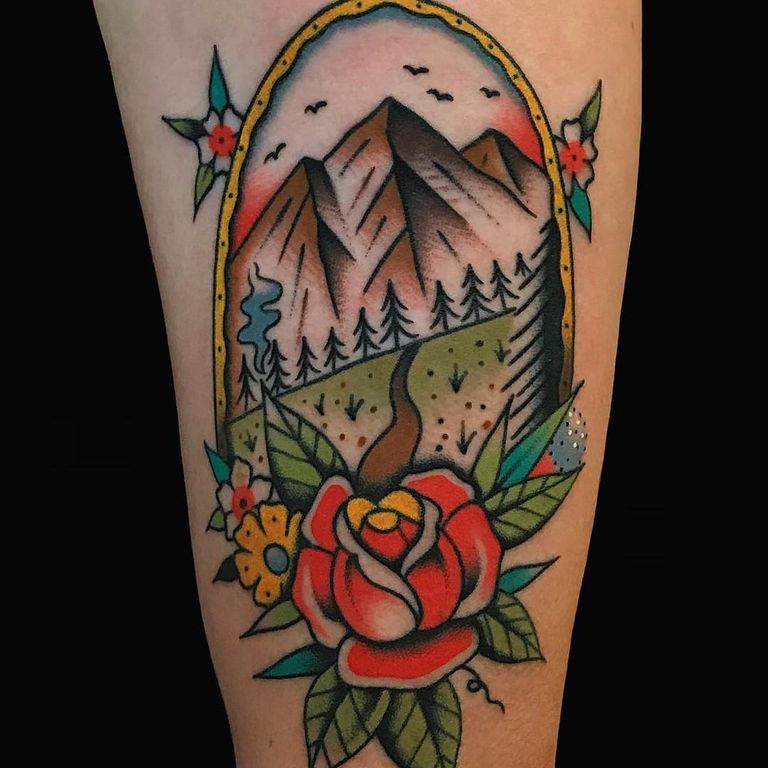
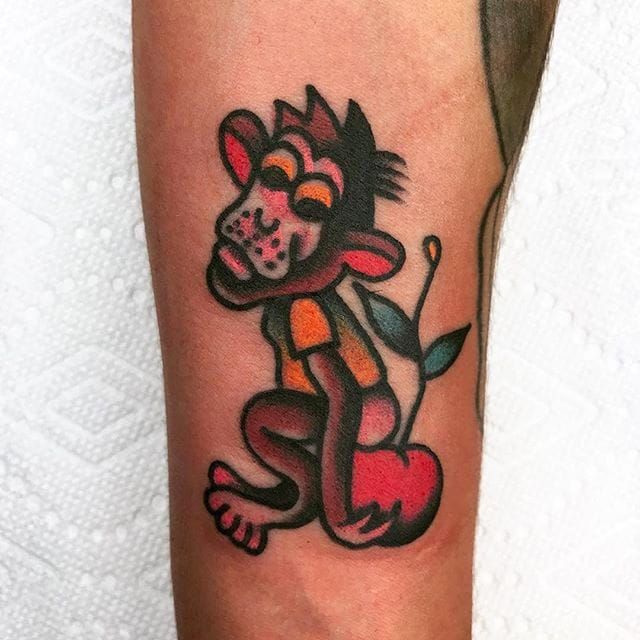
How traditional tattoos age
Better than most styles. A thick outline can soften for decades and still read as a line. Solid color fades evenly instead of breaking into patches. Yellow, the palest color, wears first. Sun speeds that up, so keep a healed piece covered or in sunscreen.
Sizes and placements
Traditional designs suit flat, open areas: the outer forearm, upper arm, calf, thigh, chest and back. A typical flash piece is about the size of your palm. Go much smaller and the gaps between lines close up. If you want a design small, ask the artist to simplify it rather than shrink it.
Many people collect traditional tattoos one at a time and fill an arm with separate designs. This is often called a patchwork sleeve. Leave some skin between pieces, and small stars or dots can fill the gaps later.
How traditional differs from neo-traditional and Japanese
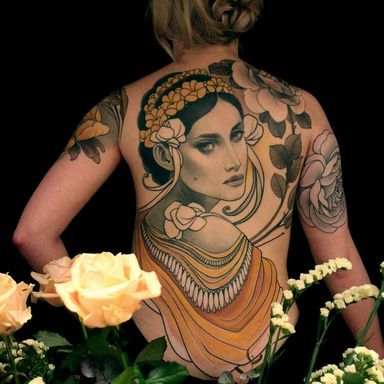
Neo-traditional keeps the heavy outline but varies the line weight. It uses a much wider palette and adds depth and detail. The neo-traditional tattoo guide covers it in full.
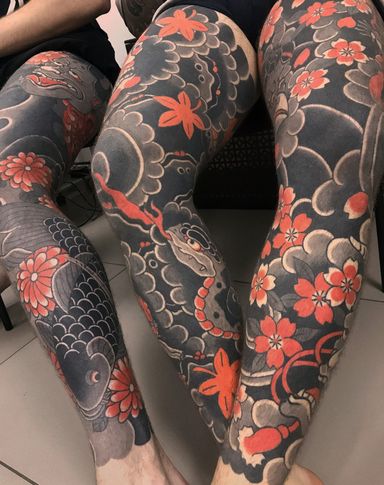
Japanese tattooing is a separate tradition with its own motifs, such as koi, peonies and waves. It’s built around large pieces that flow across the body. American traditional borrowed some of its subjects, like tigers and dragons. See the Japanese tattoo guide.
Choosing a traditional tattoo artist
Traditional looks simple, which makes mistakes easy to see. In a portfolio, look for:
- Smooth, even lines with no wobbles or doubled edges.
- Solid color with no patchy spots.
- Healed photos, so you can see whether the yellow held.
- Flash the artist painted themselves. It shows how they draw.
Many traditional shops still take walk-ins. Pick a design from the wall and the artist can often tattoo it the same day. For something custom, bring the motif and placement and let the artist draw it in their own hand. If you’re in New York, start with these old school tattoo artists in New York.
For more designs, browse American traditional tattoo ideas, or find a traditional artist near you with the Tattoodo artist finder.