Ornamental Tattoos: Meaning, Origins and Subgenres
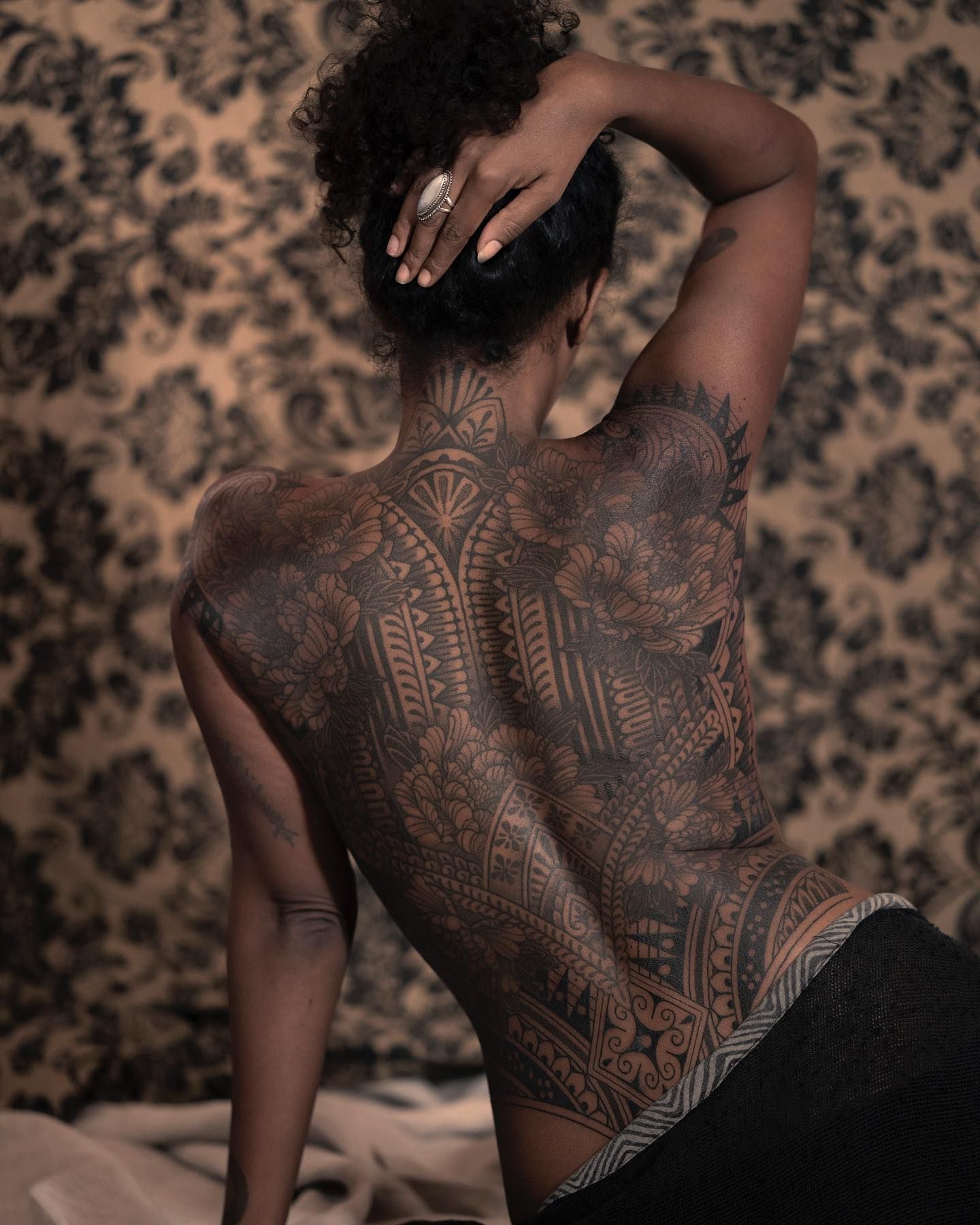
Where ornamental tattoo patterns come from, what mandala, lotus and chandelier motifs mean, and how artists fit the work to your body.
Related galleries
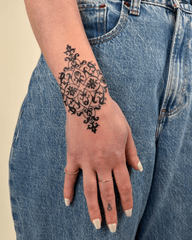
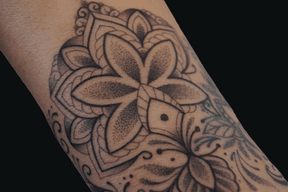
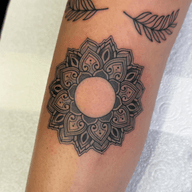
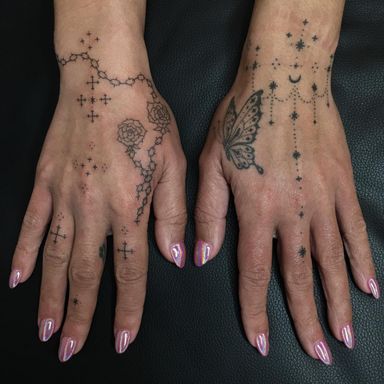
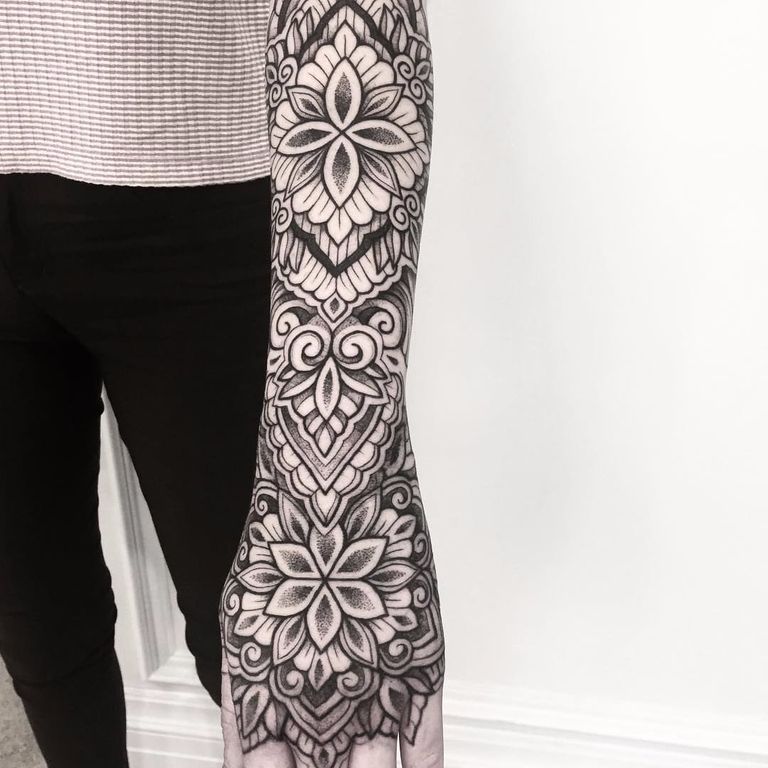
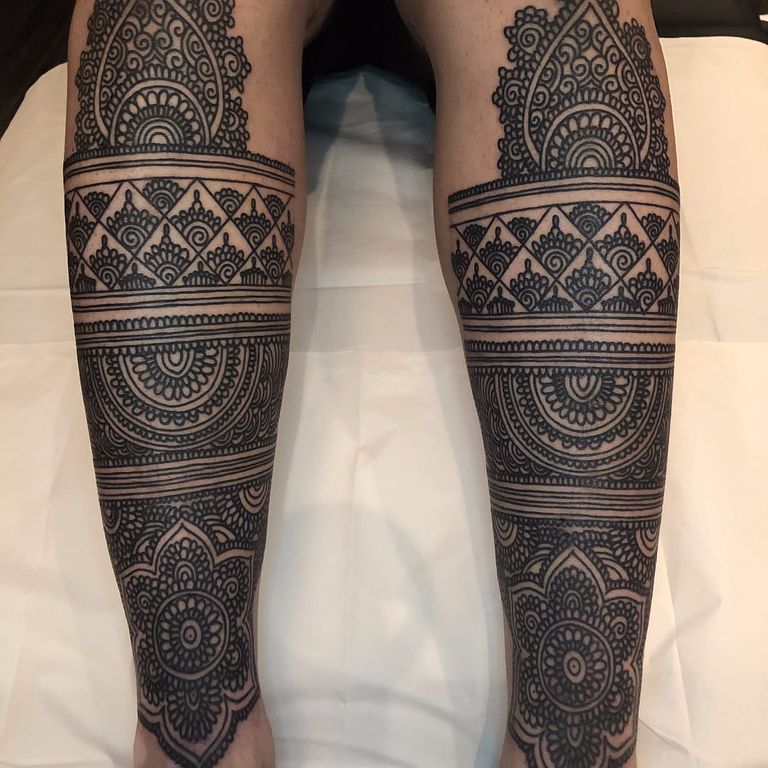
Ornamental tattoos are decorative pattern work, almost always in black ink. Think mandalas, lace-like bands, scrolls, petals and beaded drops. They’re built from clean lines, dotwork and solid black. The patterns come from henna, mandalas, lace and jewelry. Each piece is drawn to follow the body, so it wraps a forearm or frames the sternum the way jewelry would.
Summary
- The bare skin left between the lines is as much a part of the design as the ink.
- Mirrored designs need a center line, like the sternum or spine.
- Bold lines and wide spacing age better than fine dotwork.
What makes a tattoo ornamental
An ornamental tattoo is a pattern, not a picture. A realism piece shows you a thing, like a rose or a face. An ornamental piece decorates the skin the way a carved frame or a necklace would. Most pieces share a few traits:
- Motifs are mirrored across a center line or repeated in bands and rings.
- The ink is mostly black: lines, packed black and dotwork, which is shading made of tiny dots.
- The pattern is bent to fit one limb or curve, so the same design rarely suits two people.
The style overlaps with blackwork, which shares its ink, and tribal tattooing, which shares some bold shapes.
Where ornamental patterns come from
The style has no single founder or birthplace. Its artists borrow from older traditions, often several in one piece.
Mehndi and henna
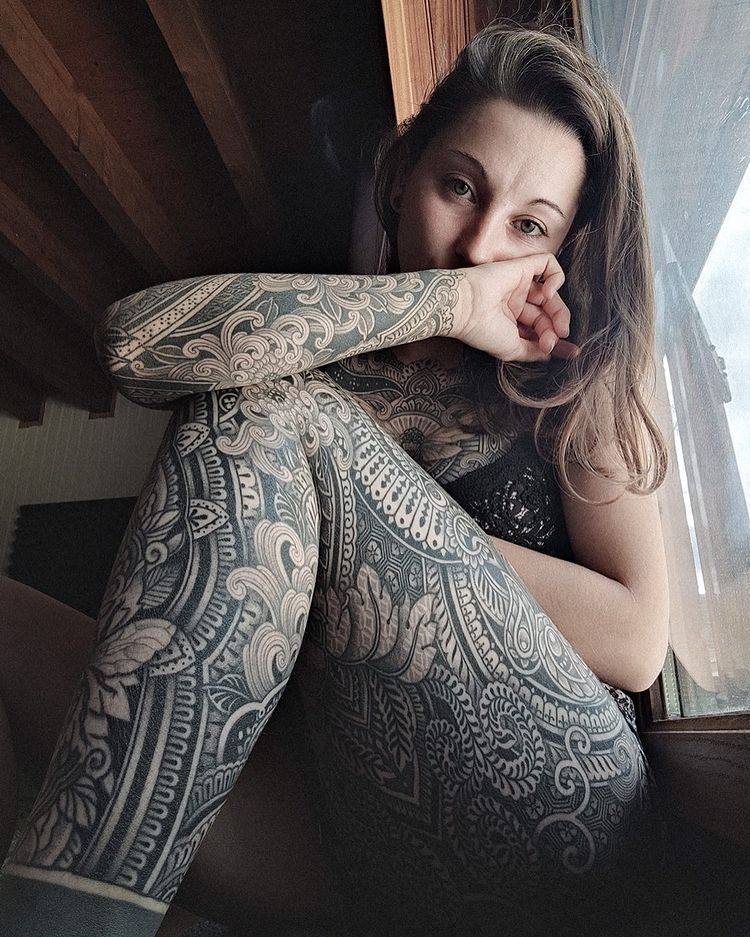
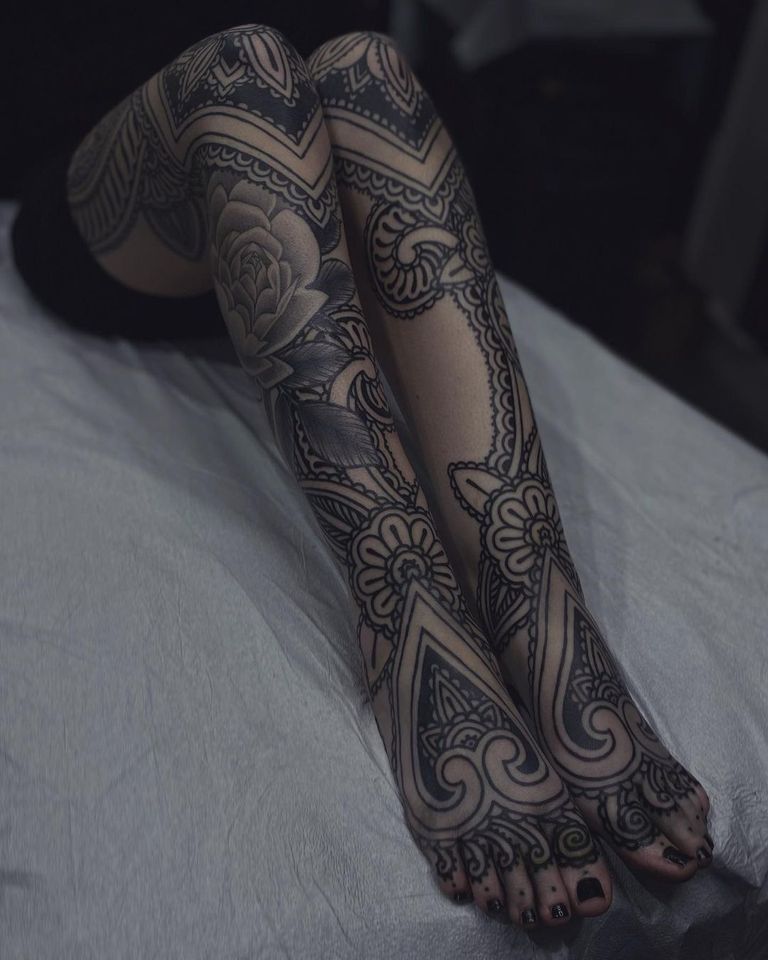
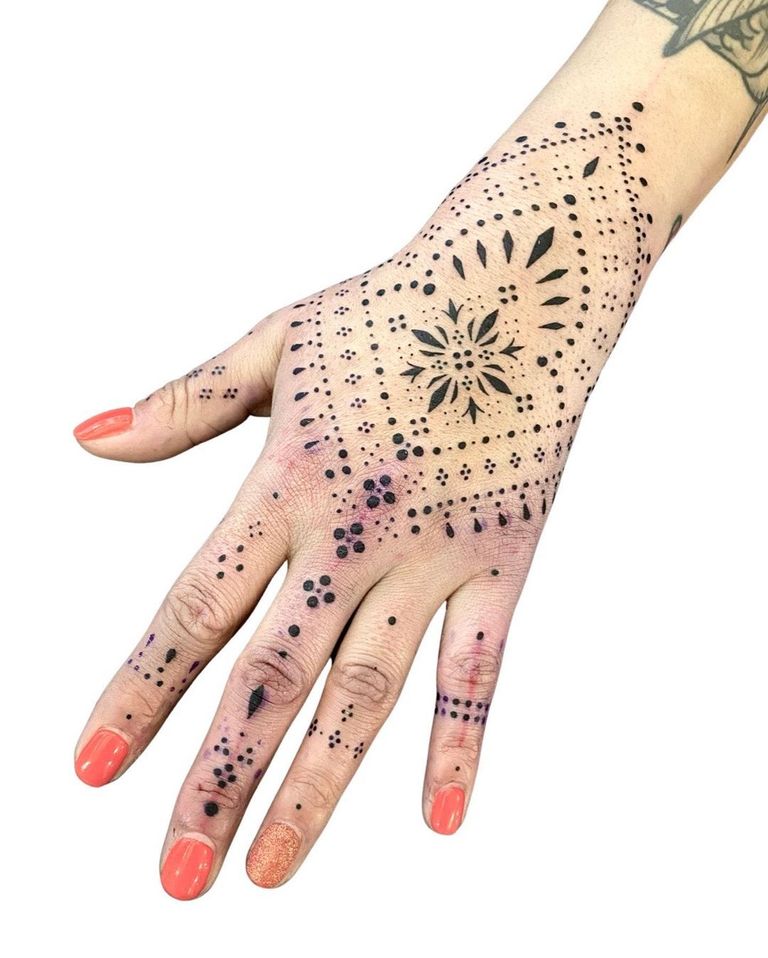
Mehndi is the South Asian name for henna. It’s a plant paste, painted on in fine patterns, that leaves a reddish-brown stain that fades. Henna probably began in the Middle East and North Africa. It’s applied to brides’ hands and feet before weddings. Mehndi gave the style its best-known shapes: paisley teardrops, fanned petals, lace edges and the mandala on the back of the hand.
Mandalas
The word mandala means “circle” in Sanskrit. In Hindu and Buddhist practice, it’s a sacred diagram of the universe, used in ritual and meditation. In tattooing, the word means any round design that grows out from a center point.
Lace, filigree and jewelry
The European side comes from lace, metal filigree and the scrolling leaves of baroque decoration. Jewelry is the other big source: chokers, chains and beaded drops. That’s where chandelier tattoos on the sternum come from.
Folk tattooing and embroidery
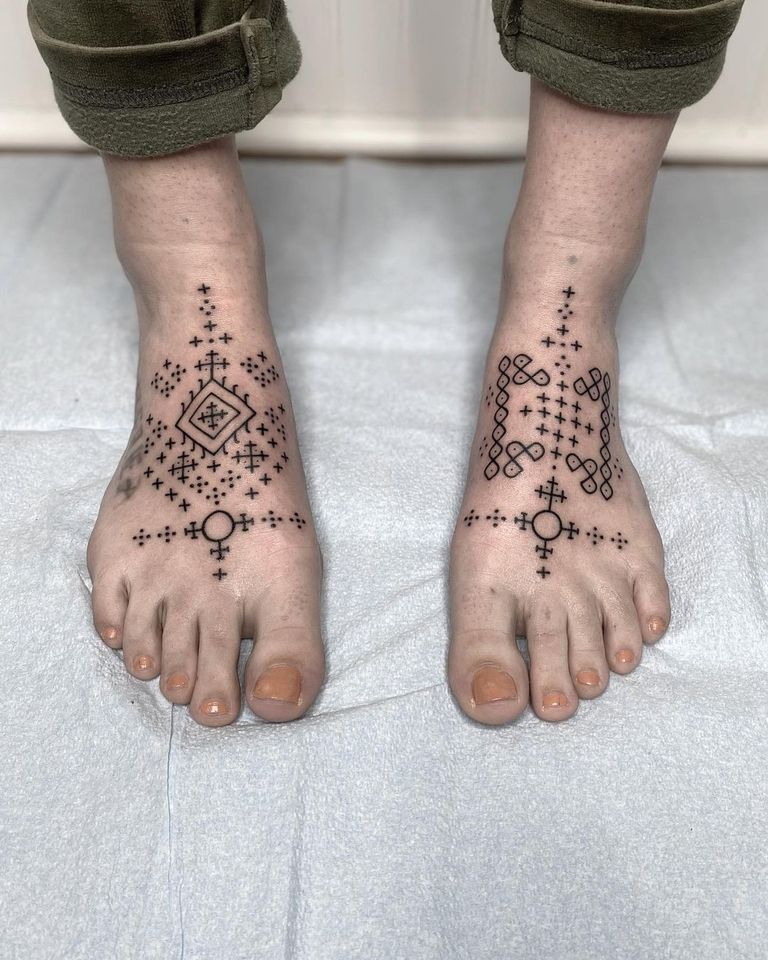
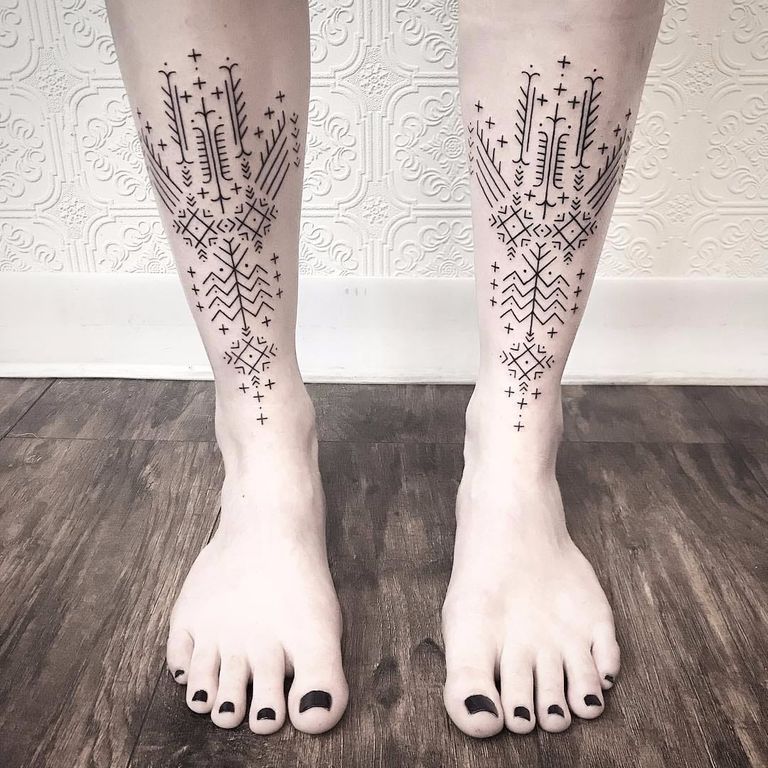
Some artists look to folk textiles and old regional tattooing. One example is sicanje, once practiced mainly by Catholic women in rural Bosnia. The designs were mostly crosses, fir branches, fences and bracelet-like bands on the hands and forearms. The practice declined after the Second World War but has seen a revival in recent years.
What ornamental tattoo motifs mean
Most ornamental tattoos have no set meaning, and many people like that. Where a motif does carry meaning, it comes from the tradition it was taken from.
- As a tattoo, the mandala is often linked with balance or a fresh start. That’s a modern reading, not a religious one.
- The lotus grows out of muddy water and opens clean, so in Buddhist and Hindu art it stands for purity. As a tattoo, it often means growth through hard times.
- Chandelier pieces work as permanent jewelry. They usually carry no symbolic meaning.
- The crosses in revived folk designs like sicanje are Christian. Many people wear them to connect with their family’s roots.
Kinds of ornamental tattoo
Artists use a few labels for the main branches. They overlap, and many pieces mix two.
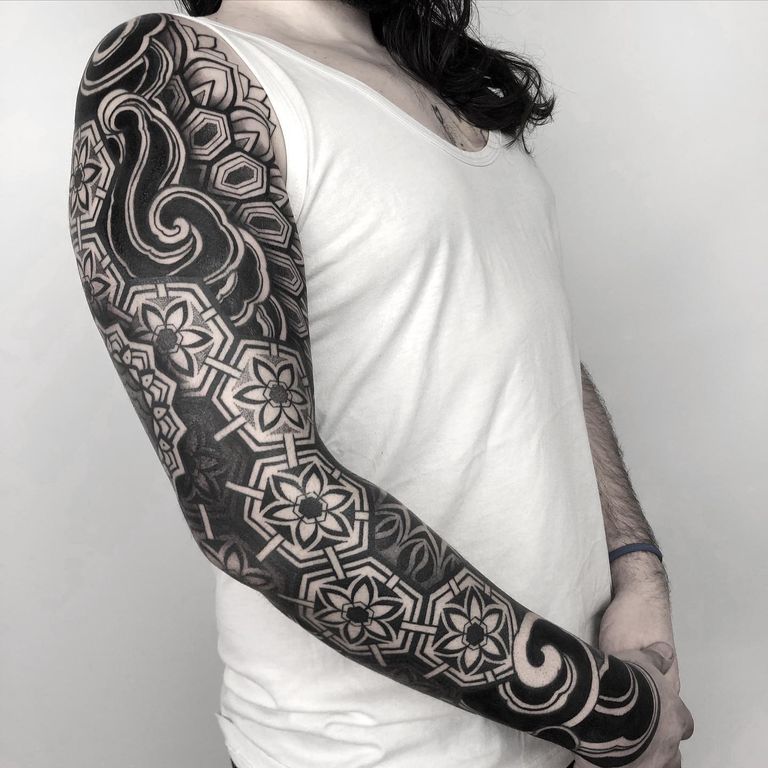
Dark ornamental
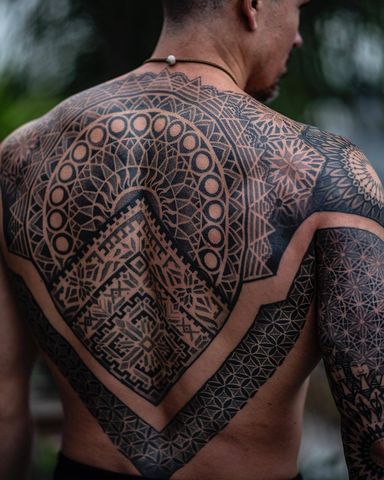
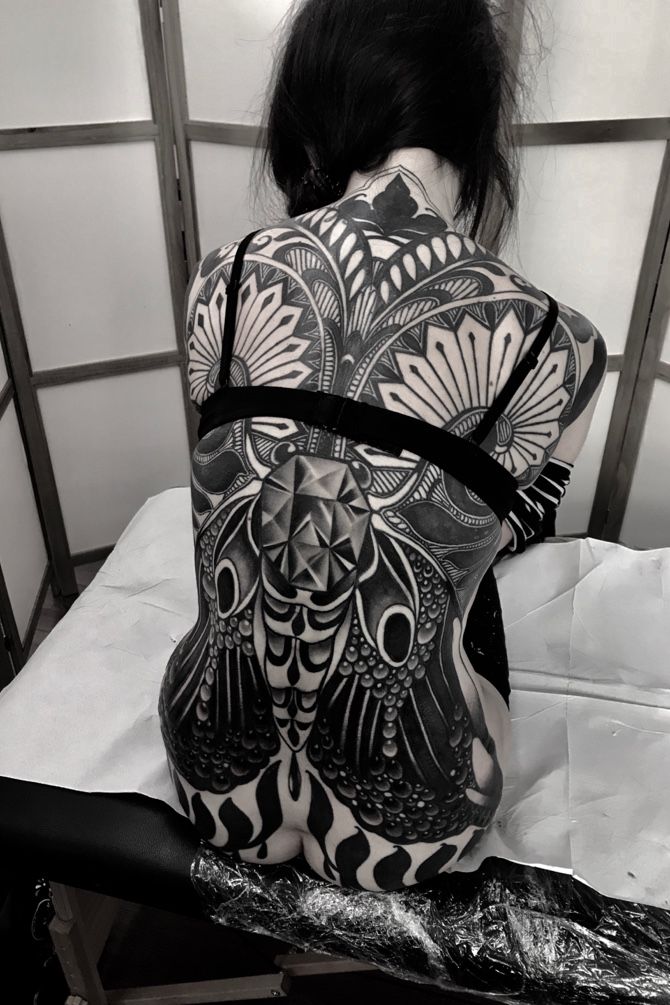
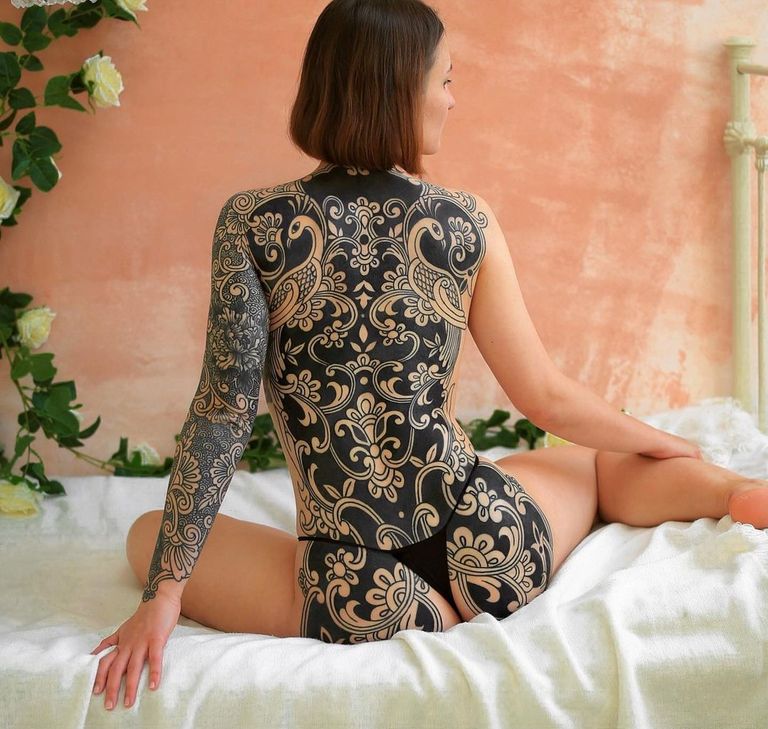
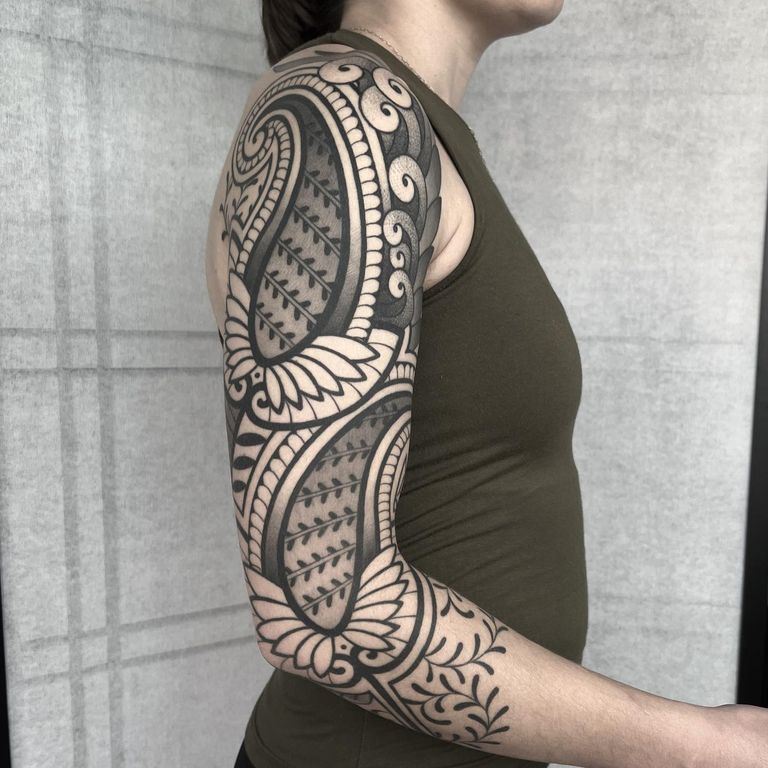
Dark ornamental flips the usual ratio of ink to skin. Most of the area is packed solid black, and the pattern is the skin left open inside it. It suits back pieces, sleeves and cover-ups. But solid black takes long sessions and is hard to change later.
Ornamental blackwork and pattern work
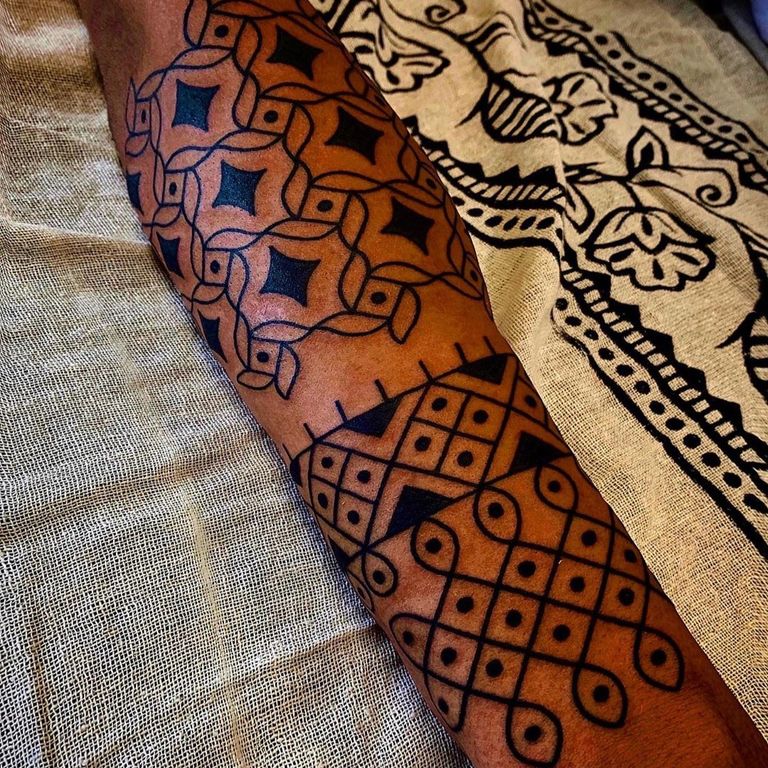
Pattern work is the geometric branch. Instead of petals and scrolls, you get tiles, grids, diamonds and loops that repeat. It sits between ornamental and blackwork.
Fine line ornamental
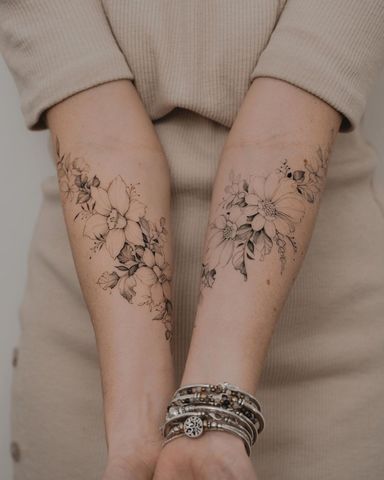
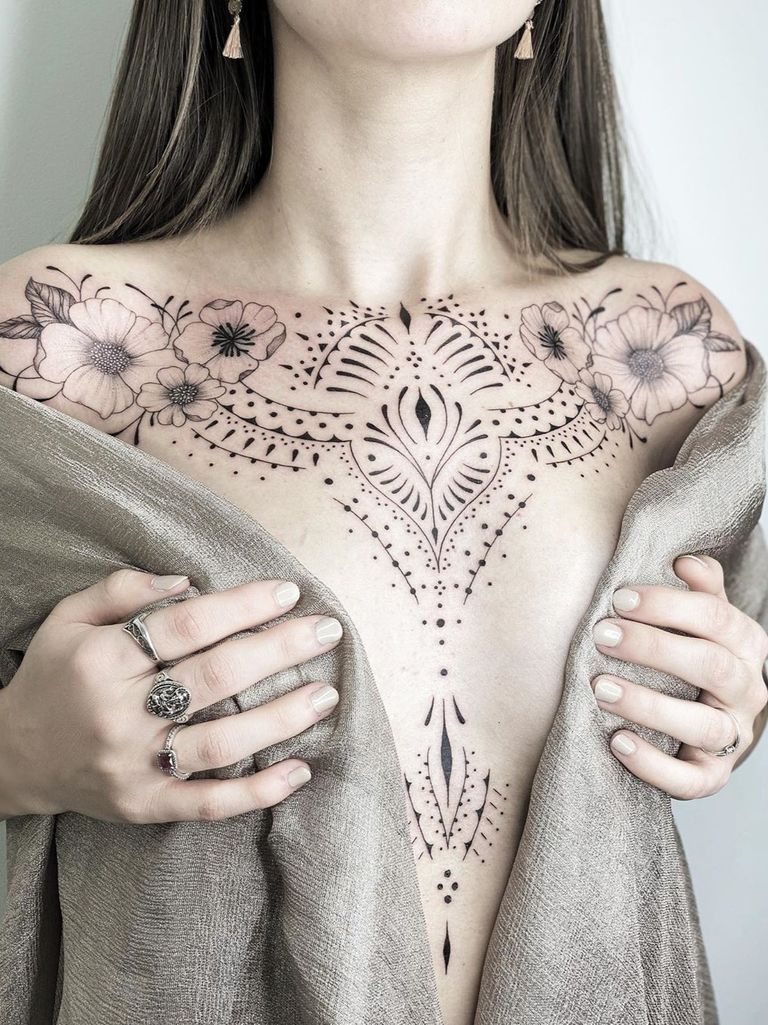
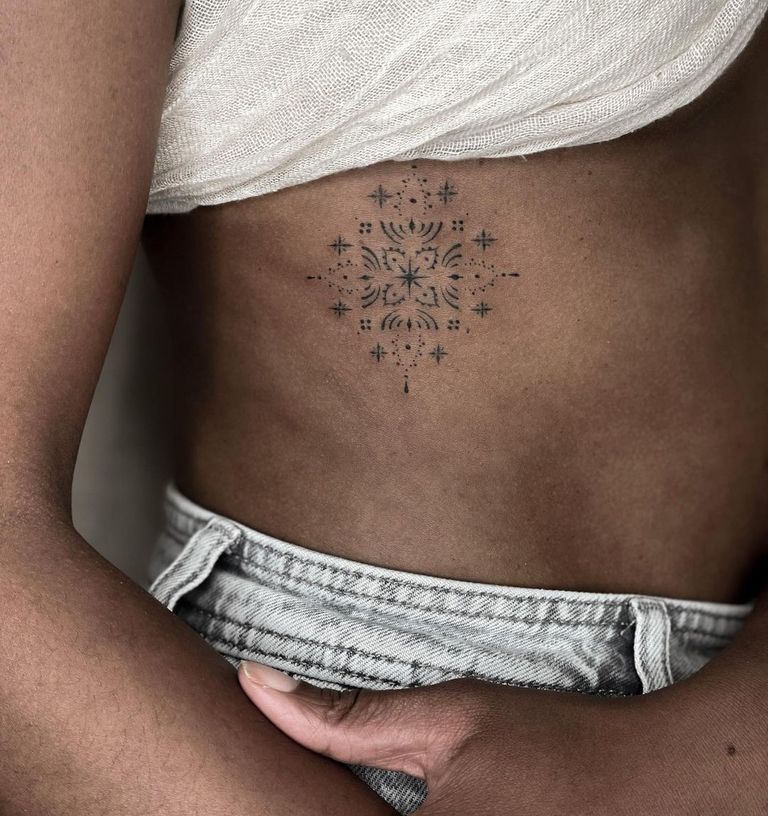
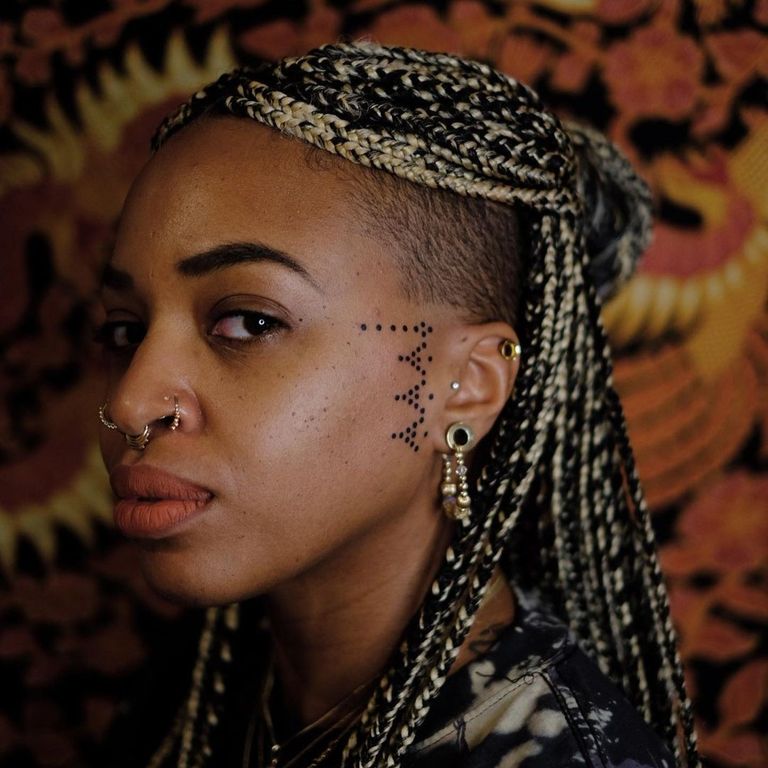
The delicate end uses single-needle lines and small dots, often mixed with flowers. It suits small spots like the sternum, ribs and fingers. The fine line tattoo guide covers the technique. The finest details need the most care and soften first.
Ornamental tribal
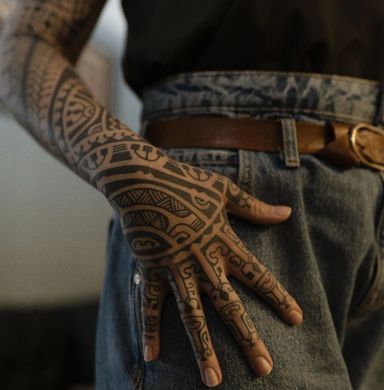
This branch mixes the bold black shapes of tribal tattooing with finer detail. Samoan, Māori and Borneo tattooing are separate traditions with their own rules. Some of their designs carry family or rank, so ask your artist what a pattern is based on. The tribal tattoo guide goes deeper.
How ornamental tattoos are fitted to the body
Each piece is designed for one body. Much of the work is drawn on the skin, or adjusted after the stencil goes on. A few rules come up again and again:
- Mirrored pieces go on a center line, like the sternum, spine or back of the neck. Off-center, a mirrored design looks lopsided.
- Round joints make good centers. A mandala on the knee or elbow follows the curve.
- Limbs get stacked bands that taper, narrow at the wrist and wide at the upper arm.
Size matters more than in most styles. A design that looks fine on paper at three inches can blur into a gray smudge. If you want something small, choose a simpler pattern rather than shrinking a big one.
How ornamental tattoos age
Aging shows first in the dotwork and the gaps. Tight dots melt into flat gray, and narrow channels of skin fill in. Bold outlines, solid black and wide spacing age best. Skin on hands and feet wears hard, so expect touch-ups there.
Choosing an ornamental tattoo artist
Pick an artist whose portfolio is mostly ornamental, not one who does the odd mandala. Ask:
- To see healed photos a year or more old, to check their dotwork and spacing.
- How they handle symmetry on a curved body.
- How many sessions a sleeve will take, and whether they plan the whole area up front.
Browse ornamental tattoo ideas to collect references, then use the artist finder to find an artist whose ornamental work already follows the body the way you want yours to.
Cover image: Dino Vallely