Trash Polka Tattoos: The Style, Its Origins and How It Ages
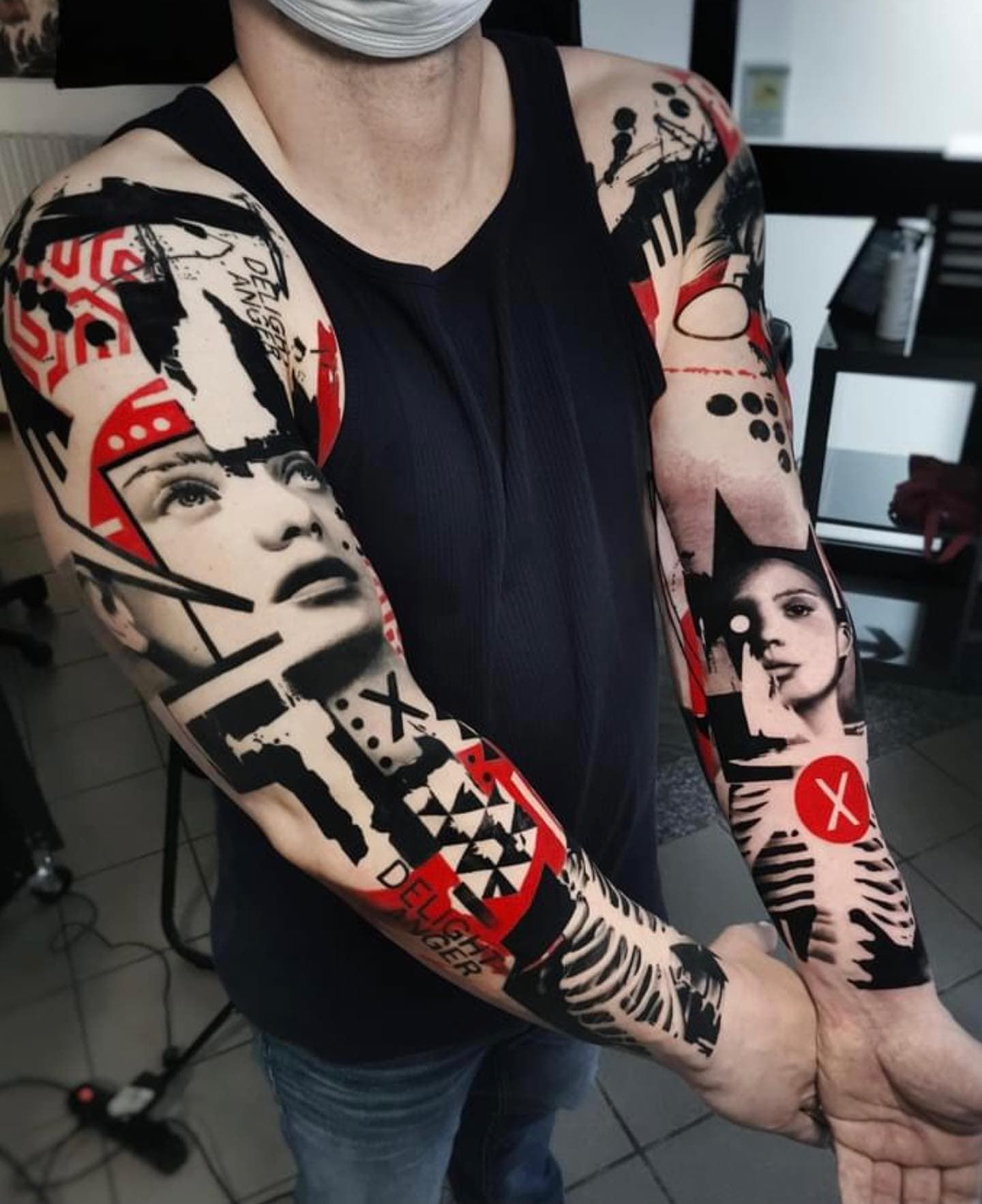
The black and red collage style from Würzburg: how its two layers work, why it needs a whole sleeve or back, and why it is hard to add to later.
Related galleries
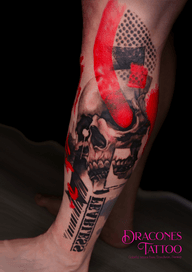
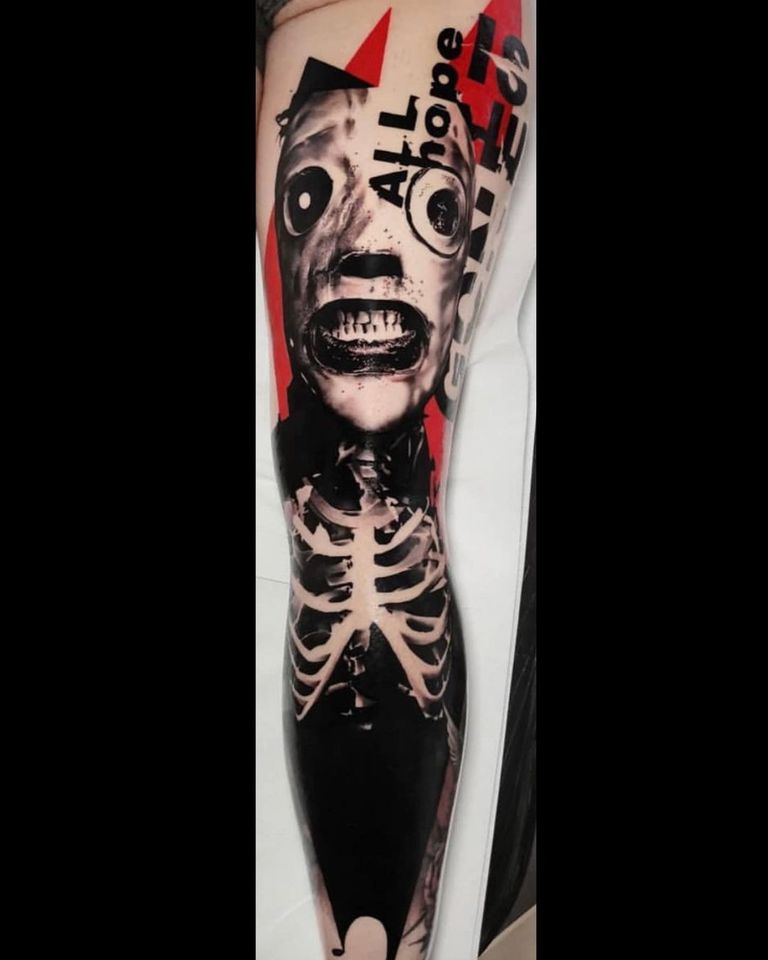
Trash polka is a tattoo style that cuts realistic images together with smears of black and red. The images are usually photo-like faces, skulls, eyes or animals. Around them go brush strokes, splatters, hard geometric blocks and typewriter lettering. The palette is black and red. Volko Merschky and Simone Pfaff developed it at Buena Vista Tattoo Club, the studio they opened in Würzburg, Germany, in 1998.
Summary
- Red goes in as a few large, flat shapes, not as fine detail.
- The style needs room, so most pieces are sleeves, thighs, ribs or backs.
- It’s hard to add to later, so plan the whole area at the start.
What makes a tattoo trash polka
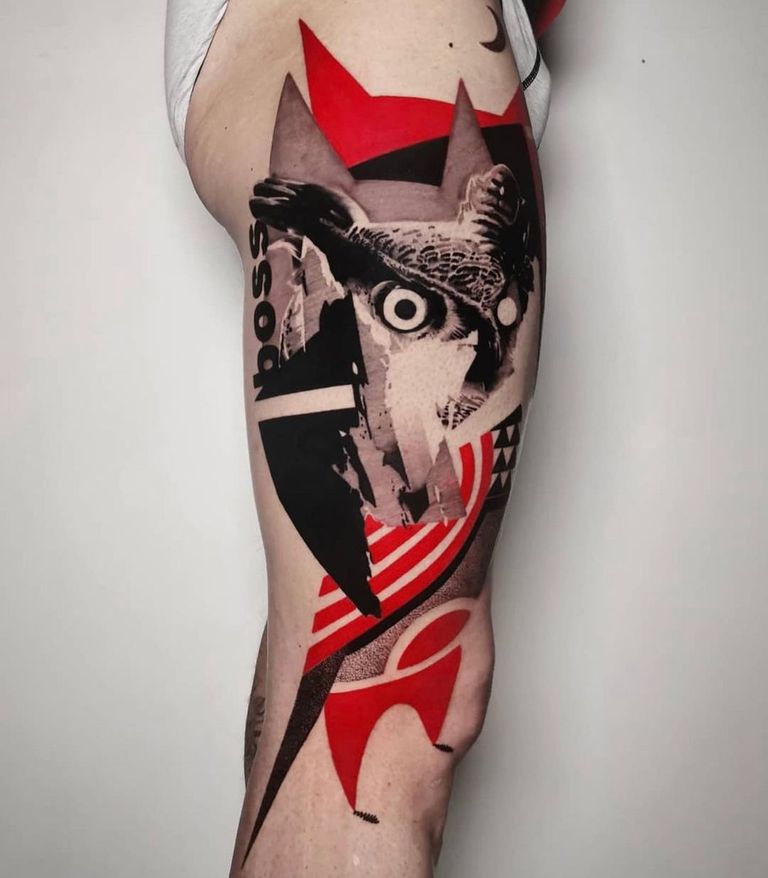
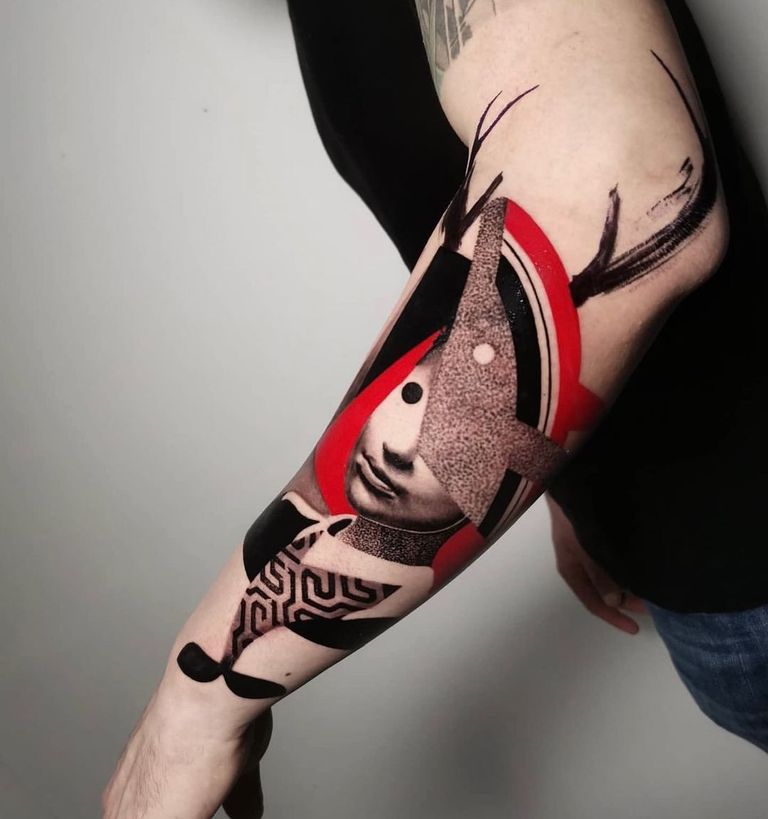
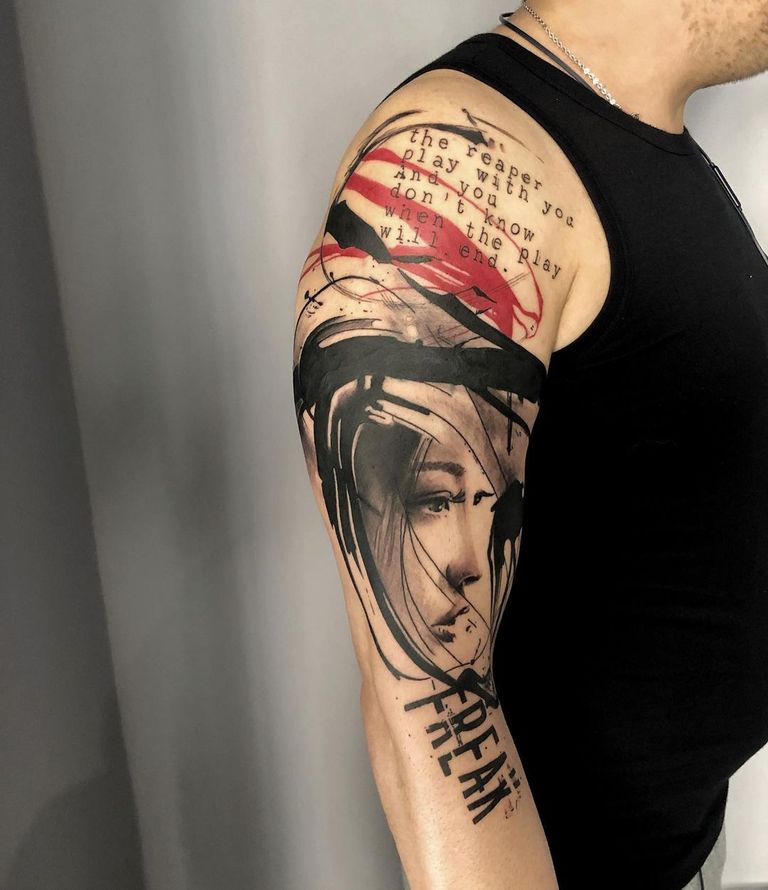
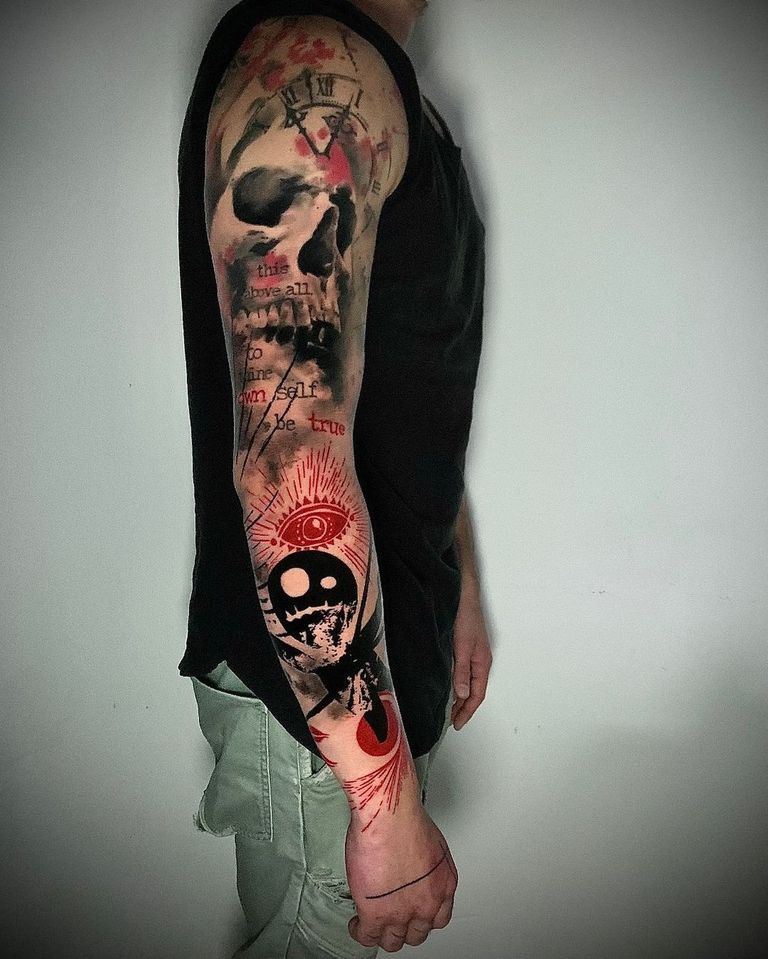
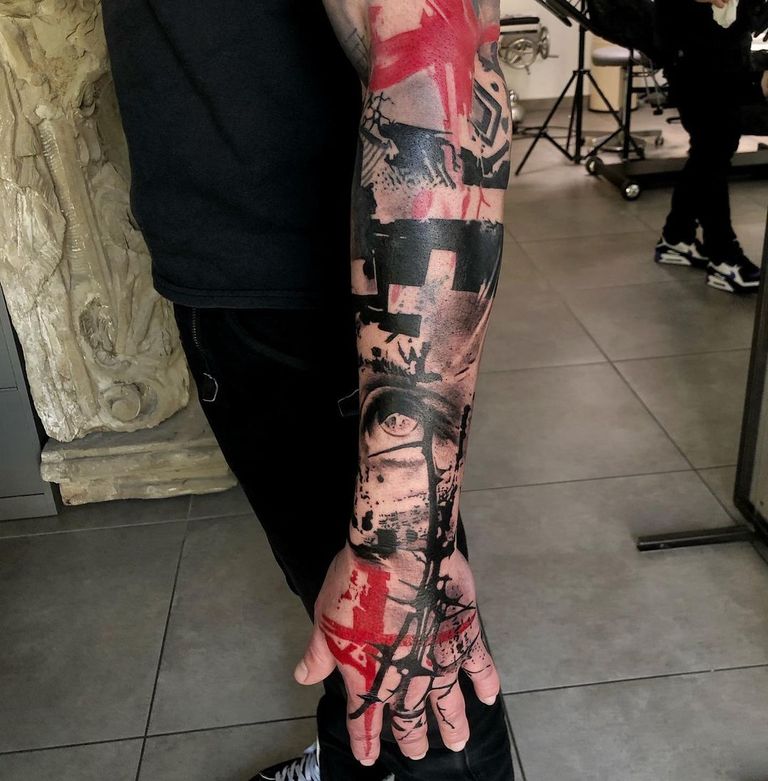
A trash polka tattoo is built from two layers. The first is realistic: a face, a skull, an eye, a clock. The shading uses the techniques of realism tattooing, but the image rarely appears whole. Faces are half covered, sliced by black bars or faded into bare skin.
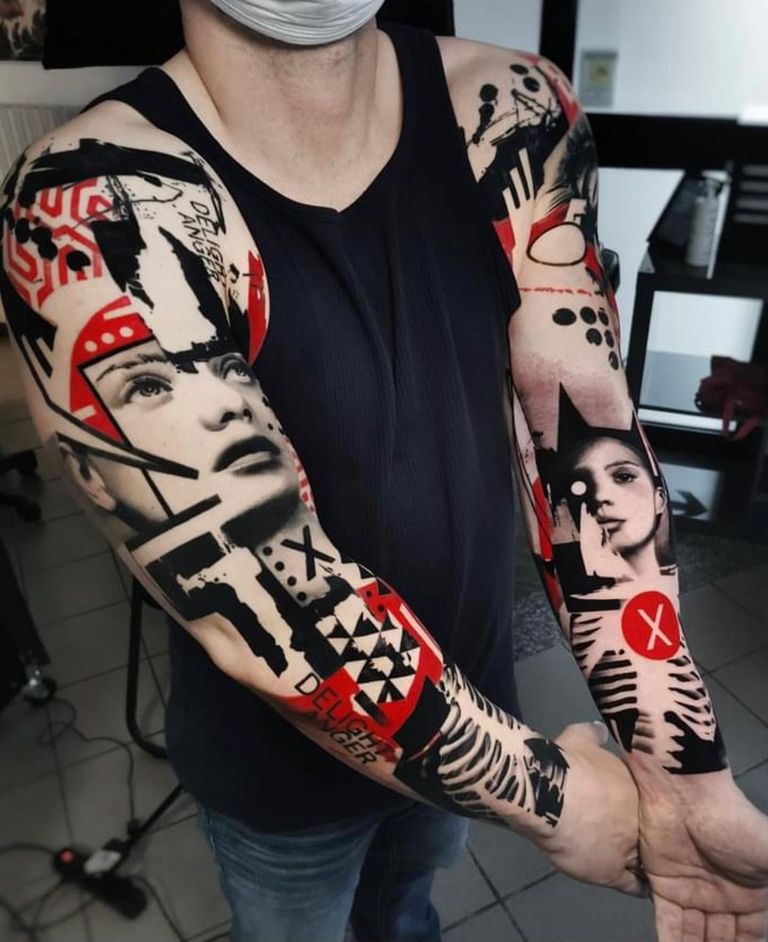
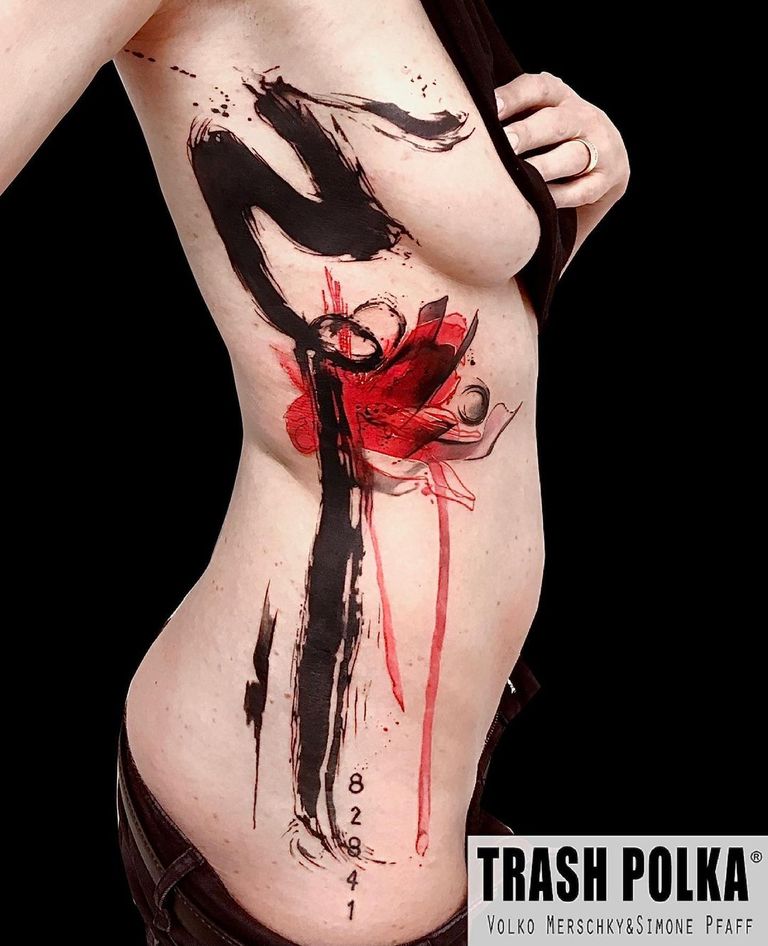
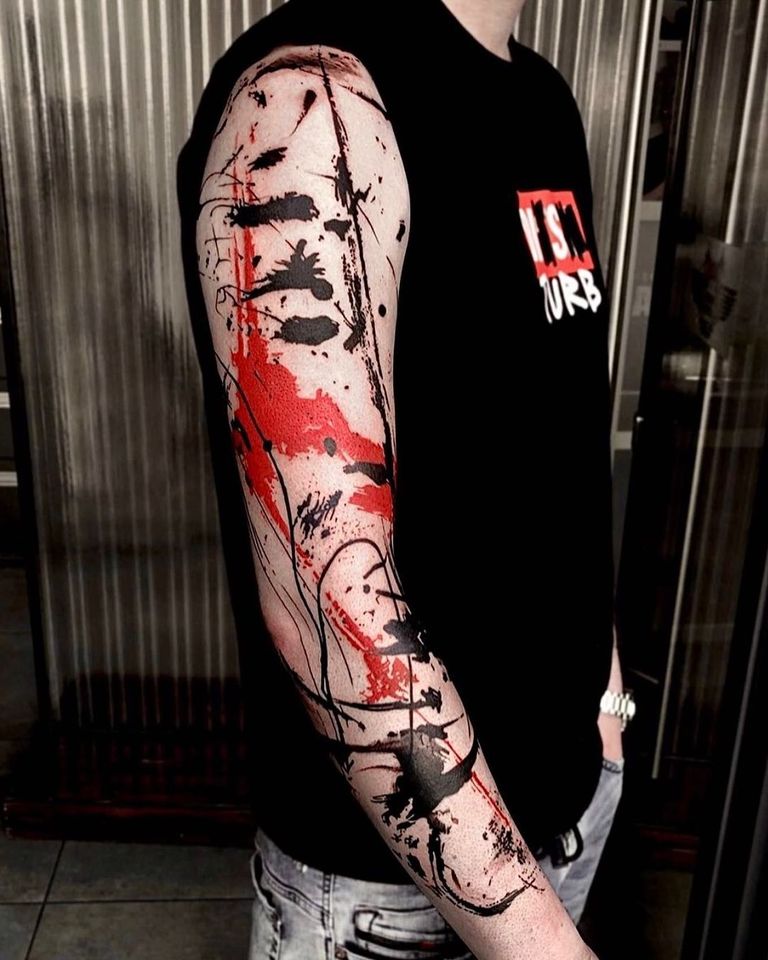
The second layer is graphic, and it’s what people notice first. Thick brush strokes run along the arm. Splatters look like flicked paint, and red circles and stripes sit on top of the image. Lettering is common, sometimes with words crossed out. The result reads like a torn poster.
The images often don’t obviously belong together, and that’s on purpose. They’re chosen for mood, not for fixed symbols. The founders’ recurring themes are life, death and the passing of time.
Why black and red
Black carries the structure: the shading, the strokes, the type. Red is the accent. It’s used loud and flat, in a few large shapes that pull your eye across the piece. Two colors against bare skin keep the contrast high.
Where trash polka comes from
Trash polka started in Würzburg, in northern Bavaria, at Buena Vista Tattoo Club. By 2010, tattoo magazines across Europe and beyond were covering the founders. Through the 2010s, artists worldwide took up the look.
What the name means
The founders first called it Realistic Trash Polka. “Realistic” is the photo-real imagery. “Trash” is everything else: the strokes, smears, shapes and lettering. “Polka” is the dance music, not polka dots. Merschky said the elements come together like notes into one piece.
How trash polka ages
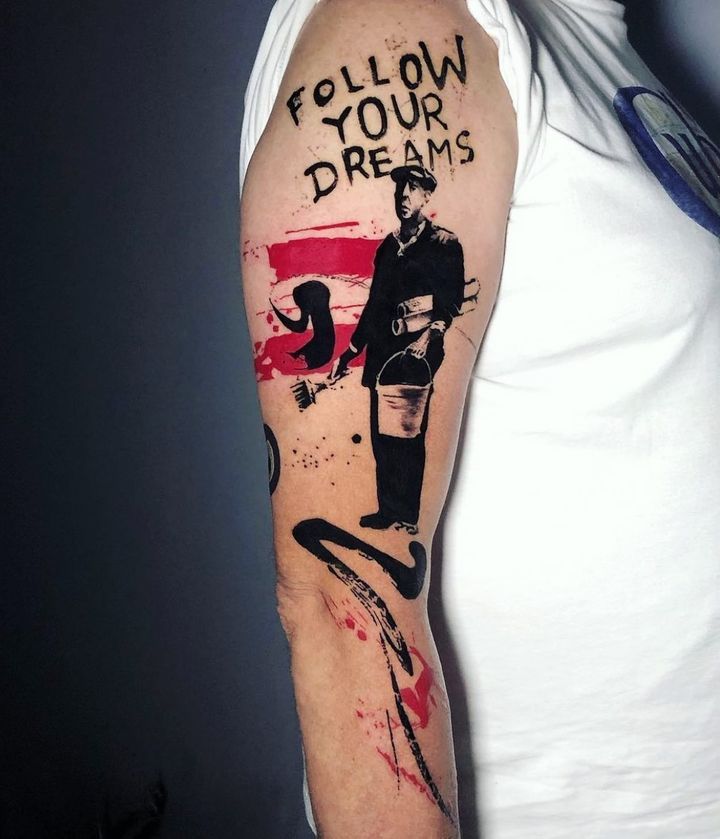
Black is the most stable tattoo pigment. Red softens sooner, especially in the sun. Red in large, solid shapes stays clearly red as it softens. Red in thin lines or small details fades toward pink, and the piece goes flat.
The black needs space too, because gaps of bare skin narrow over time. A design packed tight with black can blur into a dark mass. Fine grey shading and small type soften first, so ask for lettering large enough to stay readable. Sunscreen on the healed piece slows the red’s fade.
Red also causes more allergic skin reactions than any other tattoo color. If you’ve reacted to red ink before, tell your artist. See a doctor if a red area stays itchy, raised or swollen after it should have healed.
Sizes and placements that suit it
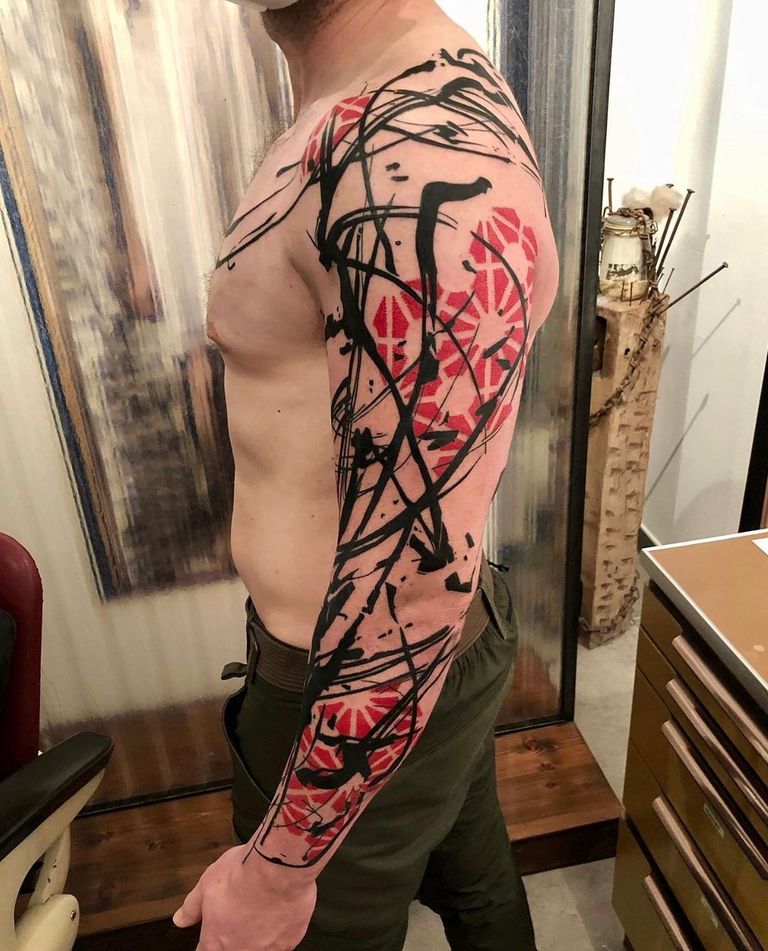
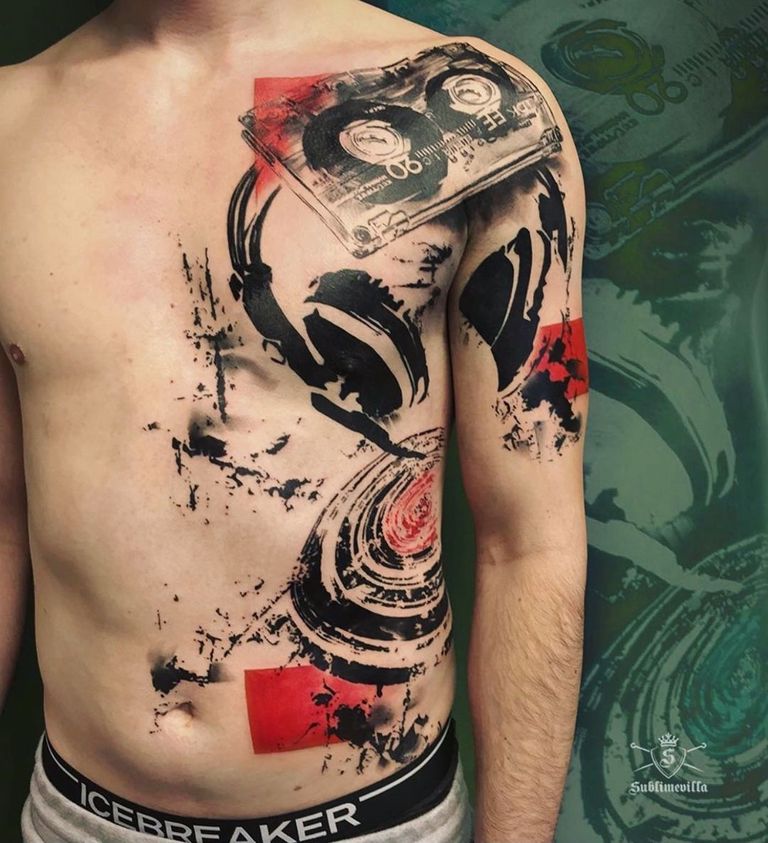
Trash polka needs room. A collage only works with several elements, and the realistic parts need size to hold detail. Most pieces are sleeves, thighs, ribs, chest panels or backs. The brush strokes look best running along the body. A palm-sized piece usually ends up as one image with a red smear behind it.
Adding to a trash polka tattoo later
This is harder than with most styles. A trash polka piece is composed as one image, with the red placed to balance the black. A new section added years later has to line up with healed, softened work. A different style next to it rarely works either, because the red pulls attention. If you might want a full sleeve, plan it now and tattoo it in sessions. To extend a piece, go back to the artist who did it.
The heavy black strokes can hide an old tattoo, so trash polka is sometimes used for cover-ups. The artist then has less freedom with the layout.
Trash polka vs realism, blackwork and watercolor
Japanese and traditional pieces are often black and red too. What makes it trash polka is the collage.
- Realism aims for a complete image. Trash polka interrupts it on purpose.
- Blackwork is black only and needs no realistic image.
- Watercolor tattoos use soft, blended colors. Trash polka strokes are hard-edged.
Choosing a trash polka artist
Trash polka asks for two skills at once: clean realism and a balanced layout. Pick an artist whose portfolio is mostly trash polka. Look for healed photos to see how their red holds up.
Expect the artist to design the piece. Speaking to Die Welt in 2010, the founders said they only tattoo their own designs, and many specialists work the same way. Bring a theme, the words you want and any photos that matter. Leave the composition to them. Then agree on the scope:
- Will you design the whole area now, even if we tattoo it in sessions?
- How big will the type be?
- How will you keep the red in large shapes?
For references, browse trash polka tattoo ideas. Then bring an artist from the artist finder a theme and your words, and let them compose it.