Ignorant Style Tattoos: Meaning, Origins and How They Age
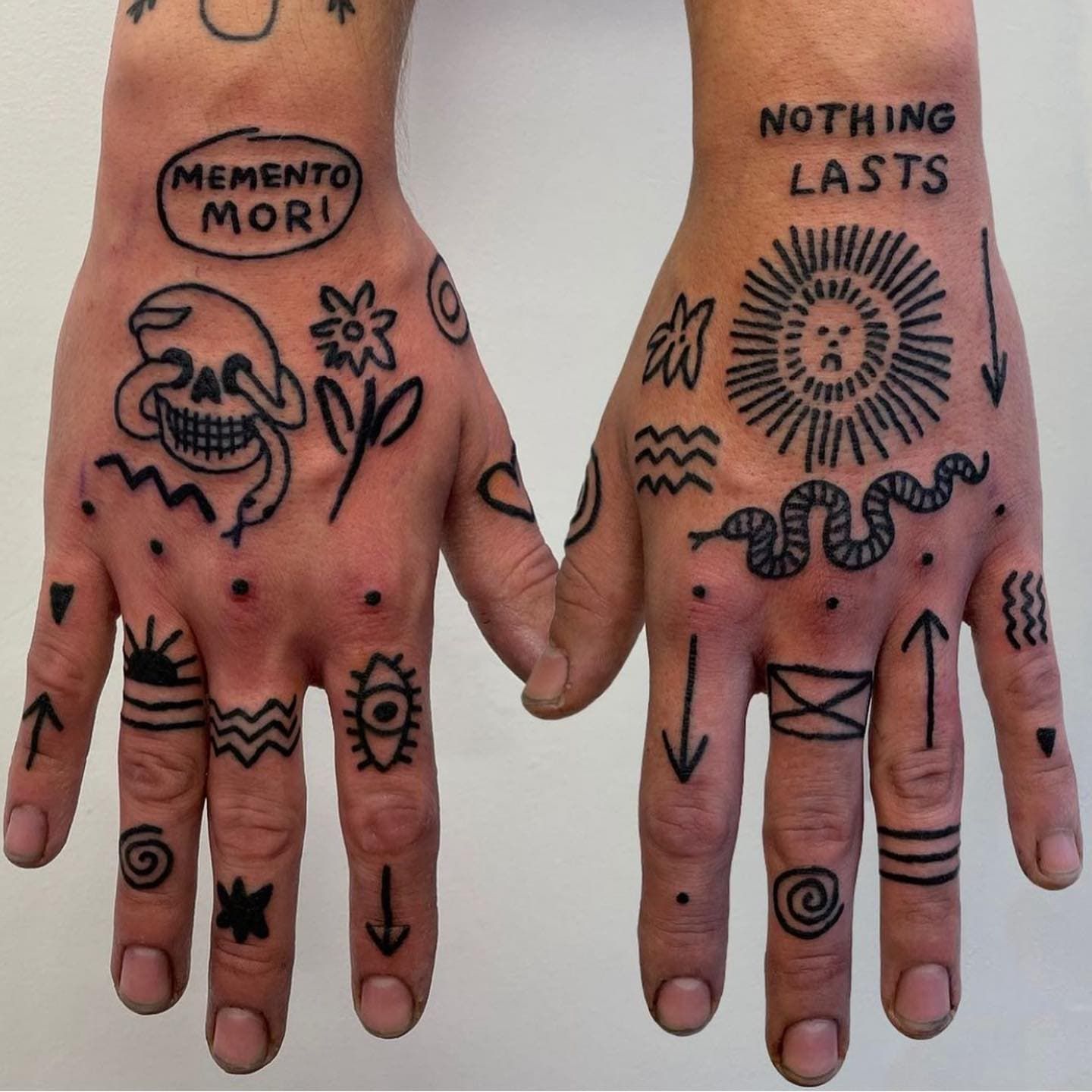
What makes a tattoo ignorant style, why it’s called that, how Fuzi UV TPK took it from Paris graffiti to skin, and how thin black lines age.
Related galleries
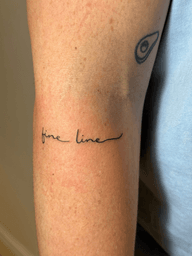
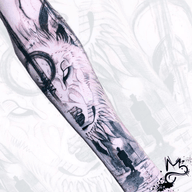
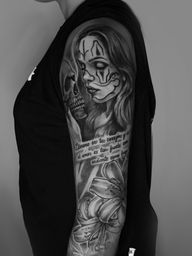
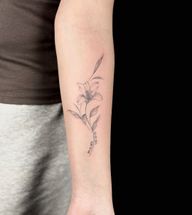
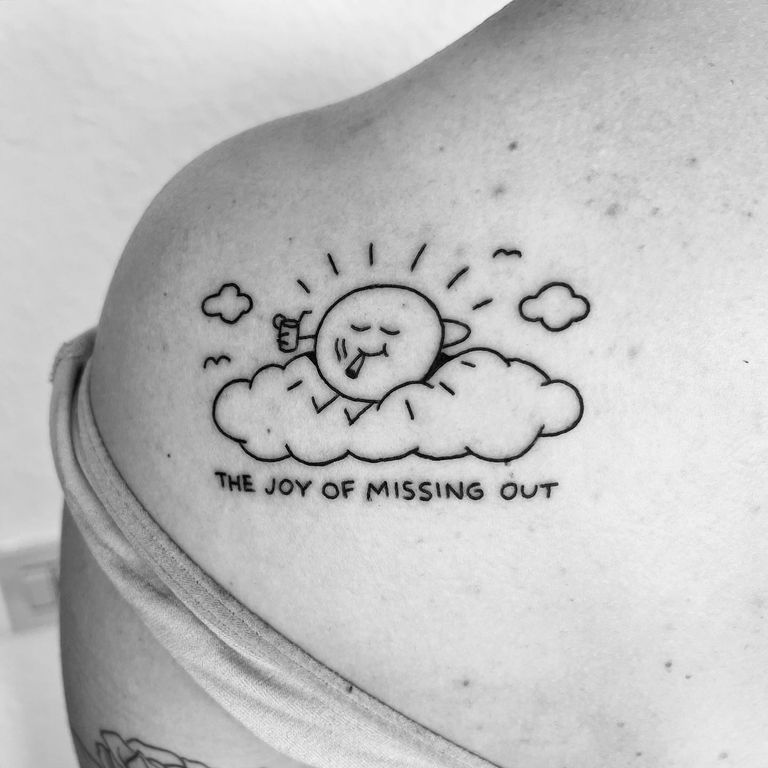
Ignorant style tattoos are drawn to look untrained on purpose. Expect plain black lines of one weight, flat cartoon figures, lopsided hand lettering and a dry or bleak joke. Most are small pieces picked from flash. The name comes from Fuzi UV TPK, a Paris graffiti writer who carried his “ignorant style” into tattooing.
Summary
- “Ignorant” describes the naive look of the drawing, not the person who wears it.
- In good ignorant work the lines are clean and steady. The naivety sits in the drawing and the captions.
- Most pieces are small and stand alone, so the style turns up often in patchwork sleeves.
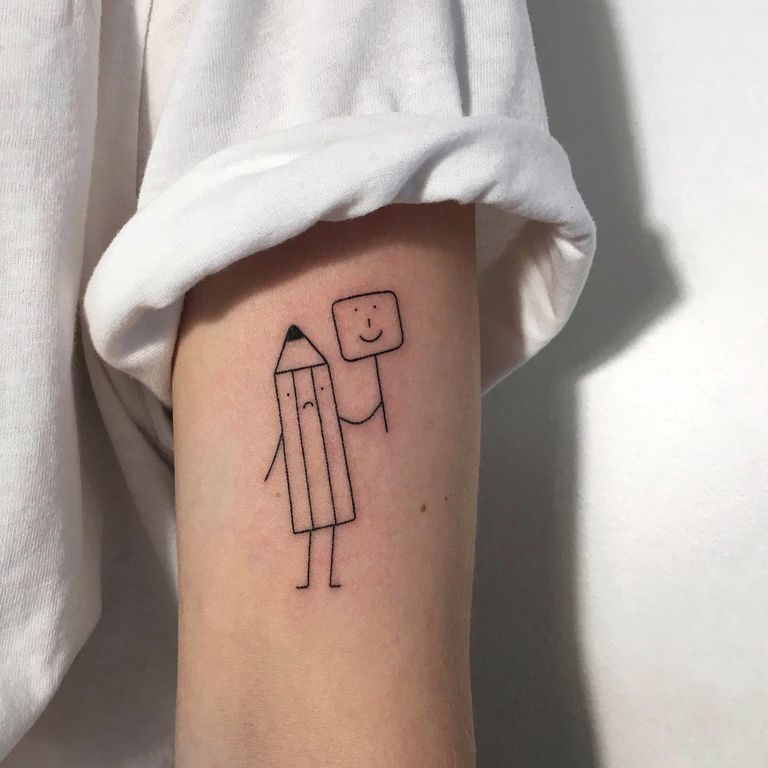
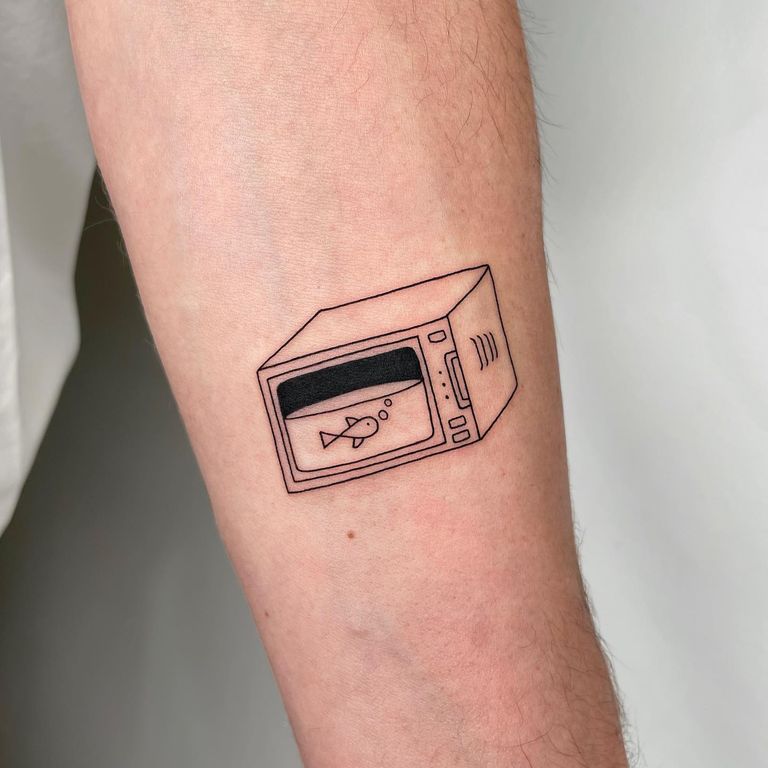
What does ignorant mean in tattooing?
“Ignorant” describes the drawing. Fuzi used the word for a naive, childlike way of painting. In a 2012 interview with Complex, he put it in one line: “Ignorant Style is a reaction to the standardization of graffiti.”
On skin, the reaction is to the polish of modern tattooing: smooth shading, perfect symmetry, photo-real portraits. An ignorant piece is meant to look like a doodle from the back of a school notebook.
The style divides tattooers. The usual complaint is that it gives cover to bad work, and sometimes it does. Fans answer that the clumsiness is a choice. You can see the difference on skin. A naive drawing by someone with steady hands has even lines. A tattoo by someone who can’t pull a line yet has wobbles, blowouts and patchy black.
What makes a tattoo ignorant style
There’s no rulebook, but most ignorant tattoos share these traits:
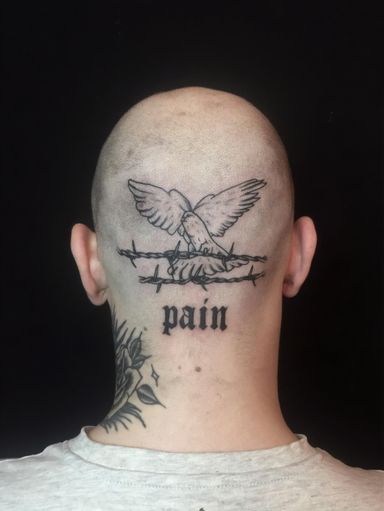
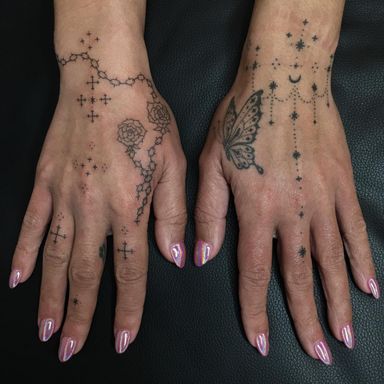
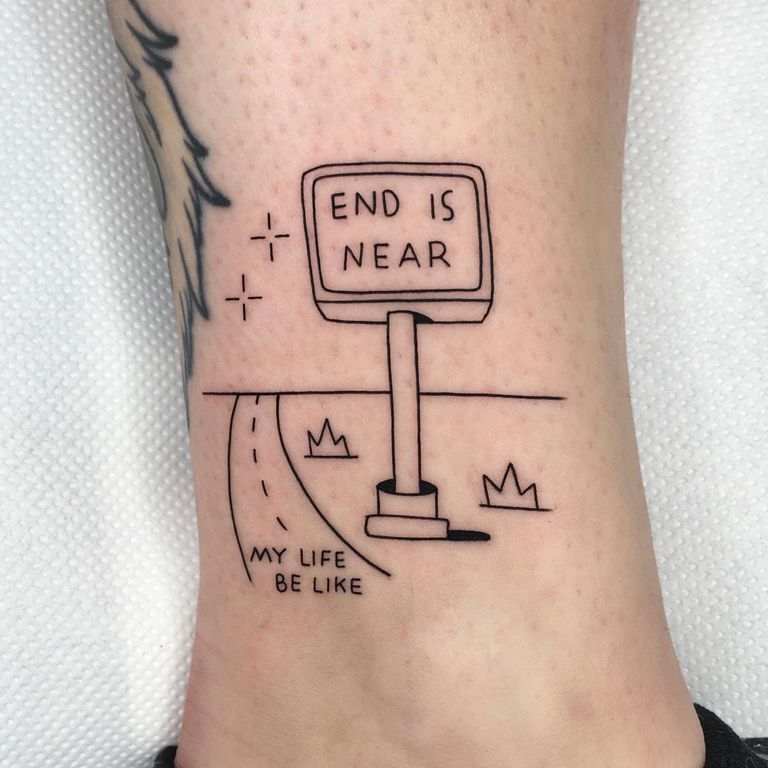
- Thin black lines in one weight, with little or no shading. Some artists add a solid black shape or a few flat spots of color.
- Flat drawings with odd proportions, dot eyes and everyday objects given faces: a sad pencil, a sleepy sun.
- Handwritten capitals that caption the picture, like “My life be like” under a sign reading “End is near”.
- Humor instead of sentiment, usually dry and often at the wearer’s own expense.
- Small, standalone pieces. Many are flash, drawn in advance for clients to pick from.
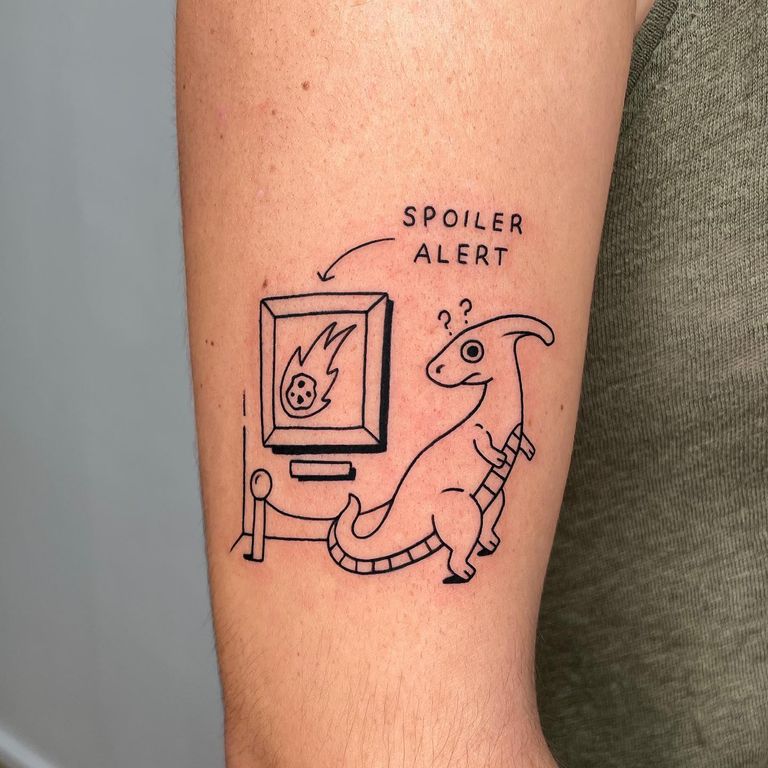
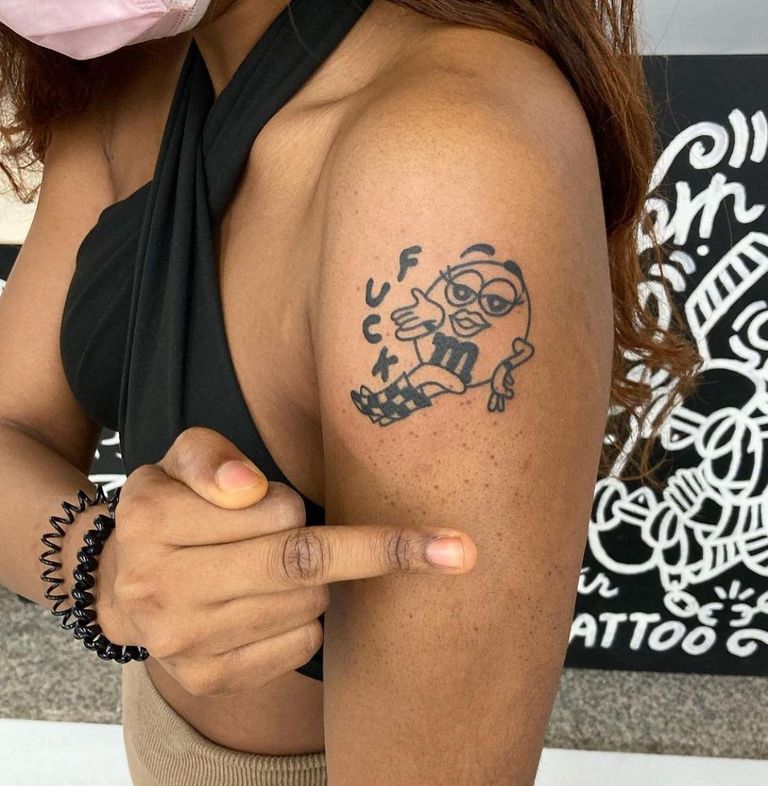
Where ignorant style came from
The name and most of the look trace back to Fuzi. He grew up painting trains and subways around Paris, and in the 1990s he started painting in the childlike way he called “ignorant style”. He told Vice that the style made him famous in graffiti.
Tattooing came next. Fuzi taught himself and kept a graffiti writer’s habits, working mostly in black line with short, punchy text. Through the 2010s tattooers across Europe and the US took up the look. You’ll also see it called naive or anti-style tattooing.
How it relates to patchwork sleeves and stick and poke
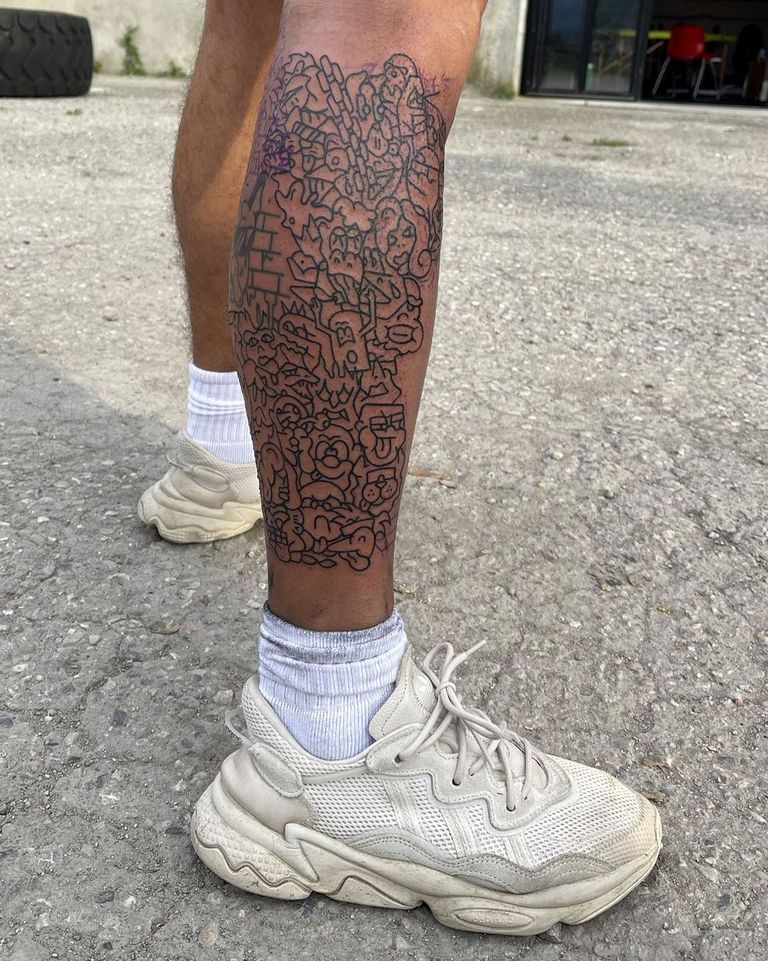
Ignorant pieces are small and self-contained, so they collect well. Many people add one at a time until an arm or leg fills up with separate tattoos and no background. That’s a patchwork sleeve, and it’s the most common way to build an ignorant sleeve. Browse patchwork tattoo ideas to see how the bare skin between pieces becomes part of the look. Some artists instead fill a whole calf with one dense crowd of characters.
Collecting small pieces is an old habit from American traditional flash, and the two styles sit well side by side. Both rely on clean black outlines and simple shapes.
Ignorant style and stick and poke grew up close together. The hand-poked tattoos of punk and skate scenes were small, rough and funny long before anyone called them ignorant. Some artists poke by hand and others use a machine. A machine line comes out crisper. A poked line has a softer, dotted edge, so say which one you’re after.
It also overlaps with blackwork, which covers any tattoo done only in black ink. Ignorant pieces mostly stay in open line, while blackwork leans toward heavy fills.
How ignorant tattoos age, and where to put them
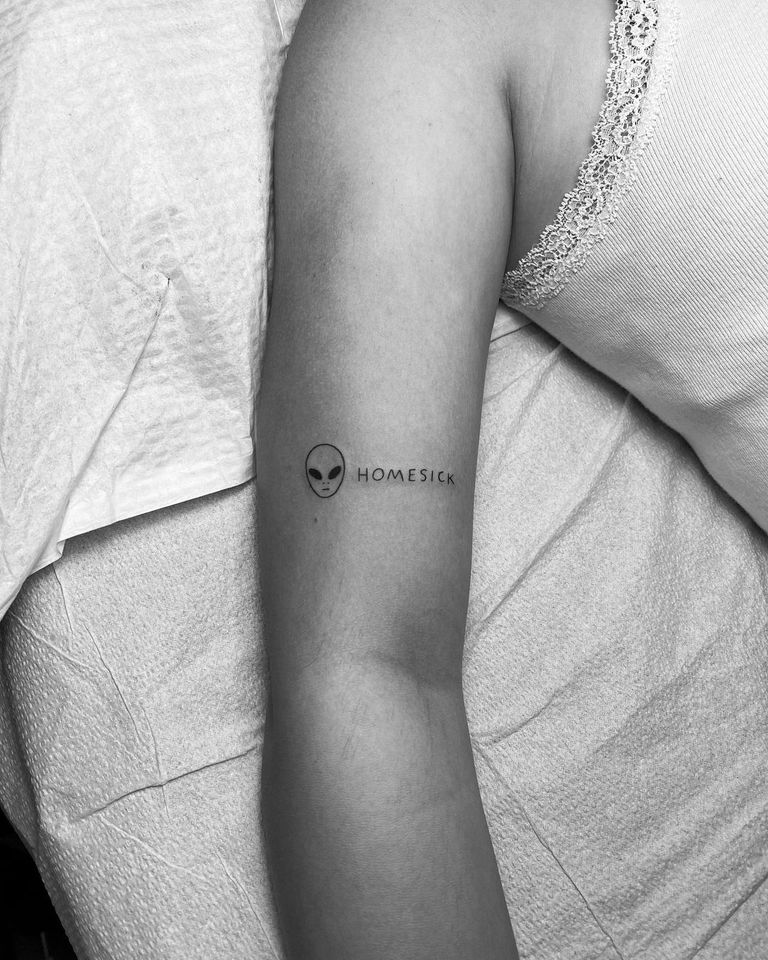
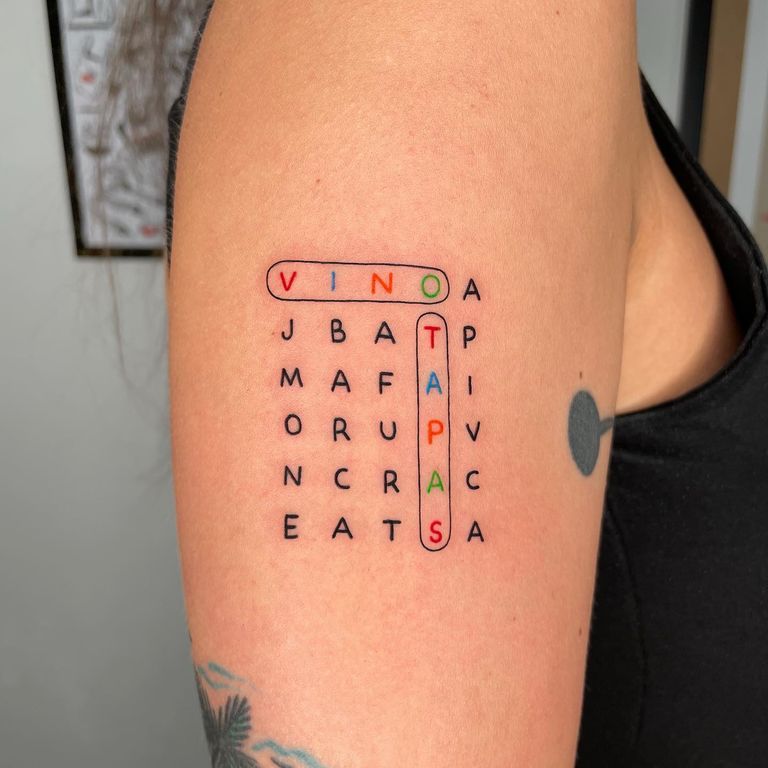
Thin single-weight lines show age more than bold ones, because there’s no shading to hold the shape. Small lettering suffers first, as tight letters drift into each other.
- Size lettering up and leave room inside letters like a, e and o.
- For anything tiny, ask for a slightly heavier line. It holds up better than a hairline.
- Forearms, upper arms, calves and the shoulder blade suit small pieces and leave room to add more.
How to choose an ignorant style artist
Look past the jokes at the lines. They should be even, the black fills solid and the lettering straight where it’s meant to be. Ask for healed photos of small lettering.
Decide whether you want flash or a custom piece. Some artists sell each flash design only once. Others will draw a new joke around your idea. Many artists in this style only tattoo their own drawings, so don’t bring another artist’s drawing to copy.
To find someone you can book, browse ignorant style artists in Paris, where the style began.
If you have a joke or a drawing in mind, put the exact words in your description in the Tattoodo artist finder, since the lettering is usually part of the design.