Chicano Tattoos: What the Imagery Means and Where It Comes From
Fine single-needle lines, soft black and grey and Old English script: where Chicano tattooing comes from, what its imagery means and what to ask your artist.
Related galleries
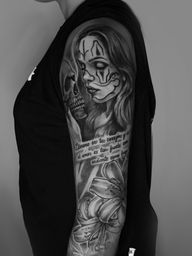
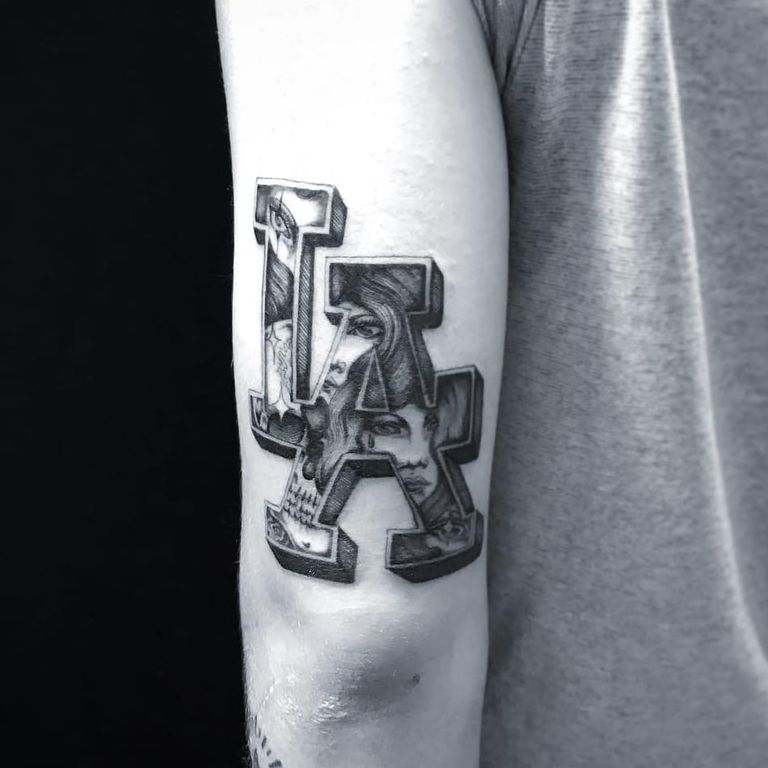
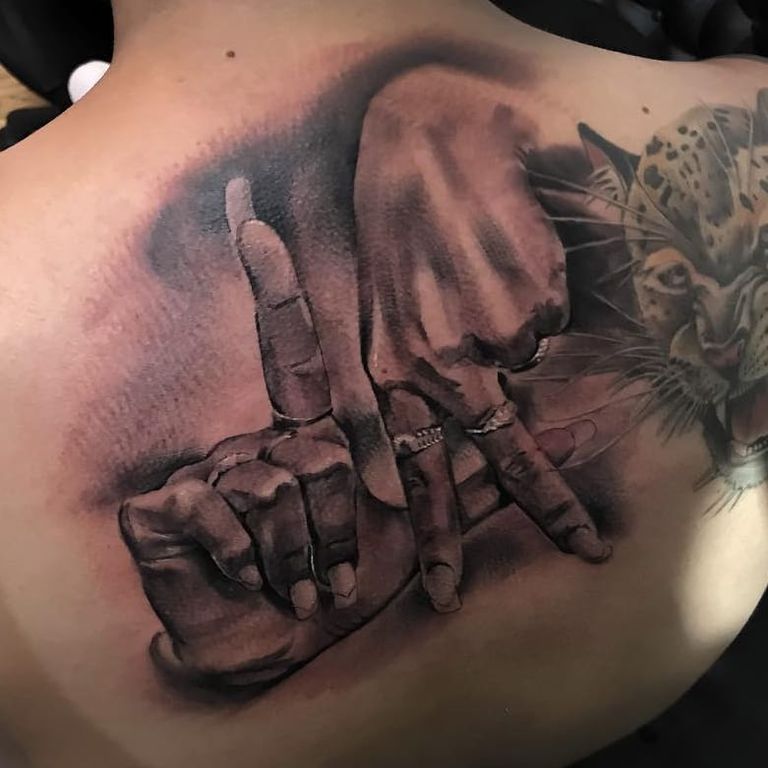
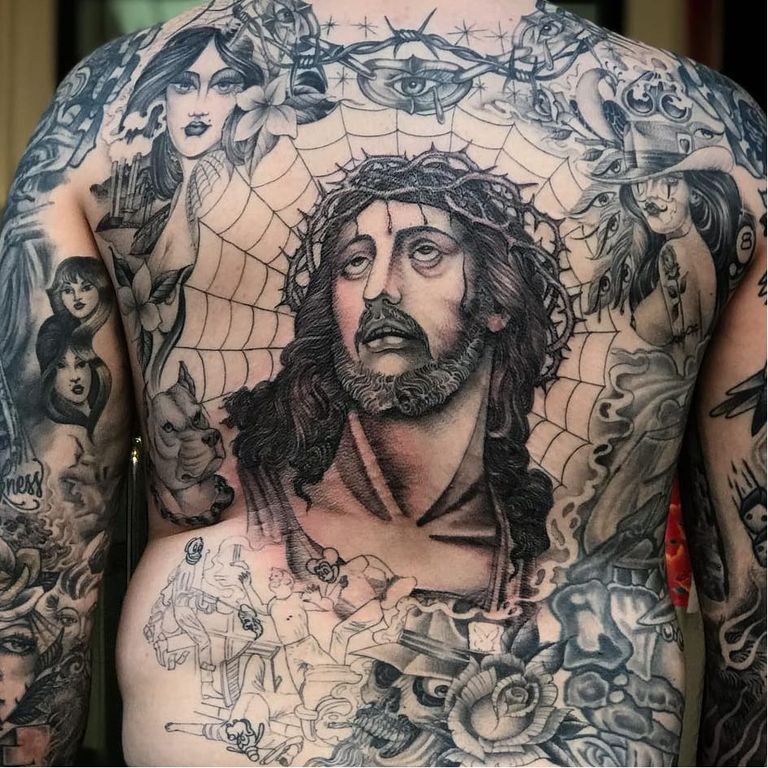
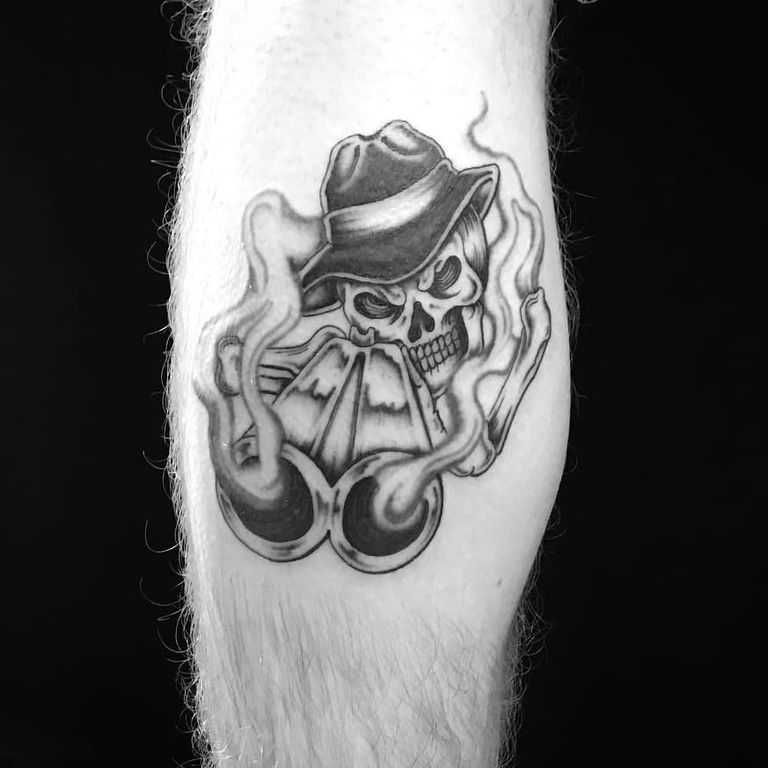
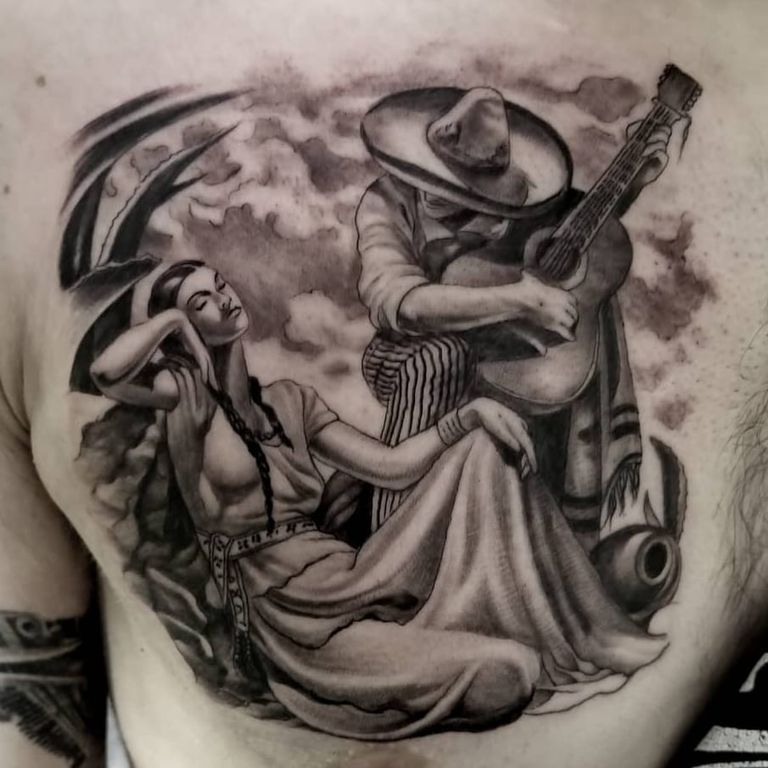
Chicano tattoos are black and grey tattoos with fine single-needle lines and soft grey shading. Most have no color at all. Common subjects are the Virgen de Guadalupe, praying hands, clown-faced women (payasas), roses, lowriders, portraits and Old English script. The style comes from Mexican American communities in Los Angeles. It runs from the pachucos of the 1940s to homemade prison tattoos in the 1960s and 70s.
Summary
- The fine lines and grey shading began in prison, where machines had one needle and ink was made from soot.
- Most of the imagery is about faith, family, loss and your neighborhood.
- Teardrops, three dots and the numbers 13 and 14 read as gang or prison marks.
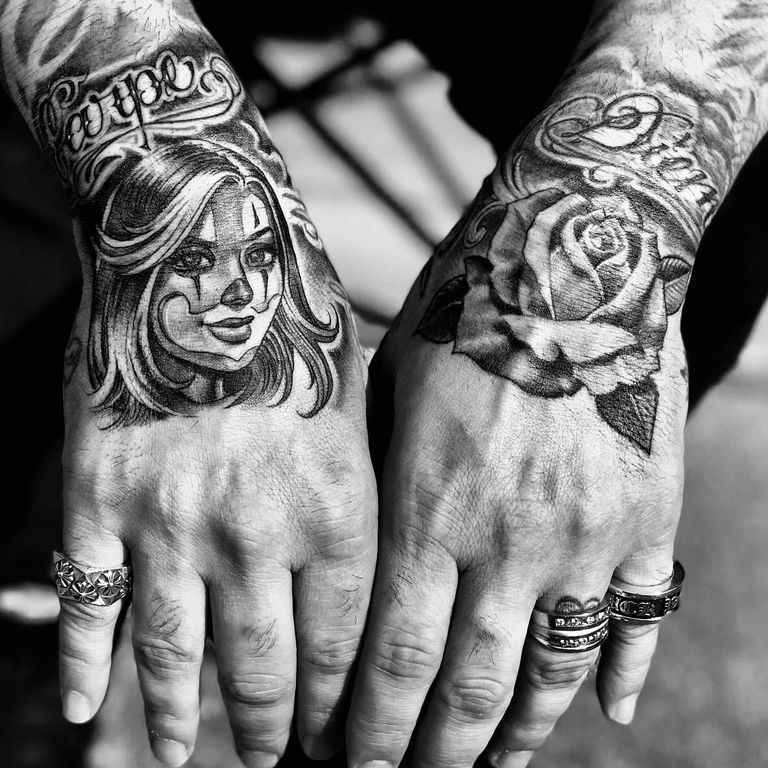
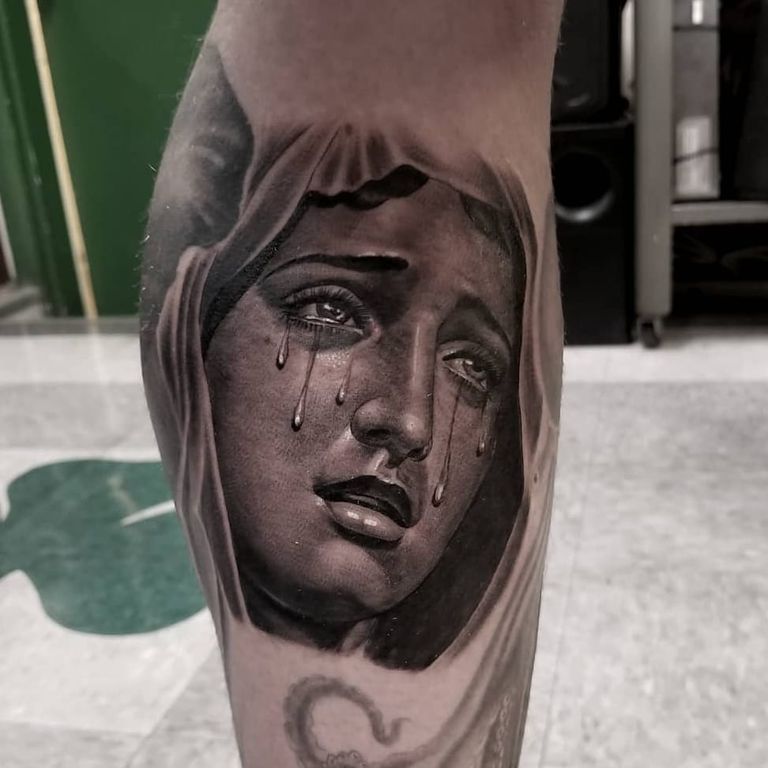
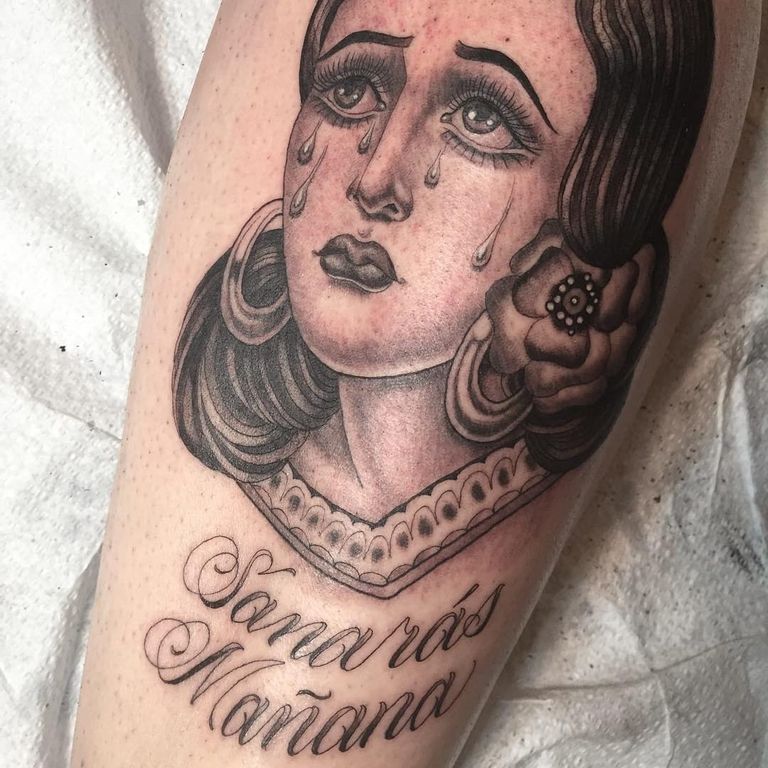
What defines a Chicano tattoo
Chicano work is outlined with a single needle or a very small group, so the lines are thin. They look drawn rather than painted. The shading is black ink thinned with water into smooth greys. Color is rare. When it shows up, it’s usually one accent, like a red rose.
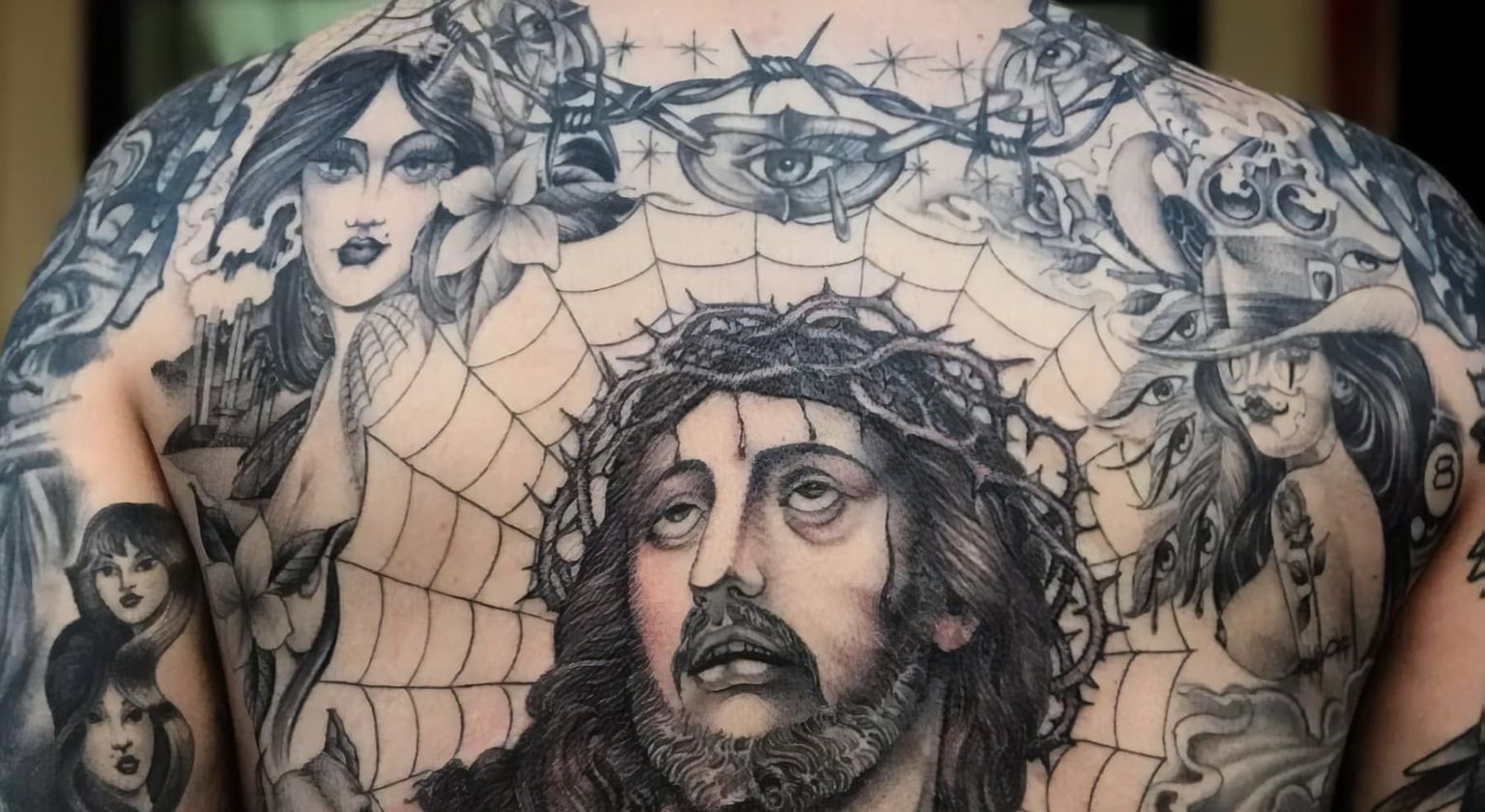
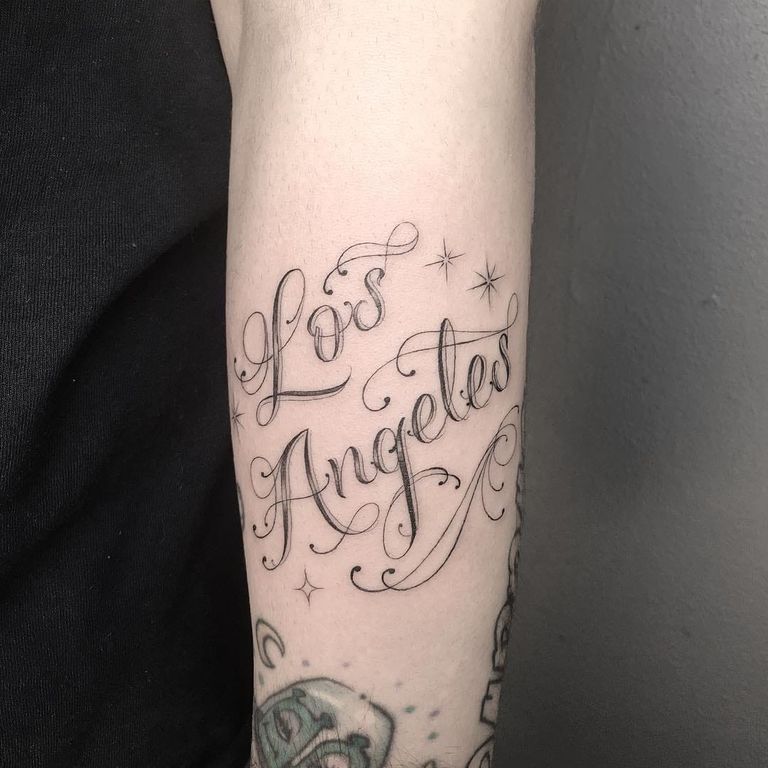
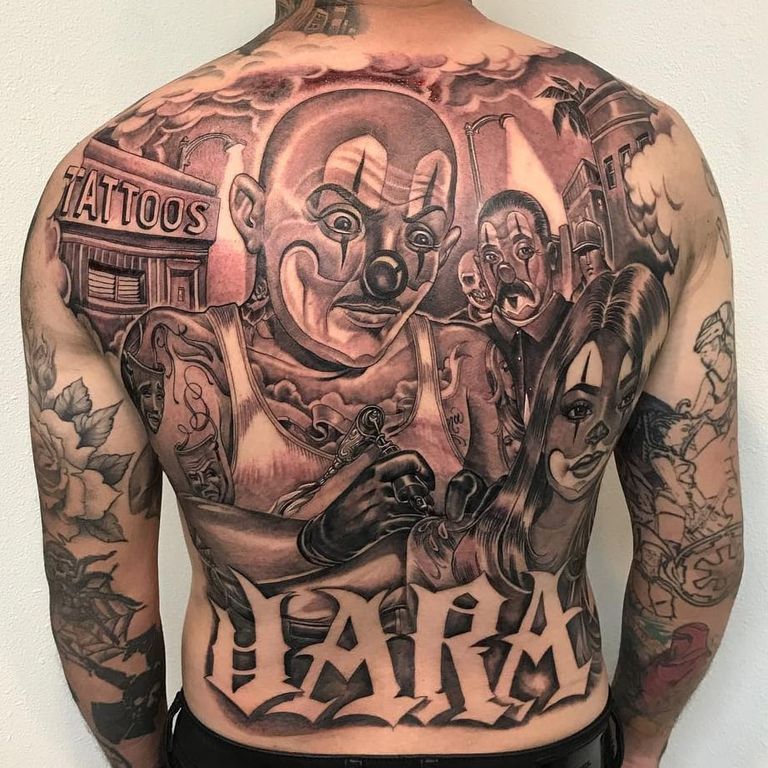
Lettering is the other half of the style. Old English and cursive script carry family names, neighborhoods and the names of the dead. It’s often tattooed large, across a stomach, chest or back. Several elements are stacked into one scene: a woman’s portrait, roses, a banner of script. The result often looks like a ballpoint drawing on skin.
Not every black and grey tattoo is Chicano, though. Chicano names a people and a culture. The imagery and where it comes from matter as much as the shading.
Where Chicano tattooing comes from
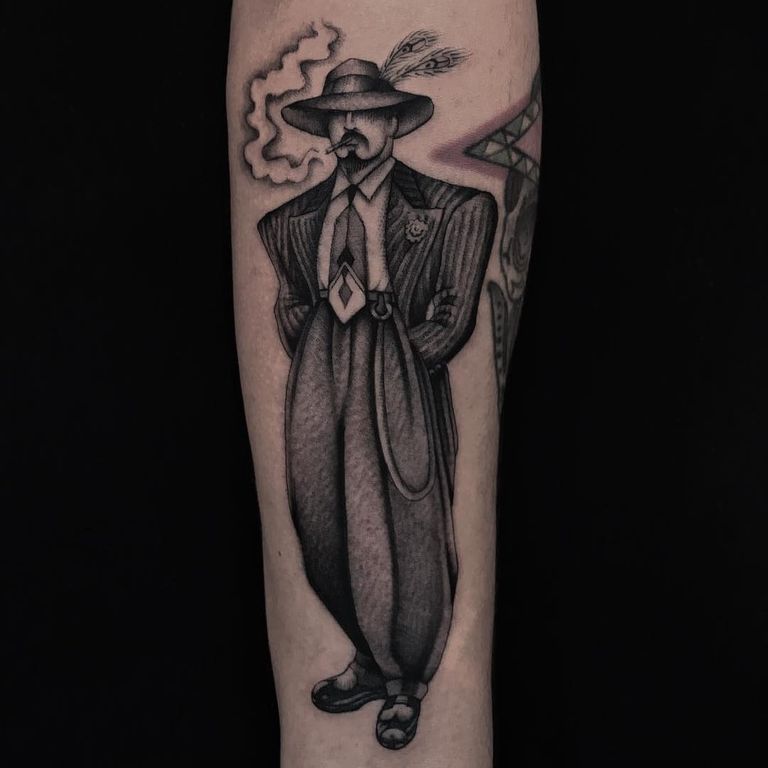
The pachucos were young Mexican Americans in 1940s Los Angeles. They wore zoot suits and spoke their own slang. Their mark was the pachuco cross: a small cross with short rays above it, often hand-poked between thumb and forefinger.
The technique was worked out in prison. Freddy Negrete, who did time in Folsom, told NPR that inmates built tattoo machines from pens, needles and tape-player parts. With no ink, they burned baby oil and mixed the soot with water. More water made a lighter grey.
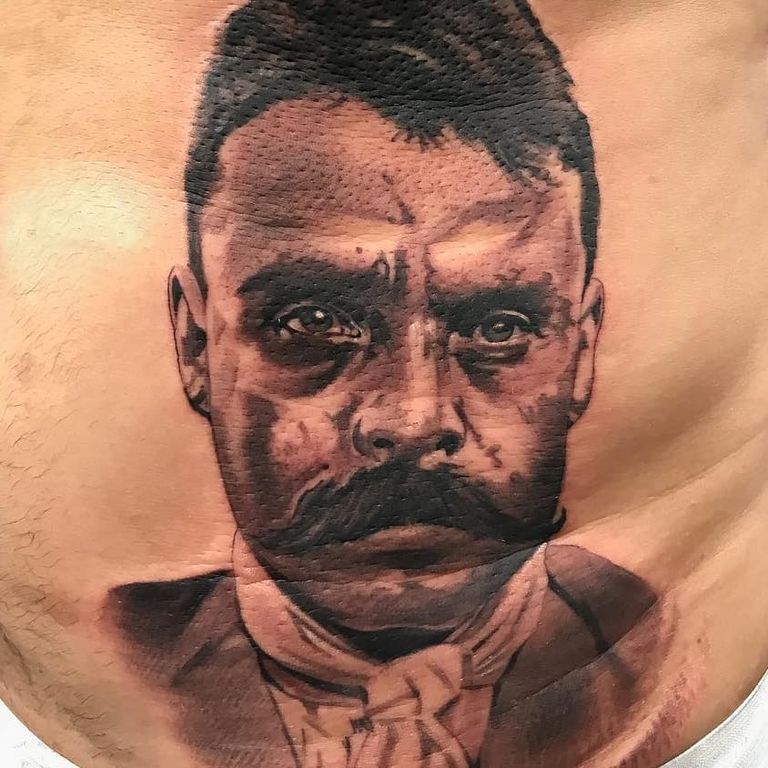
So the tattoos were black and grey because nothing else was available. The machines carried one needle, which meant fine lines. Chicano inmates asked for what mattered to them: Catholic imagery, Aztec symbols, Mexican revolutionaries, portraits of people they’d lost and lettering that said where they were from.
In the mid-1970s, Good Time Charlie’s Tattooland opened in East Los Angeles. Its customers wanted prison-style tattoos, and Charlie Cartwright and Jack Rudy built single-needle machines to deliver them. Negrete joined the shop in 1977. He has described himself as the first Chicano hired as a professional tattooer.
Later, West Coast hip-hop carried the look far beyond California. Black and grey realism grew out of it, and modern fine line tattooing owes much to its single-needle work.
What Chicano tattoo imagery means
These are the common readings, but a tattoo can mean something more personal.
The Virgen de Guadalupe and religious imagery
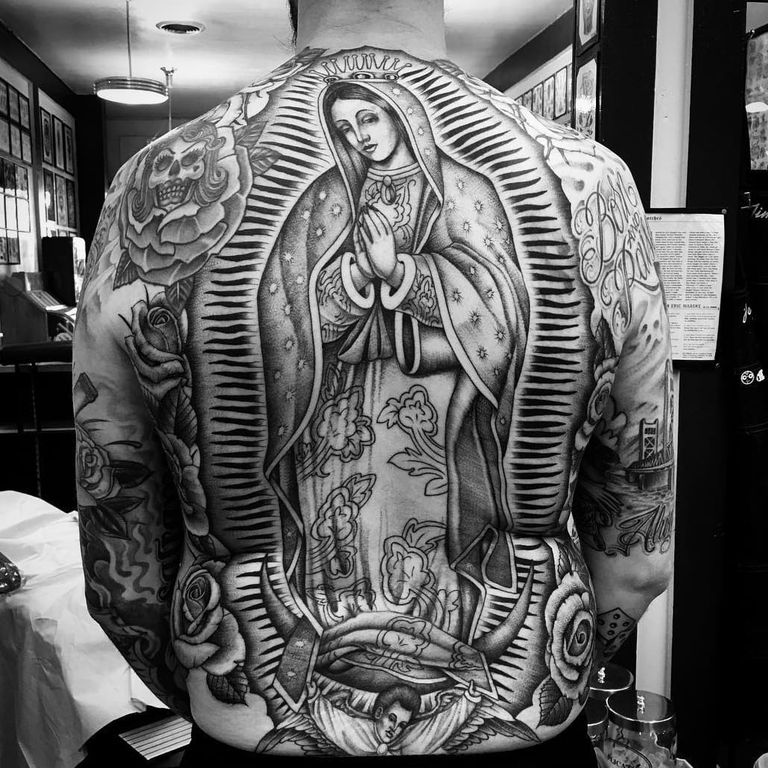
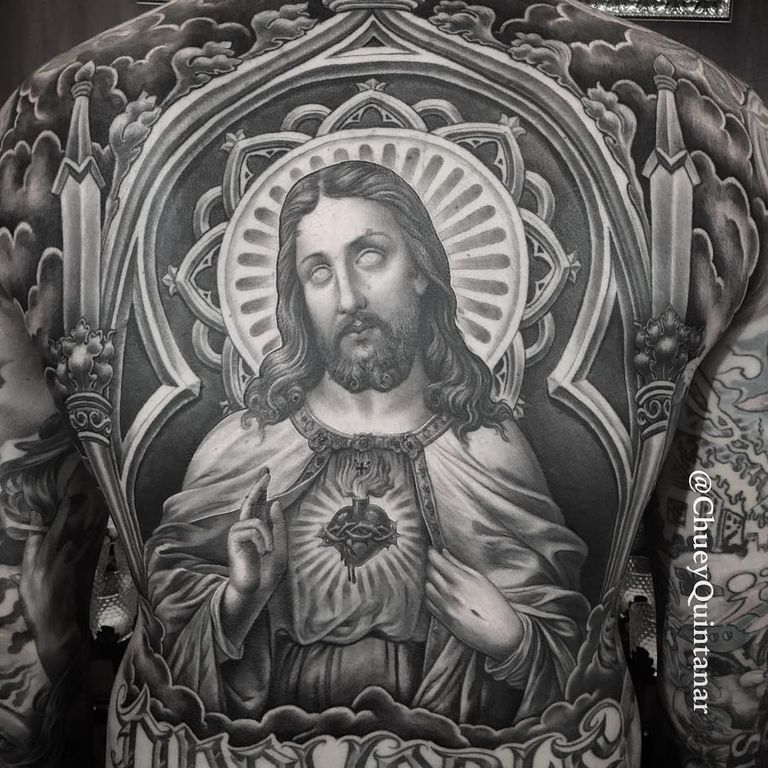
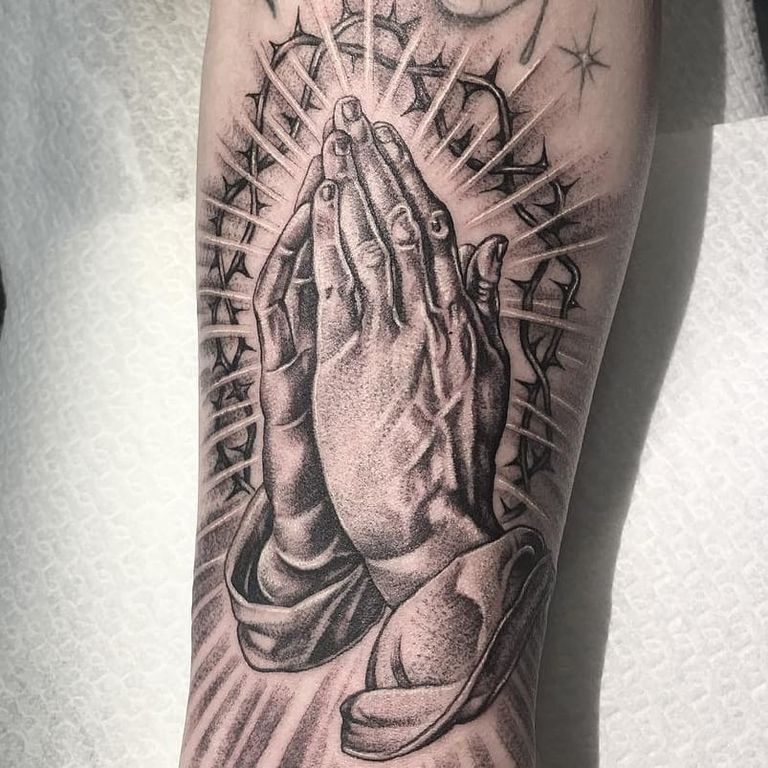
The Virgen de Guadalupe is a symbol of Mexican identity as much as faith. On skin she usually stands for protection and devotion, and she’s often tattooed across the whole back. Around her you’ll find Jesus, the Sacred Heart, rosaries and praying hands. These usually stand for faith, or for prayers for someone who has died.
Payasas and “smile now, cry later”
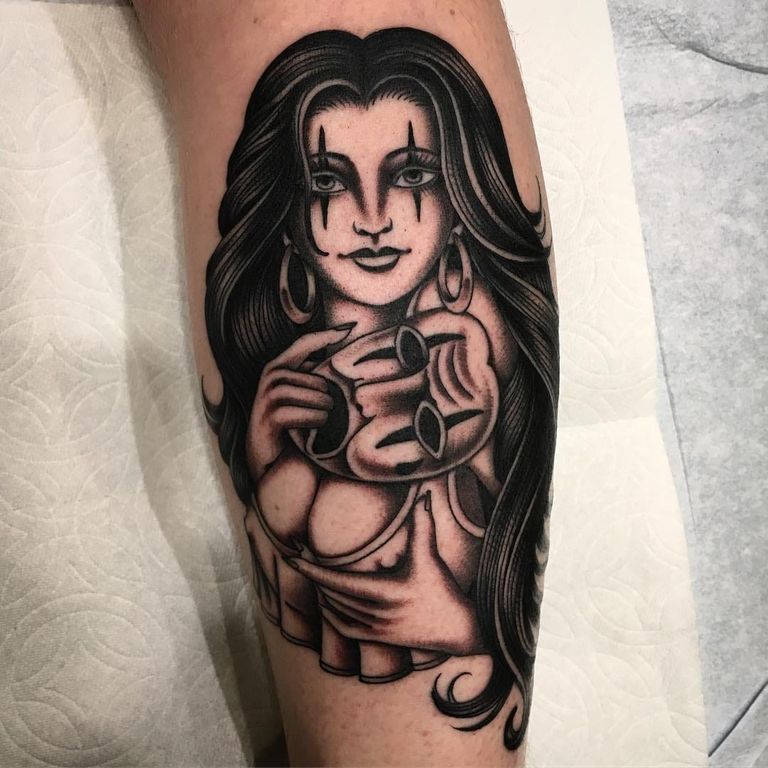
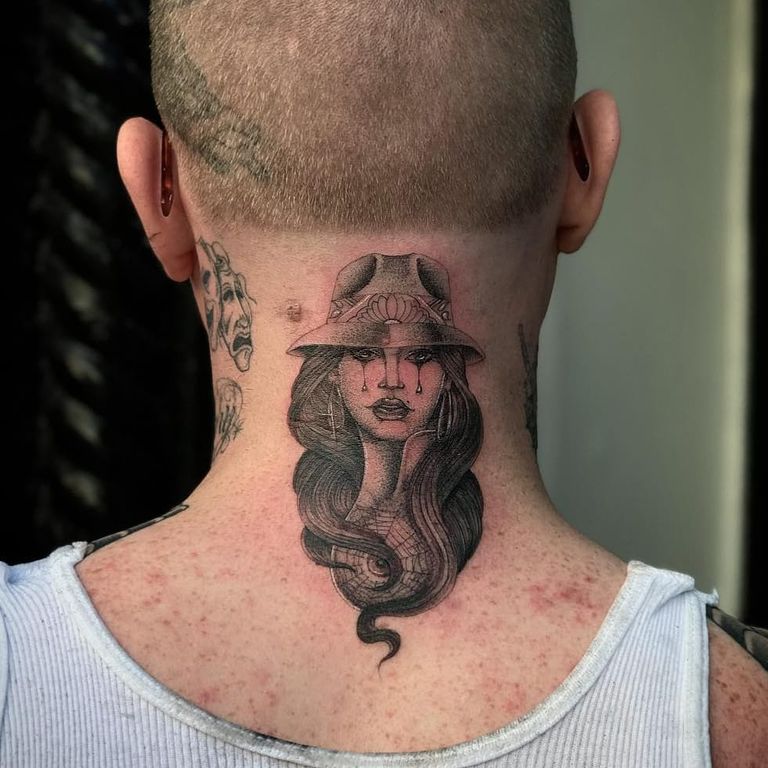
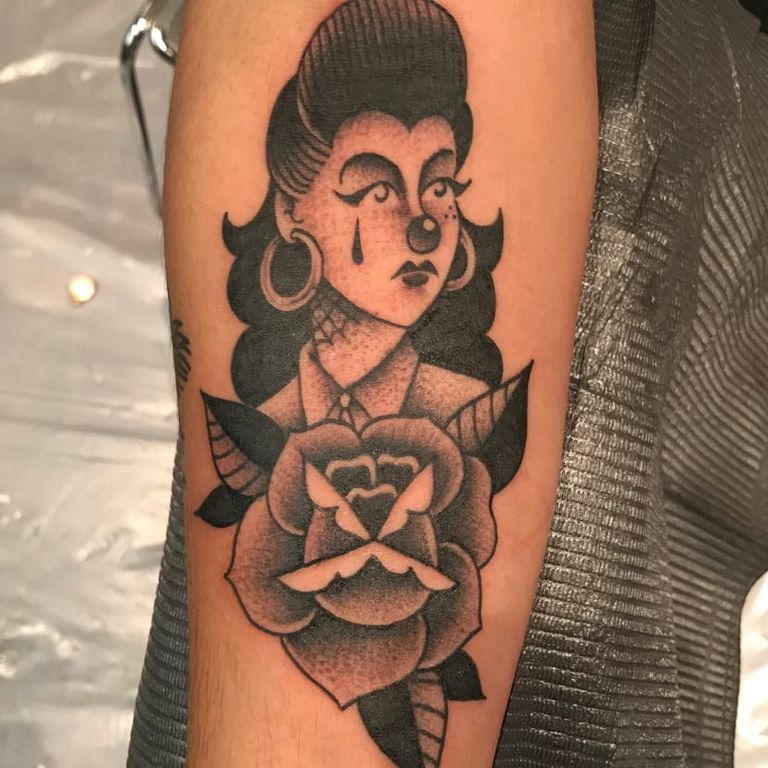
A payasa is a woman in clown makeup (payaso is the male form). She often comes with two theater masks, one laughing and one crying, and the phrase “smile now, cry later”. People read it two ways. Enjoy life now and pay for it later. Or keep a brave face over the grief underneath.
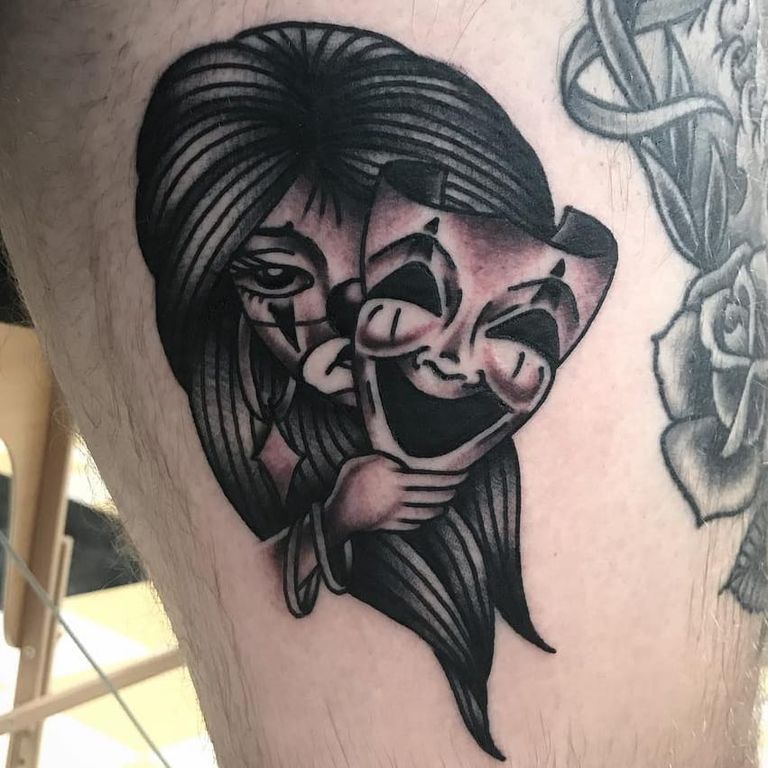
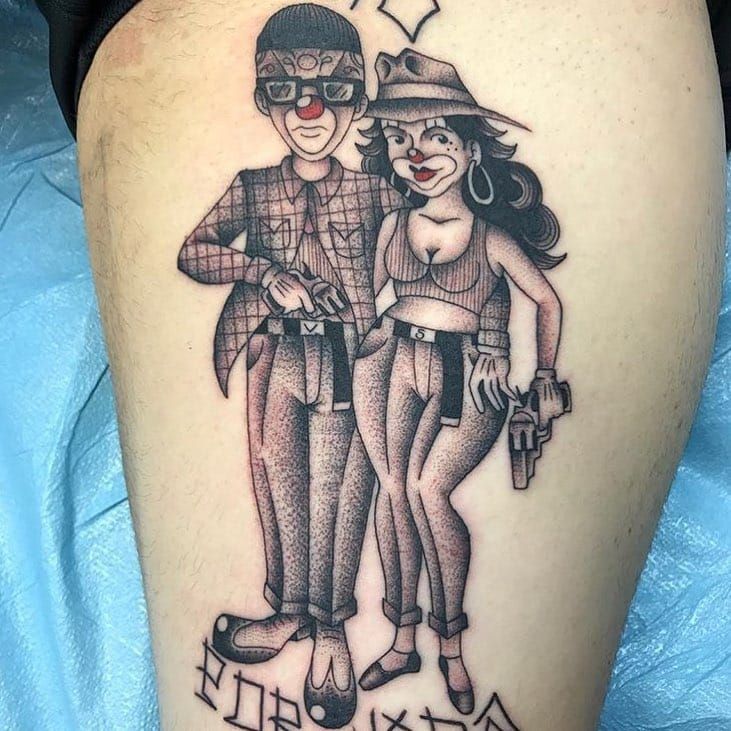
Lady heads, roses and portraits
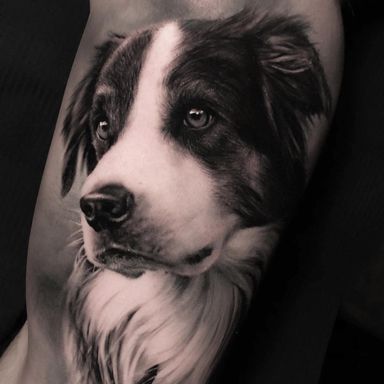
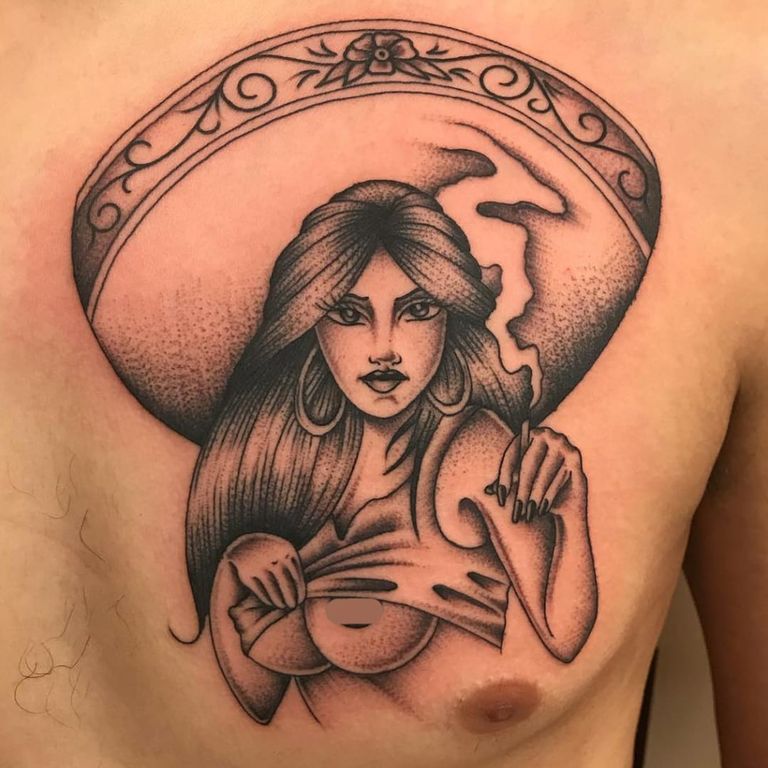
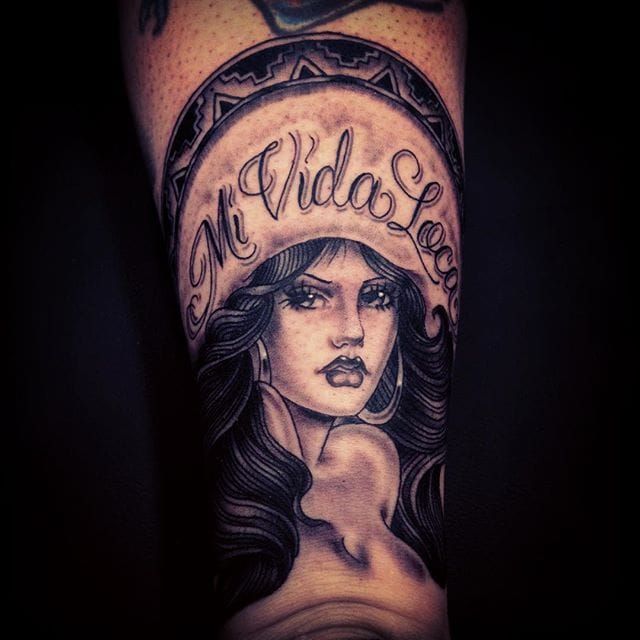
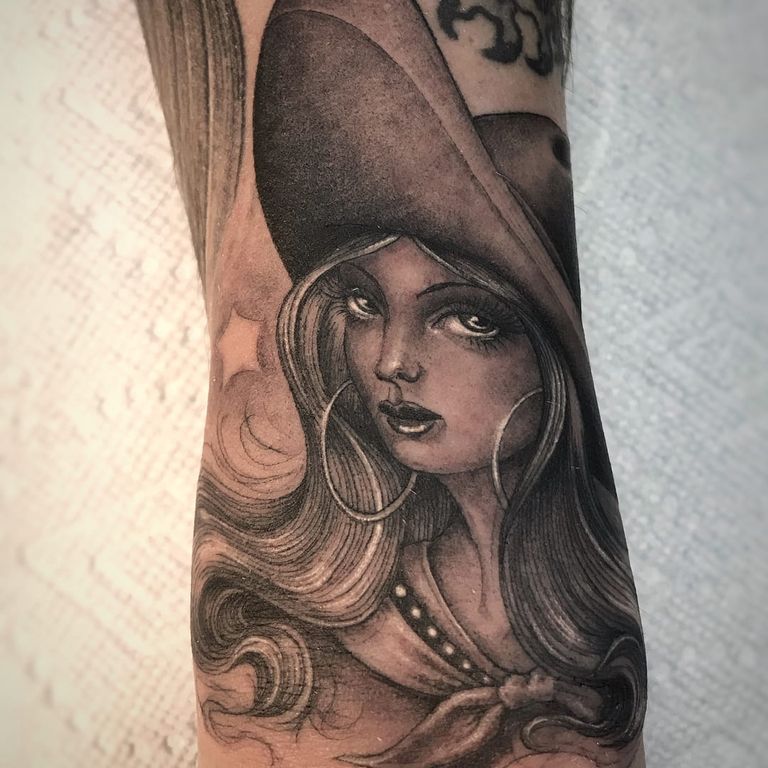
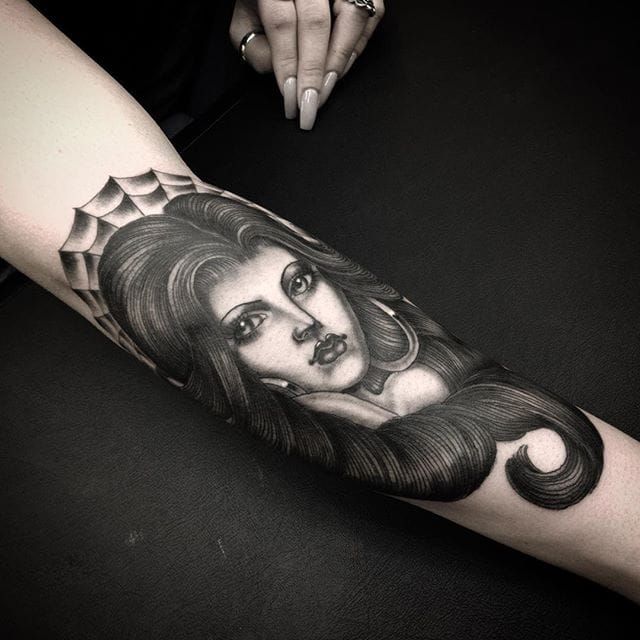
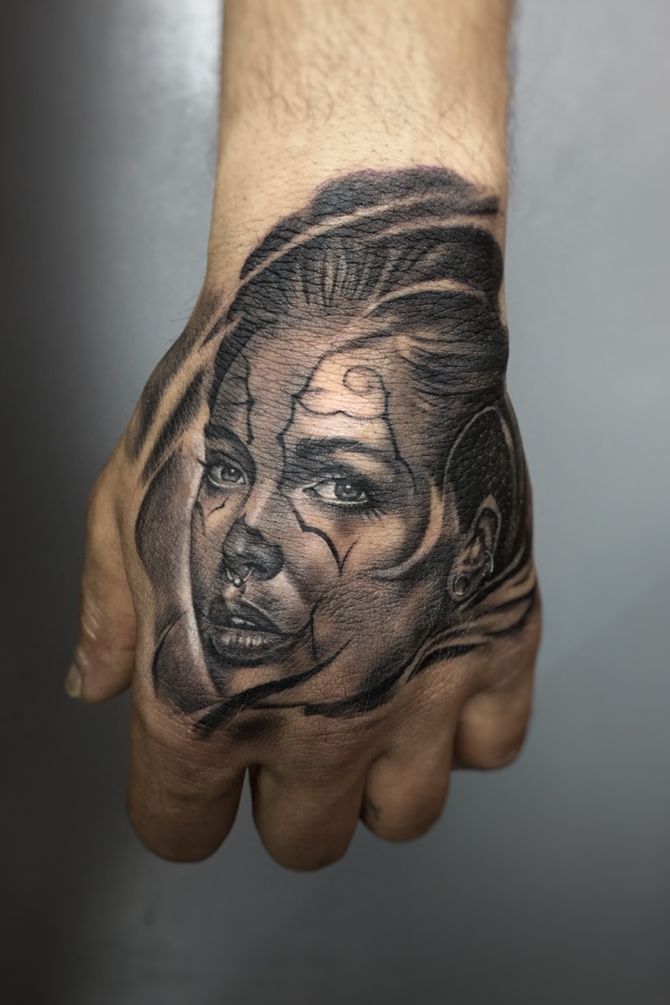
The Chicana portrait is the best-known image in the style. She has lined lips, hoop earrings and a bandana or hairnet, sometimes with a tear on her cheek. Portraits of real people are just as common, often of loved ones who have died. Roses usually mean love or remembrance.
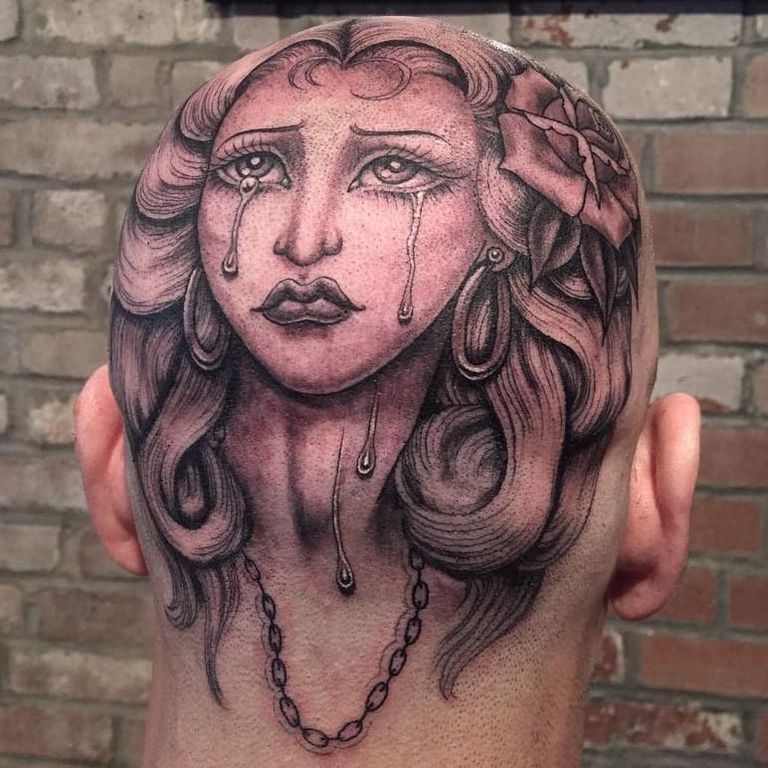
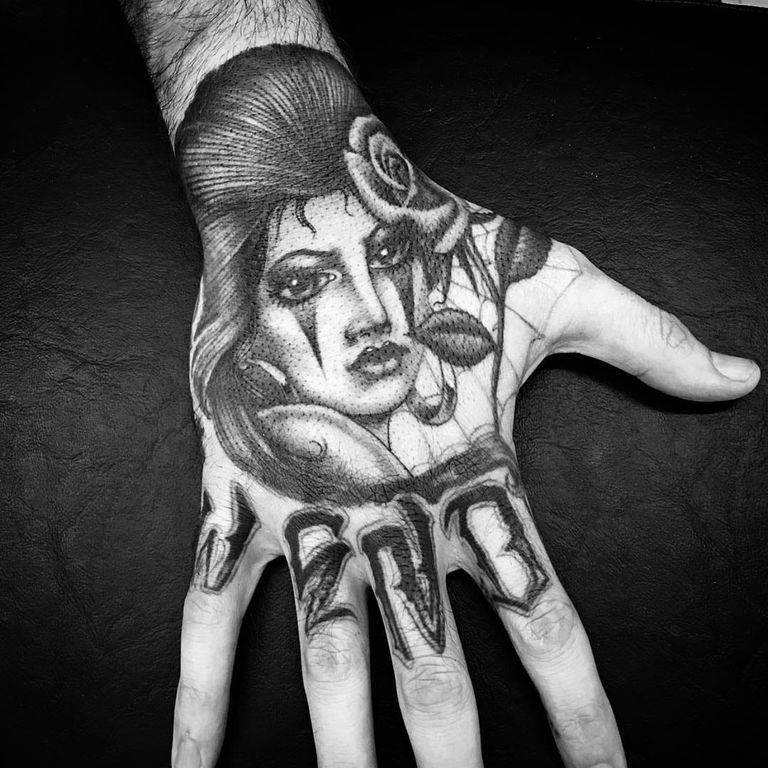
Lowriders, lettering and the neighborhood
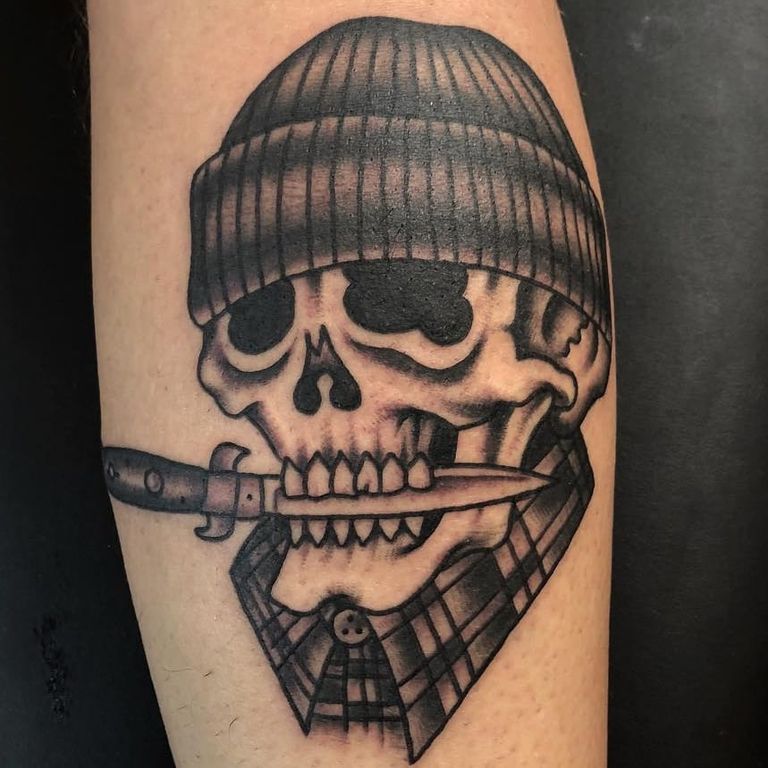
Lowriders are the low, customized cars of Mexican American car clubs. They stand for pride and craft. Lettering says who you are and where you’re from: a surname, a barrio, a child’s name, a date. Sugar skulls and La Catrina come from Día de Muertos, not the prison tradition. They usually honor someone who has died.
What teardrops, three dots and gang numbers mean
Some imagery came out of gangs and prisons and still reads that way:
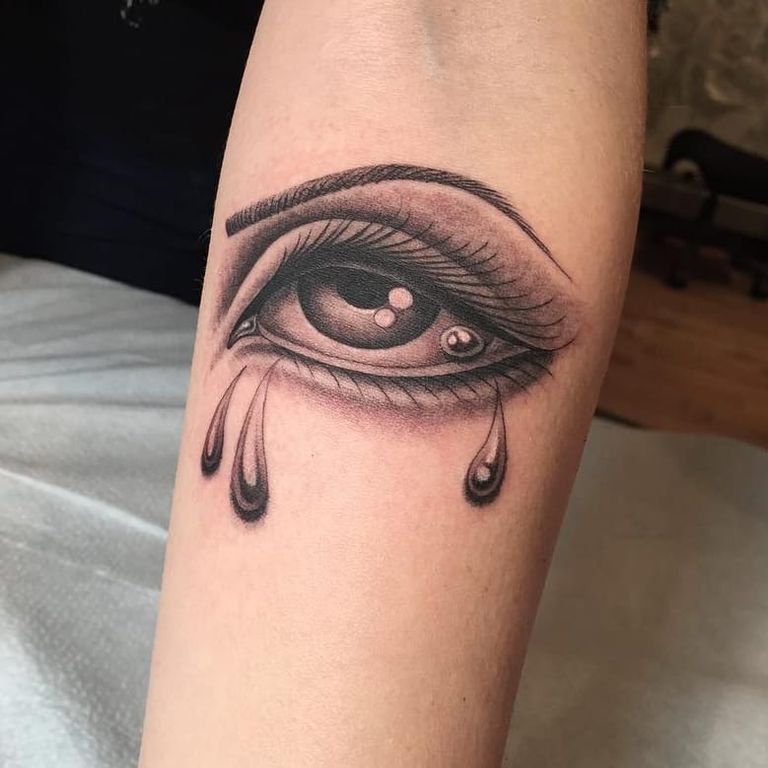
- A teardrop under the eye can be read as prison time, a lost loved one or a killing. You don’t get to choose.
- Three dots in a triangle mean “mi vida loca” (my crazy life). They’re tied to gang and prison life.
- The numbers 13 and 14 stand for Sureño and Norteño gangs in California. They read as a claim of membership.
- A neighborhood or clique name reads as membership in it.
People who know the culture will read these marks this way, whatever you meant. If your tattoo isn’t about that life, leave them out.
Size, placement and how Chicano tattoos age
Black and grey holds up better than most color. Still, the palest greys fade first and fine lines soften over the years. A coin-sized face won’t stay readable for long. Give a portrait a full forearm or more, and leave space in small script so the letters don’t close up.
Forearms, chest, back and calves suit the style best. Hands and fingers are part of the tradition too, but they blur faster and need touch-ups. Sun fades soft grey fastest, so once it has healed, protect the tattoo from the sun.
Choosing a Chicano tattoo artist
When you look at portfolios, check for:
- Smooth grey gradients without blotches or hard bands.
- Faces that still look like the person, with eyes that line up.
- Lettering with even spacing and clean strokes.
- Healed photos. Fresh grey always looks darker than it will once it settles.
Bring the names, dates and photos that matter. An artist who knows the tradition will tell you if a symbol says something you didn’t intend.
To plan yours, browse Chicano tattoo ideas for imagery and layouts. Then look through Chicano tattoo artists in Los Angeles, or use the artist finder to find someone near you.