Blackwork Tattoos: Styles, Origins and How Solid Black Ages
Dotwork, geometric, blackout, etching and neo-tribal: how the subgenres differ, how blackwork grew out of the 1980s tribal revival, and why it suits cover-ups.
Related galleries
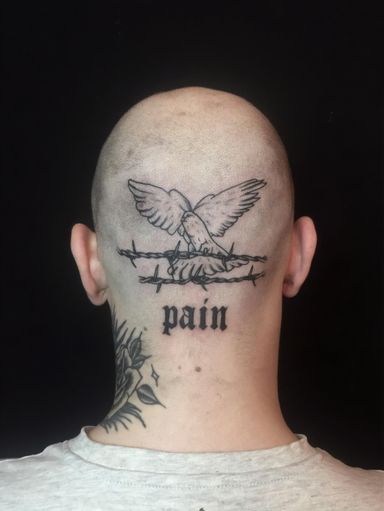
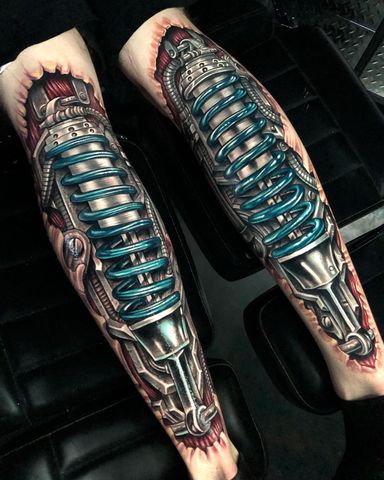
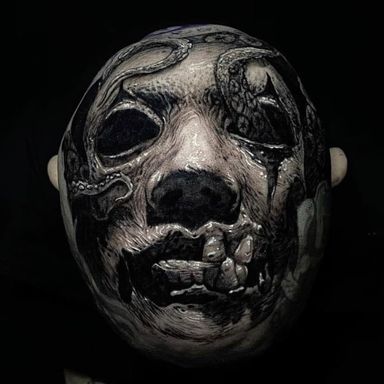
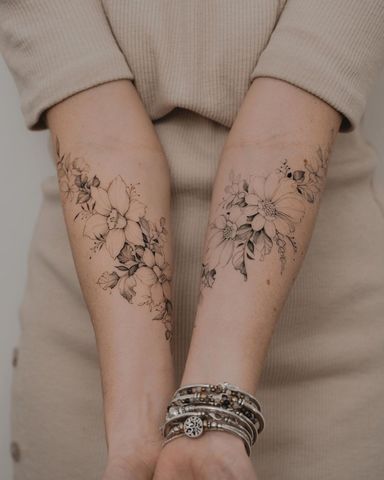
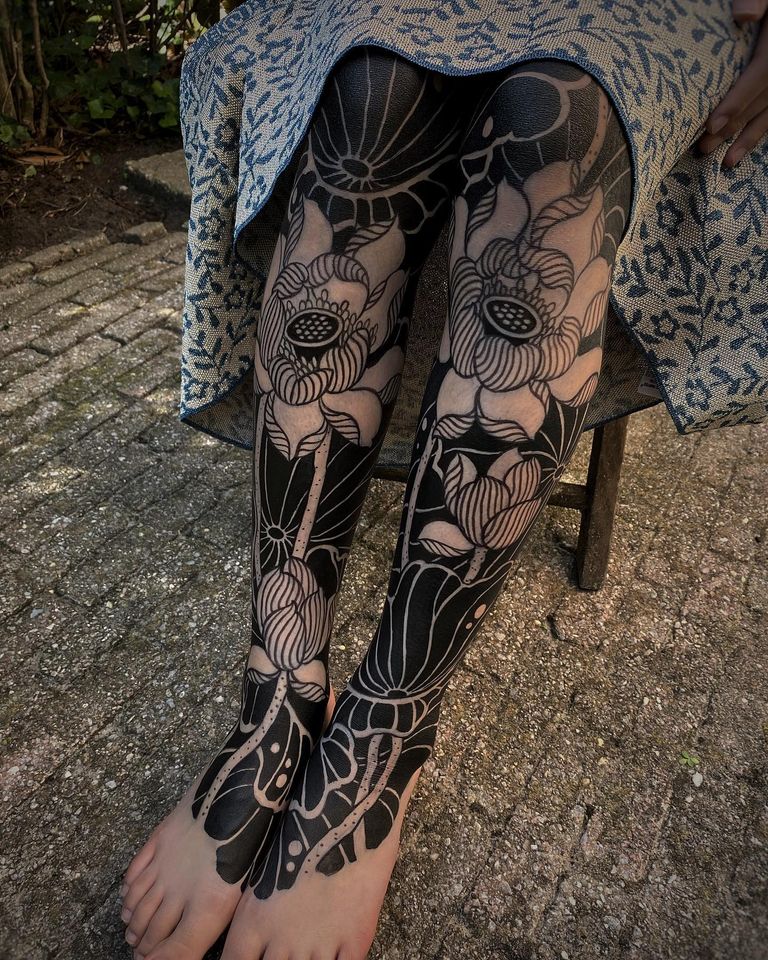
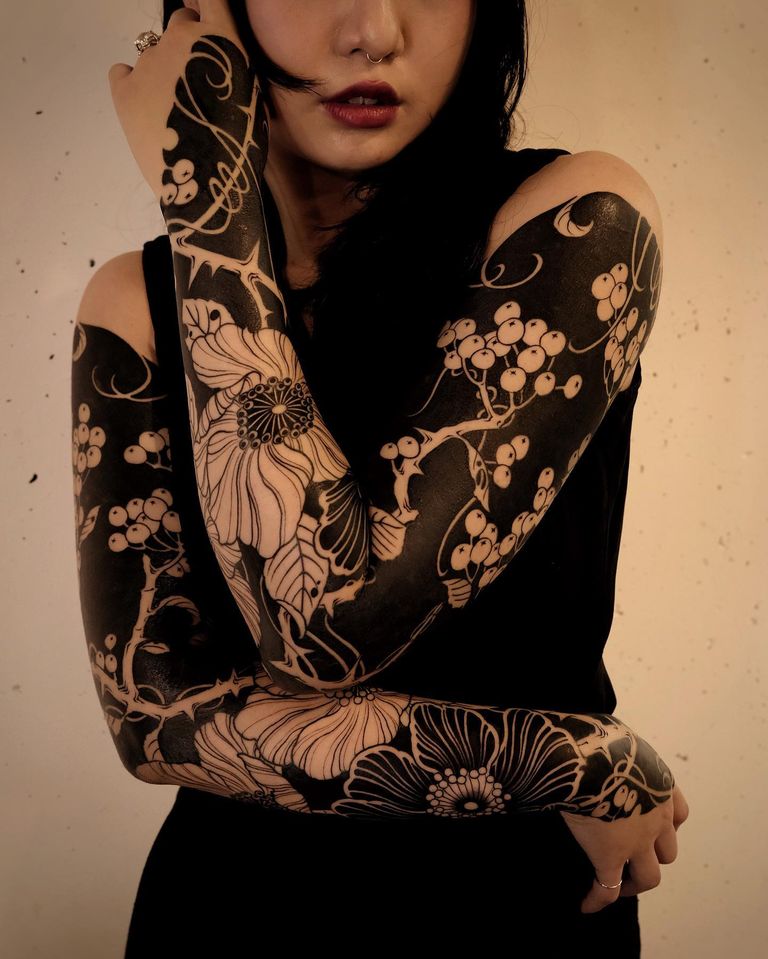
A blackwork tattoo uses solid black ink and bare skin, with no color and little or no grey. Expect heavy lines, big filled areas and designs that use untouched skin as part of the picture. Black is also the most opaque ink, which makes blackwork the usual choice for covering an old tattoo.
Summary
- Black ink only, no grey wash: that’s the rule most artists use, whatever the subject.
- Dotwork, geometric, blackout, etching and neo-tribal are all blackwork. They differ in how they build shade.
- Leave wide gaps of bare skin. Thin gaps close up into a dark patch over the years.
What counts as blackwork
Most tattooers go by a short rule: black ink only, no color, no grey wash. Shading comes from dots, hatched lines or how densely the black is packed. It doesn’t come from black ink watered down to grey. That’s the line between blackwork and black and grey, which is built mostly from those diluted tones.
The subject is open. Written as two words, black work, it’s the same style. Artists do disagree on how strict to be. Some soften an edge with a little grey; others never use diluted ink. Ask before you book if that matters to you.
Styles of blackwork tattoos
Blackwork is an umbrella term. These are the subgenres you’ll see in artist bios.
Dotwork
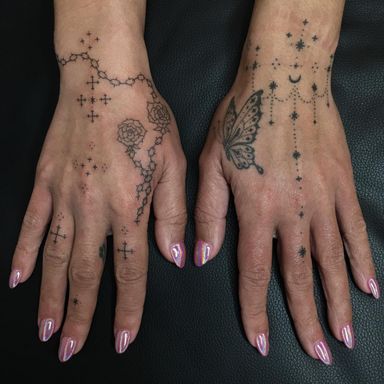
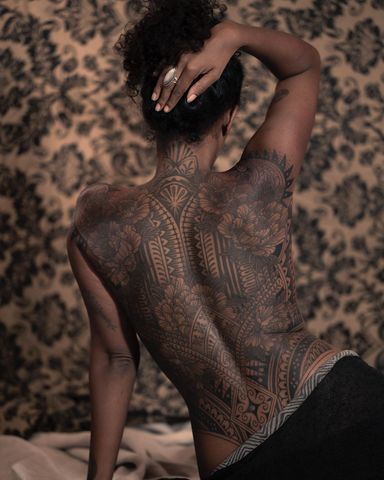
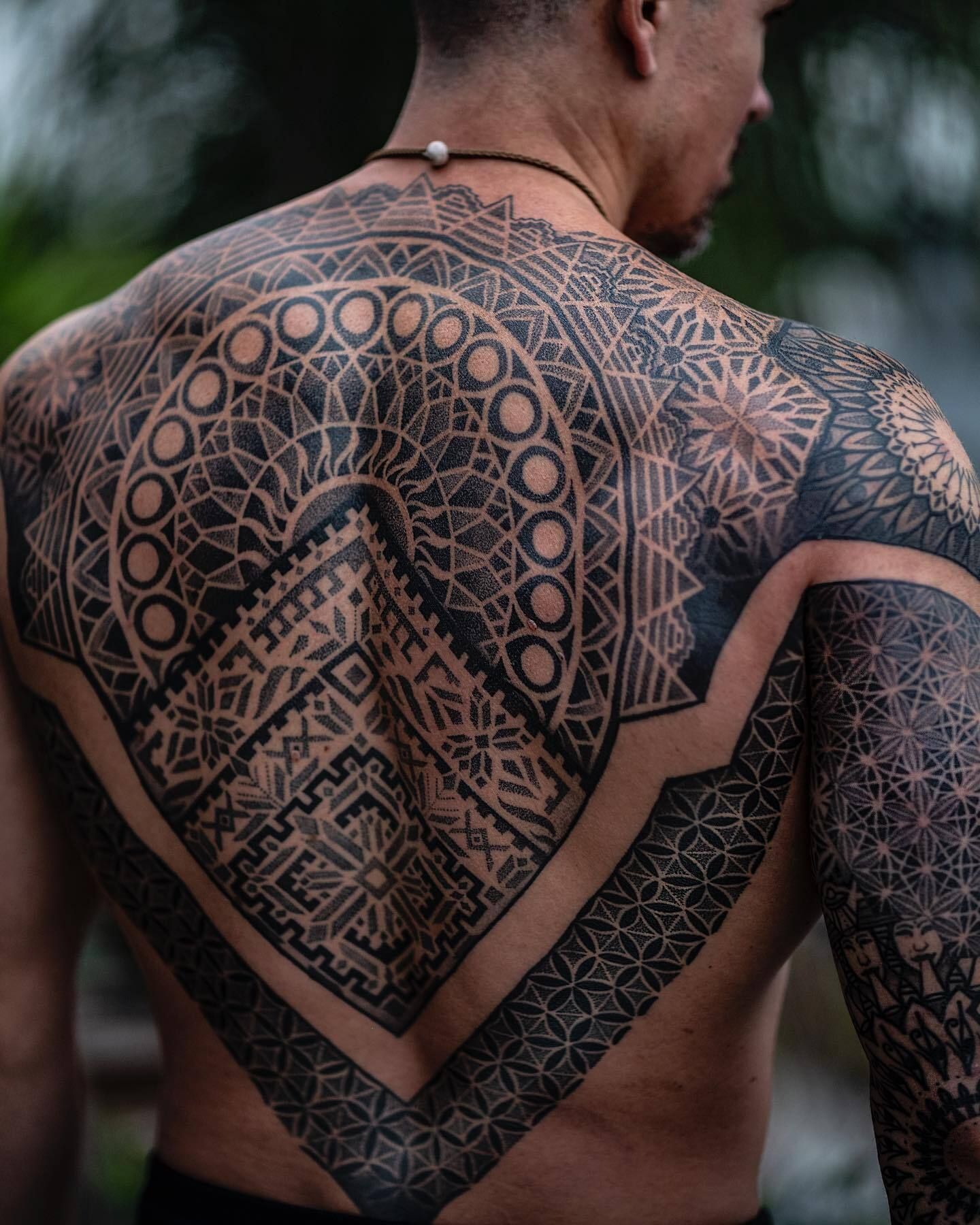
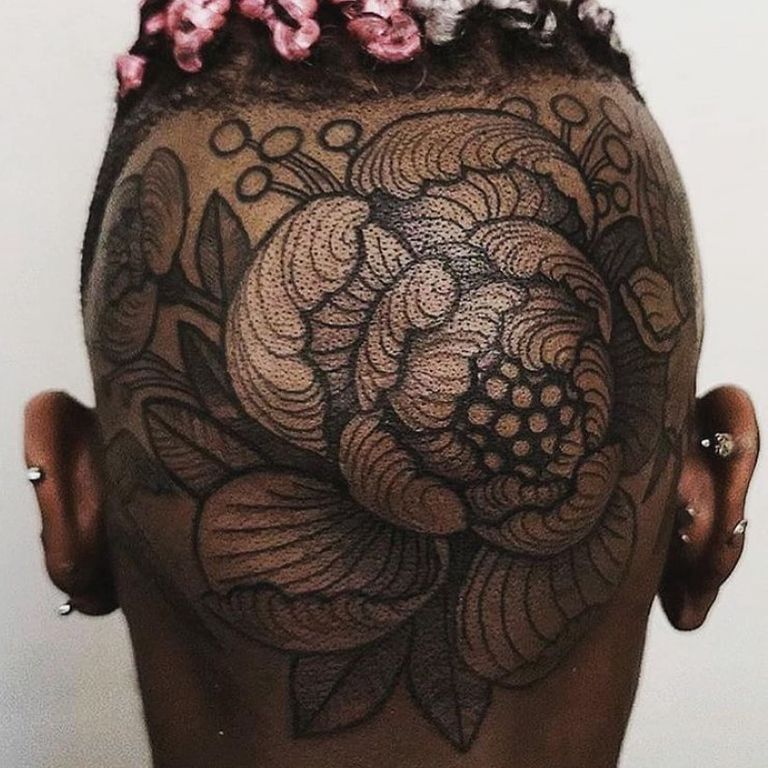
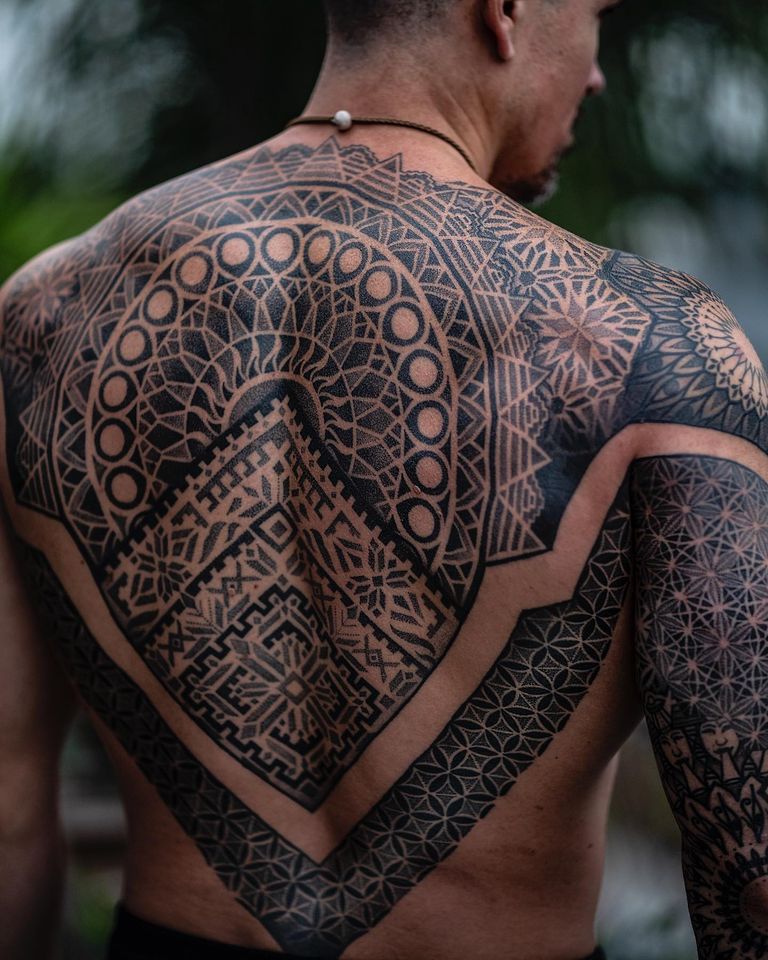
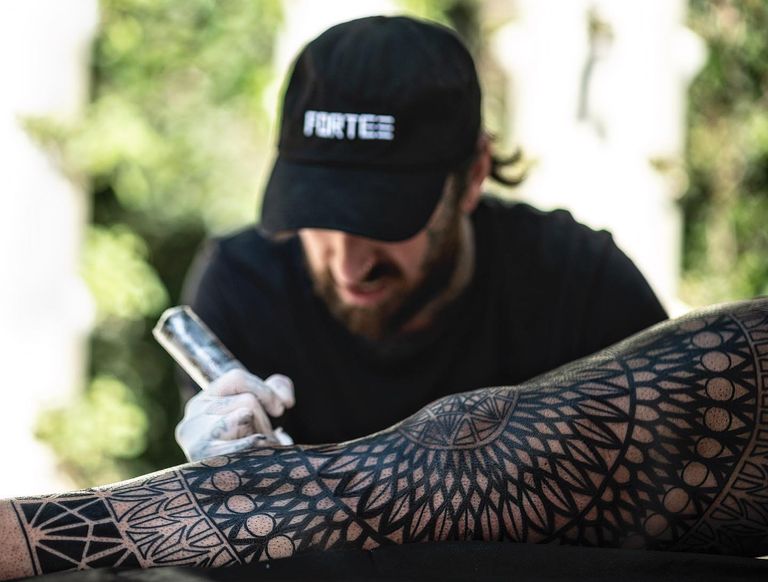
Dotwork builds shade from thousands of single dots. Packed close, the dots read as dark. Spread out, they read as light. That gives a gradient without grey ink. Dotwork pairs well with mandalas and geometric patterns.
Geometric
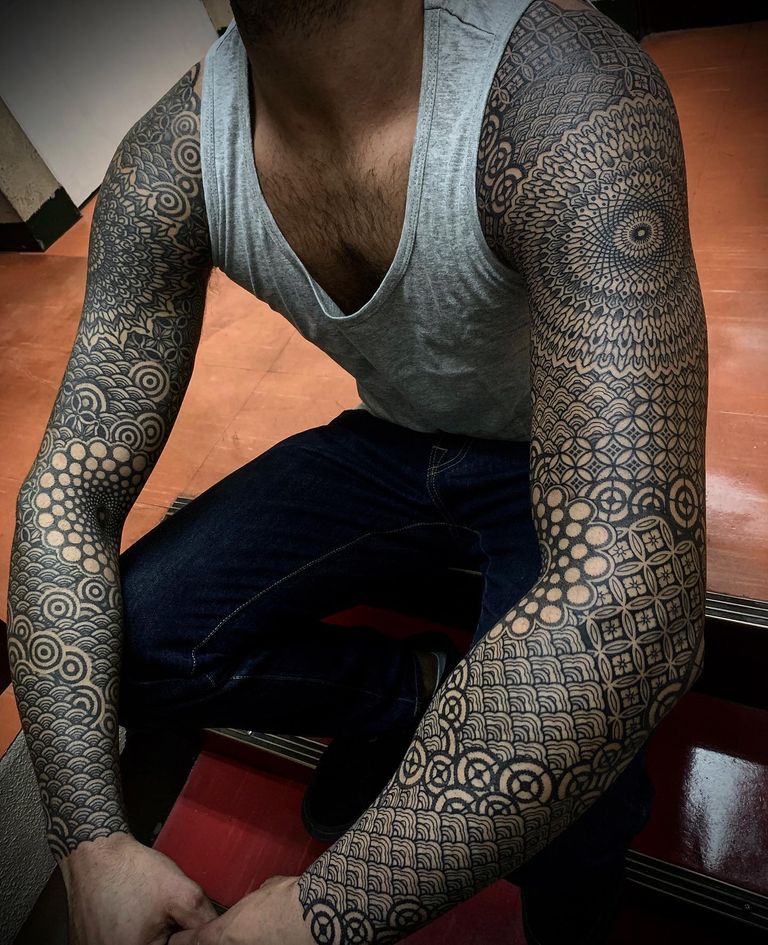
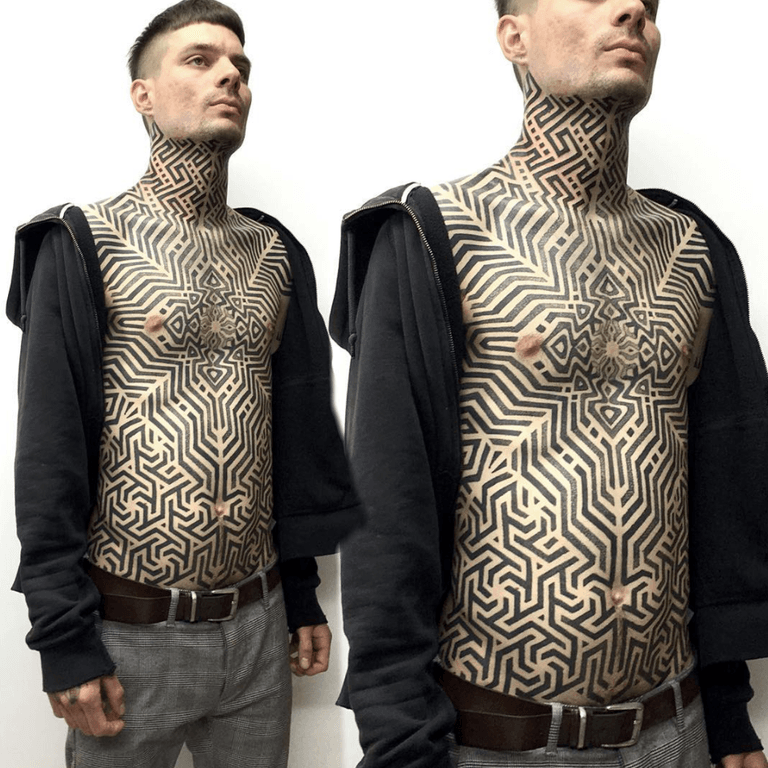
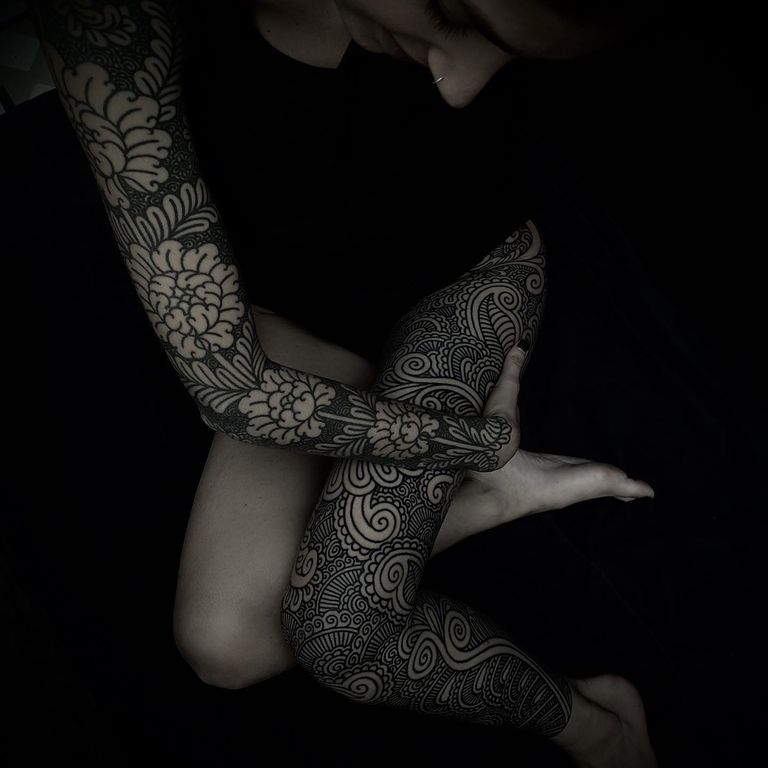
Geometric blackwork uses straight lines, true circles and repeating tiles: mandalas, the Flower of Life, maze-like linework. Much of it comes from sacred geometry, though plenty carries no meaning beyond the pattern. Precision matters most here. A wobbly circle shows at a glance.
Blackout
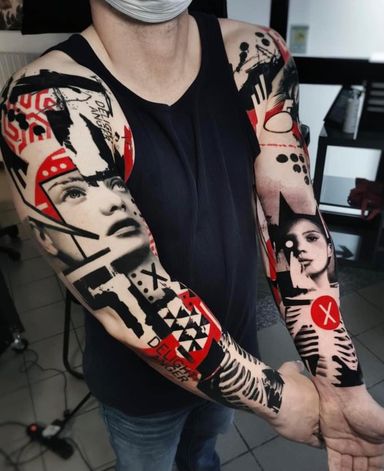
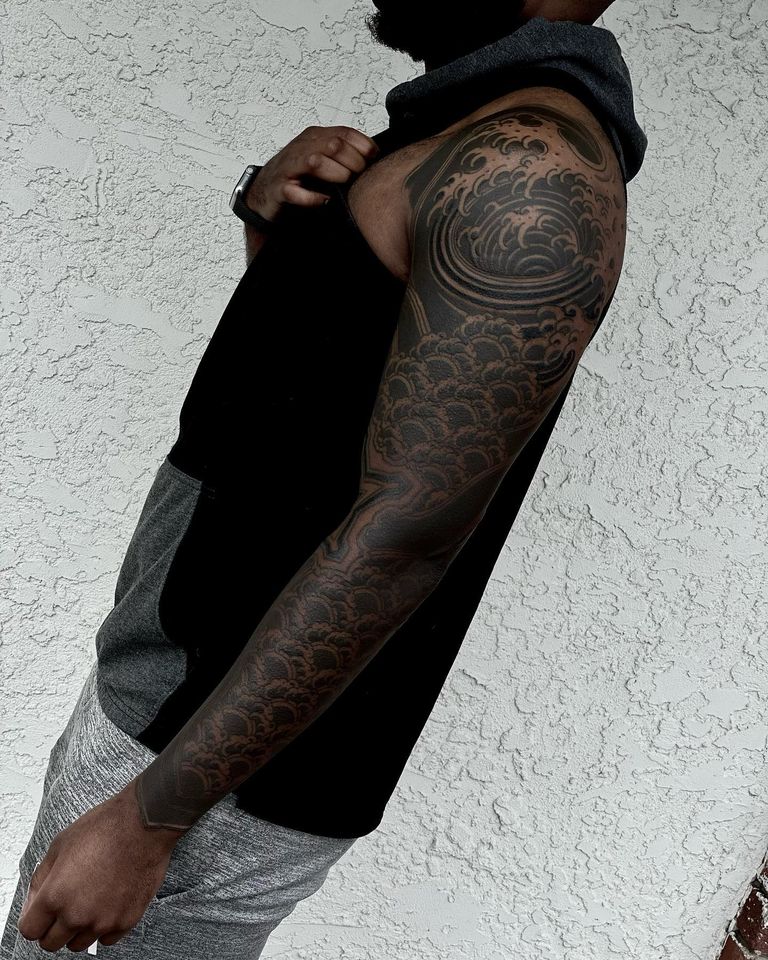
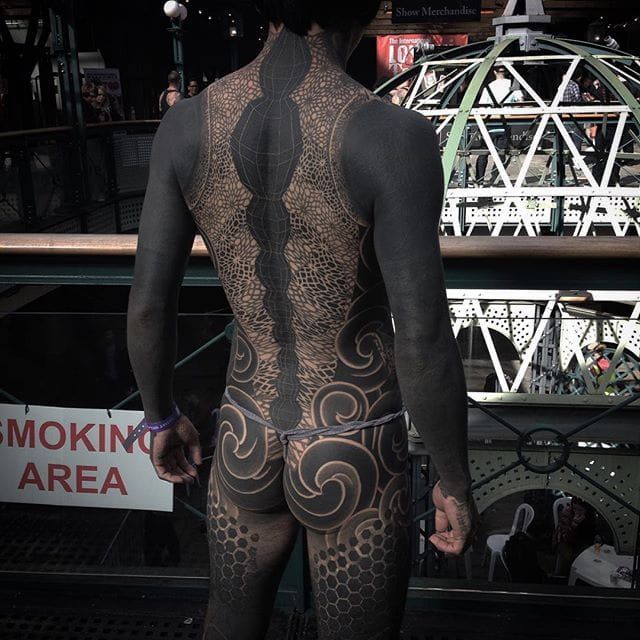
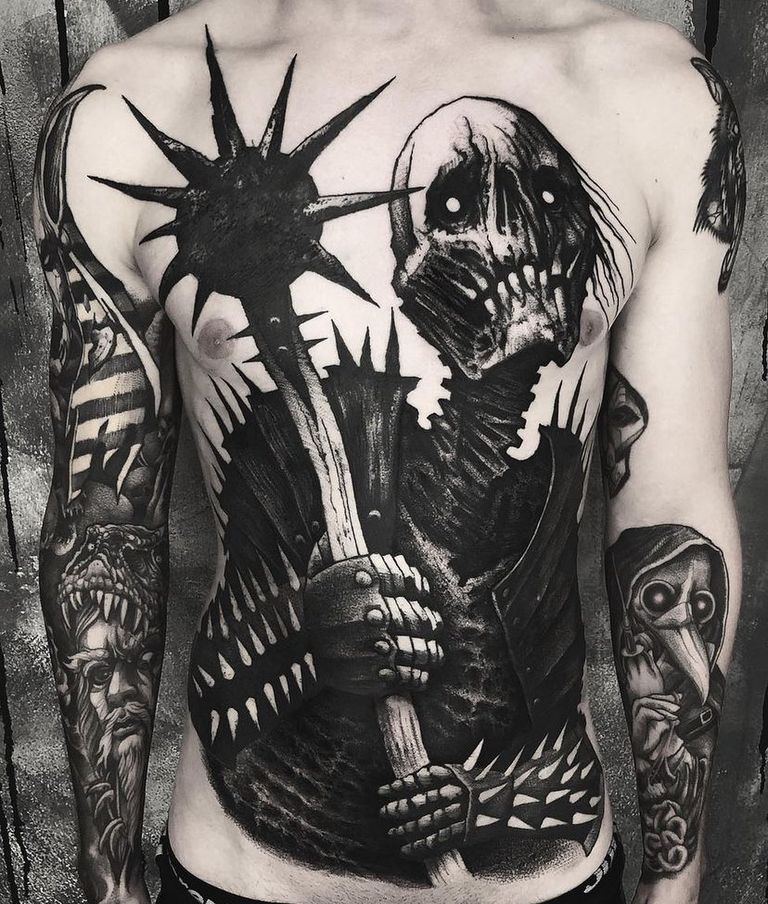
Blackout covers an area of skin in solid black: a sleeve, a chest panel, sometimes most of the body. It started as a way to bury unwanted tattoos and became a look of its own in the 2010s.
Etching and engraving style
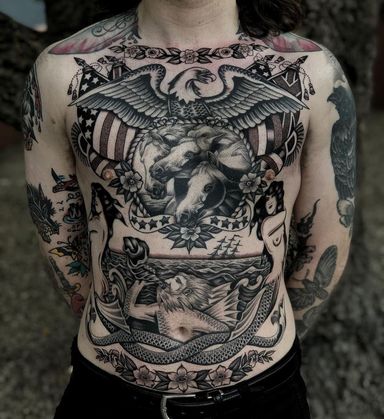
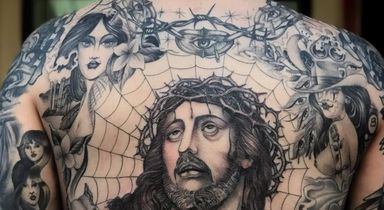
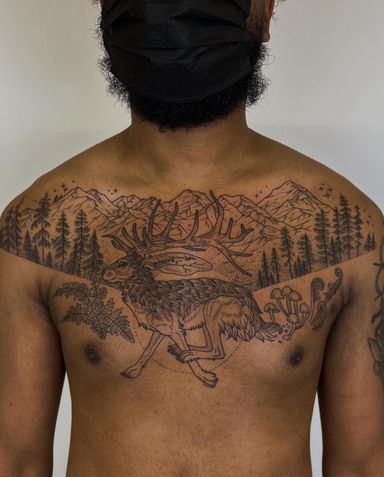
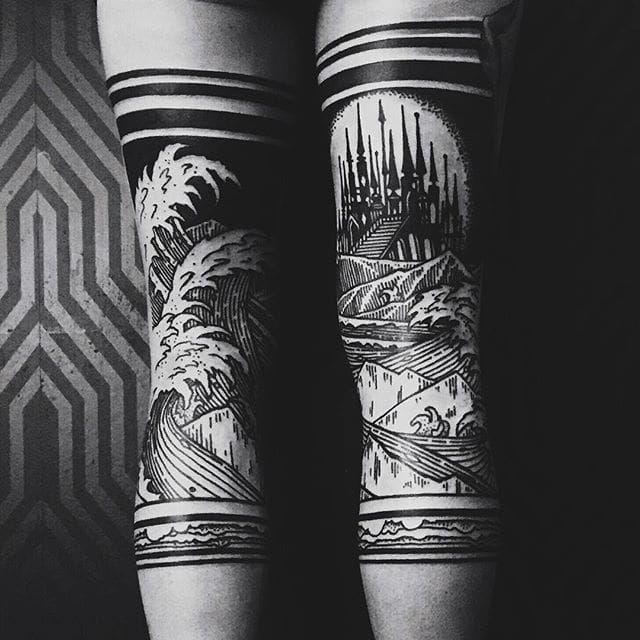
Etching-style blackwork borrows from old woodcuts and copperplate engravings. Tone comes from parallel lines and cross-hatching instead of grey, so the tattoo looks printed onto the skin. Landscapes, ships, anatomy and religious scenes are common subjects.

Neo-tribal
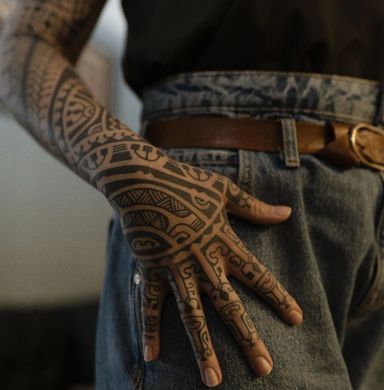
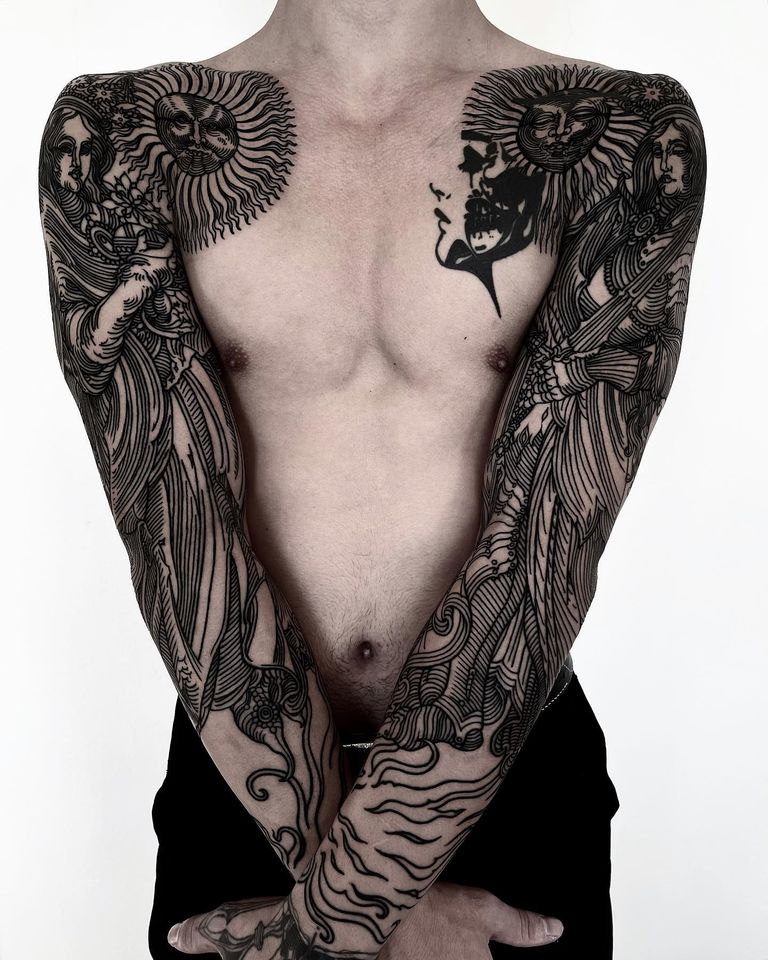
Neo-tribal takes the sweeping black shapes of 1990s tribal and makes them sharper and more abstract. It uses no one culture’s motifs. For a design tied to a heritage, such as Samoan tatau, see a tattooer from that tradition. The tribal tattoo guide covers the difference.
Ornamental and illustrative
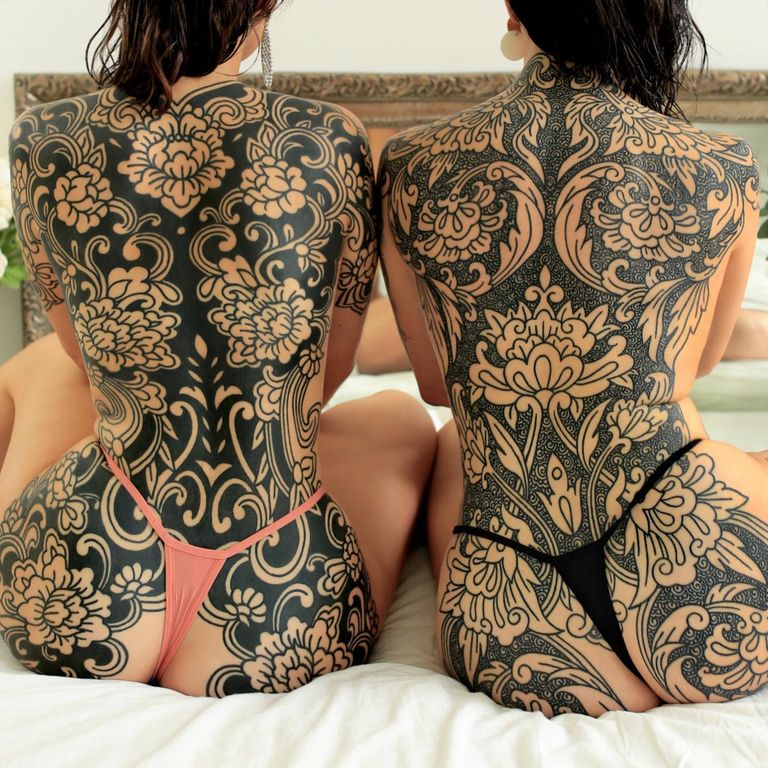
Ornamental tattoos draw on lace, filigree, henna patterns and architectural ornament. Done in black only, they count as blackwork. Illustrative blackwork is any drawn image done in heavy black with little or no grey. Most dark art, with its skulls and demons, is done this way.
Where blackwork comes from
Black-only tattooing is as old as tattooing. Traditions in Samoa, Aotearoa New Zealand and Borneo worked in one black pigment made from soot. In the 1980s a tribal revival adapted those designs into large black pieces, and by the 1990s the tribal armband was everywhere. Artists later kept the solid black and dropped the tribal motifs.
Blackwork vs fine line vs black and grey
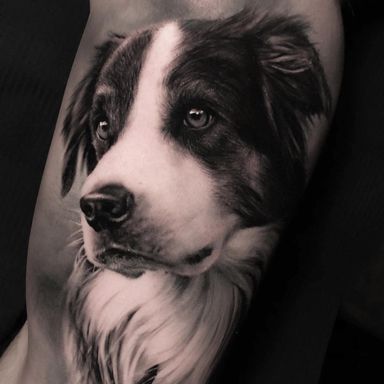
Black and grey adds diluted black (grey wash) for smooth gradients, which is why most portraits are black and grey. Blackwork skips the wash. If a design depends on soft shadow, it’s black and grey. If it depends on solid fills and contrast, it’s blackwork.
Fine line is about the needle, not the ink. It uses very thin needles for delicate lines, usually at small sizes and often with soft grey shading. Blackwork tends to be heavier and larger.
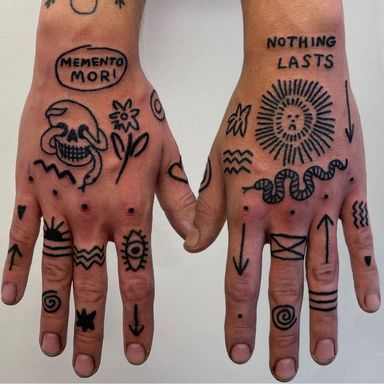
Black line work (linework) is a design drawn only in black outlines, with no fill or shading. Heavy lines with no grey count as blackwork. Thin single-needle outlines sit closer to fine line.
Black traditional, or traditional blackwork, usually means American traditional designs done in black only. Some artists use the term for tribal, so check which they mean.
How solid black heals and ages
A solid fill takes many passes of the needle over the same skin. So large blackwork pieces swell more and weep more in the first days. Patchy spots after healing are common on big fills, and a touch-up a few weeks later is normal. The surface heals in two to three weeks. Follow your artist’s aftercare, and see a doctor if redness spreads, the area gets hot or you run a fever.
Black holds up better than any color, so blackwork ages well. What changes is the edges: lines spread a little and gaps of bare skin narrow. A design with generous spacing stays readable for decades.
Sizes and placements that suit it
Go bigger than you think. Blackwork needs room for its bare skin, so it suits forearms, calves, thighs, backs and chests. Small dotwork on fingers, hands and feet blurs fastest, because that skin renews quickly and rubs all day. Geometric patterns look best on flat areas. Around elbows and knees they distort every time you move.
Blackwork for cover-ups and blackout
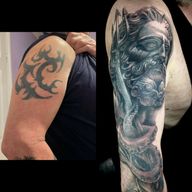
A blackwork cover-up hides the old lines inside the darkest parts of the new design. So the new piece is usually larger and darker than the old one. Blackout is the last resort, when nothing else will hide the old work. Before you commit, ask about a few laser sessions to fade the old tattoo first. A full blackout holds so much ink that removing it later takes many sessions.
Choosing a blackwork artist
Ask for healed photos of big fills, since patchy black only shows once the swelling has gone. Pick someone whose portfolio matches the subgenre you want. If you have dark skin, ask to see healed work on similar skin tones.
For a large fill or a cover-up, ask before the first session:
- How many sessions will this take, and how far apart?
- Is a touch-up included if the fill heals patchy?
- Will you use any grey, or is it black only?
For references, browse blackwork tattoo ideas and note which subgenre each one is. Name it when you describe your idea in the artist finder.