New School Tattoos: Style, Origins and How the Color Ages
The cartoon style that grew out of animation and graffiti in the late 1980s, how to tell it from neo-traditional, and how to keep its neon color bright.
Related galleries
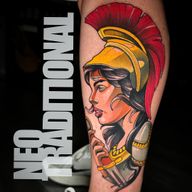
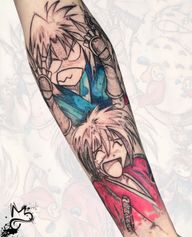
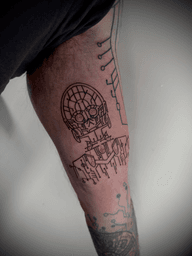

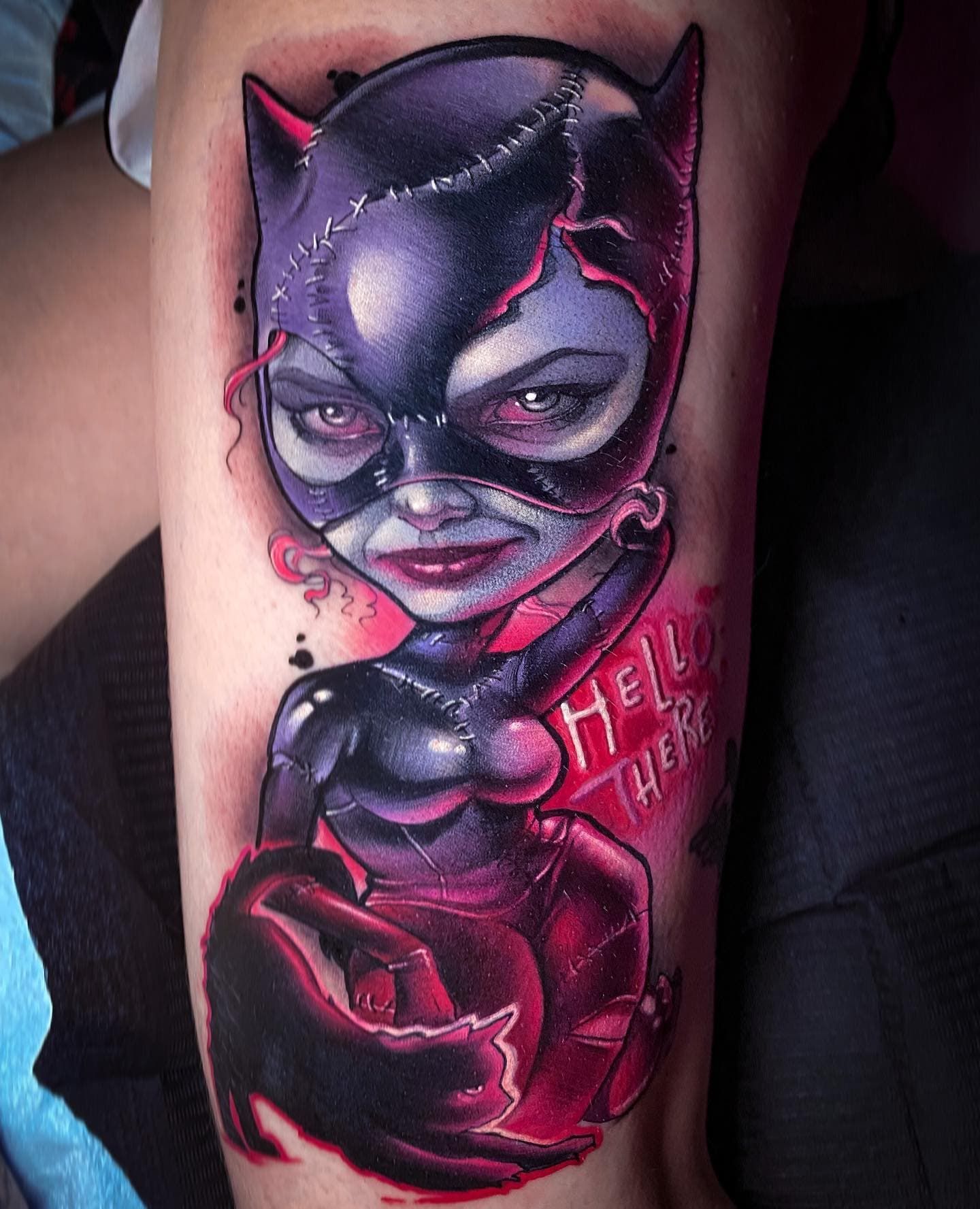
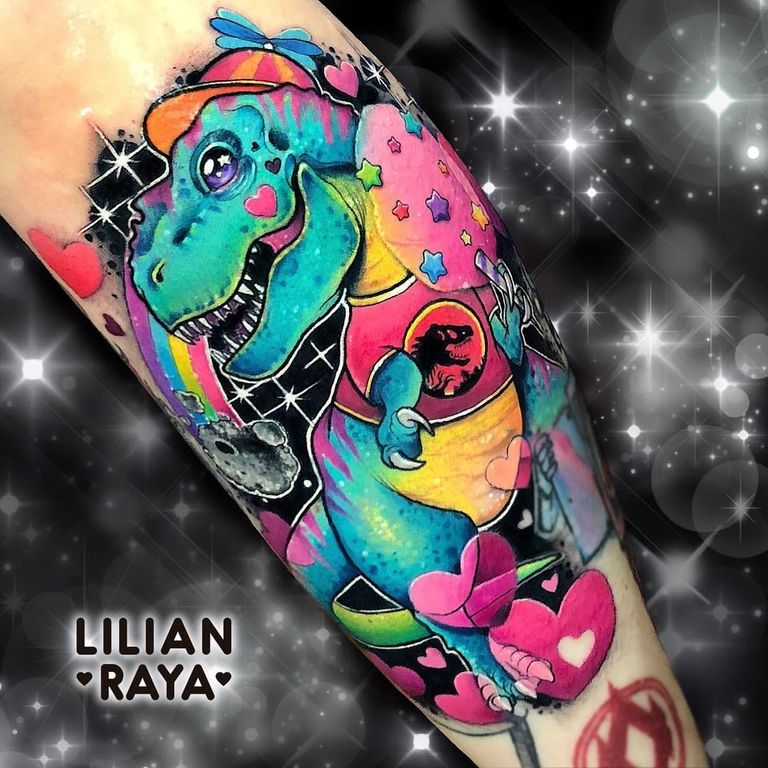
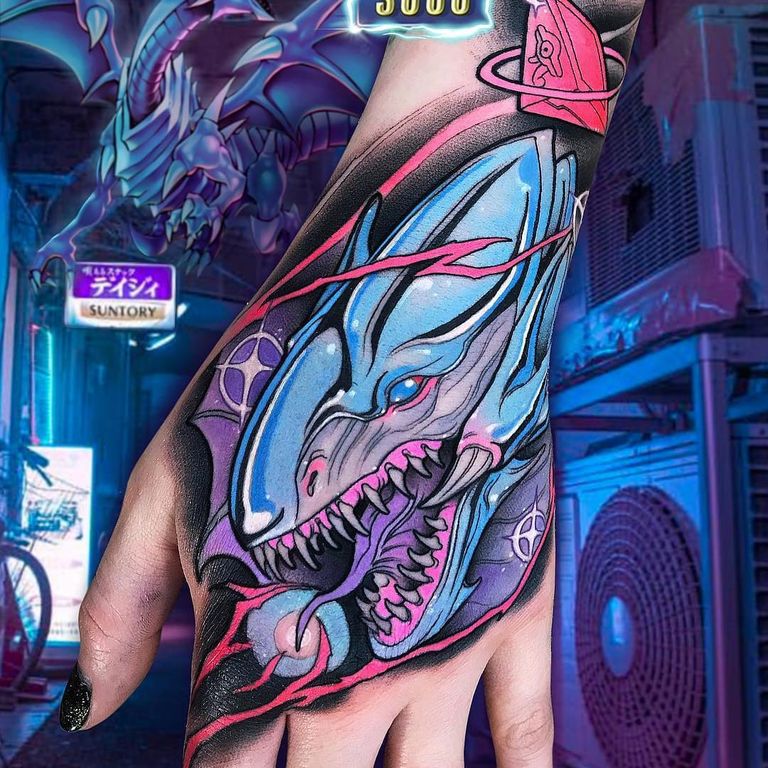
New school is a cartoon style of tattooing. Expect oversized heads and eyes, bent perspective, thick black outlines and saturated color. The color is blended into gradients and finished with white highlights that make the design look glossy. Subjects come from animation, anime, video games and comics. The bubble letters and drop shadows come from graffiti. Most designs need to be palm-sized or bigger.
Summary
- Neo-traditional keeps anatomy believable, while new school squashes and stretches it.
- White highlights fade first and are the most common thing to touch up.
- A good artist redraws a character in their own hand rather than tracing a screenshot.
What defines a new school tattoo
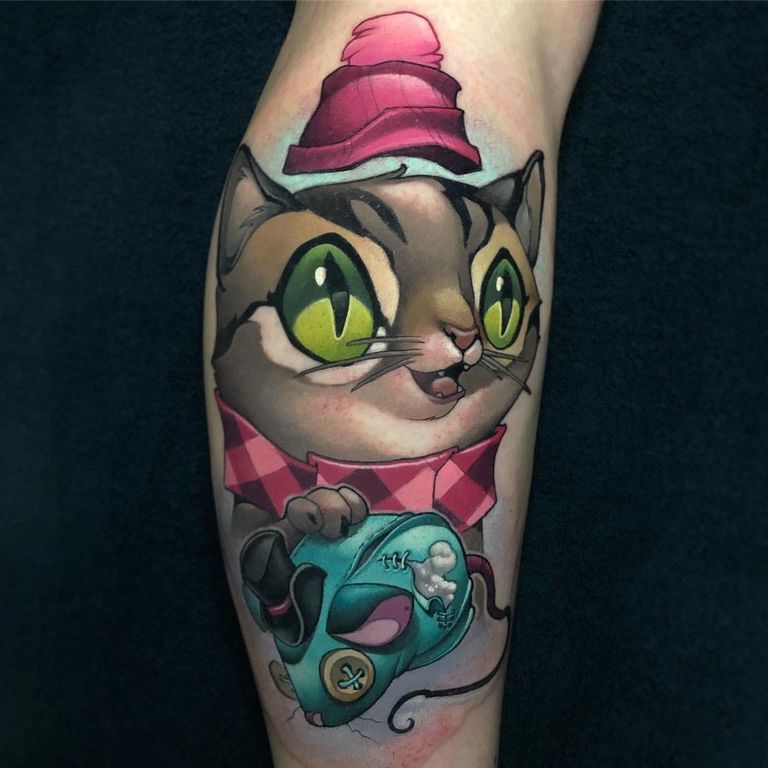
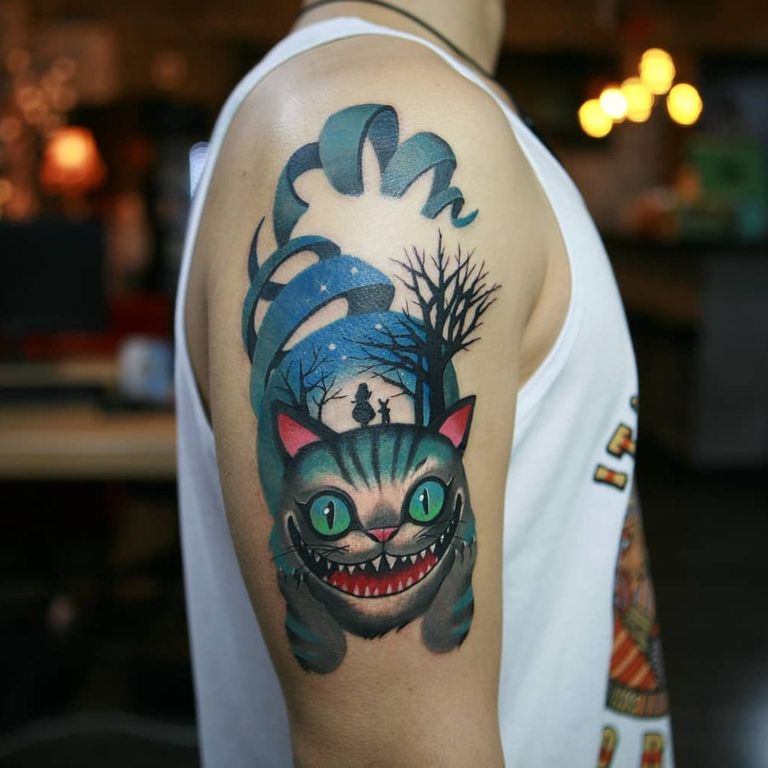
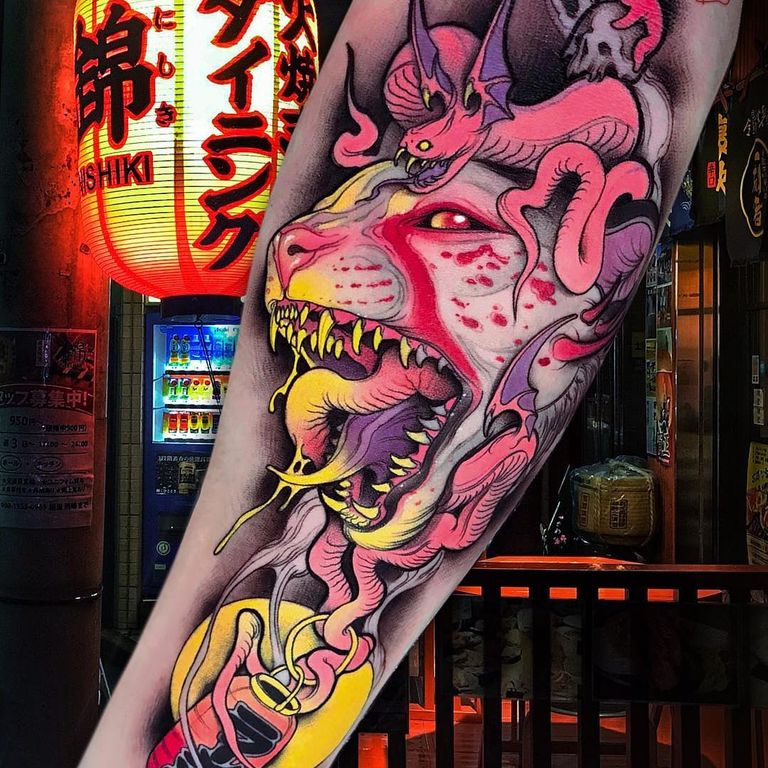
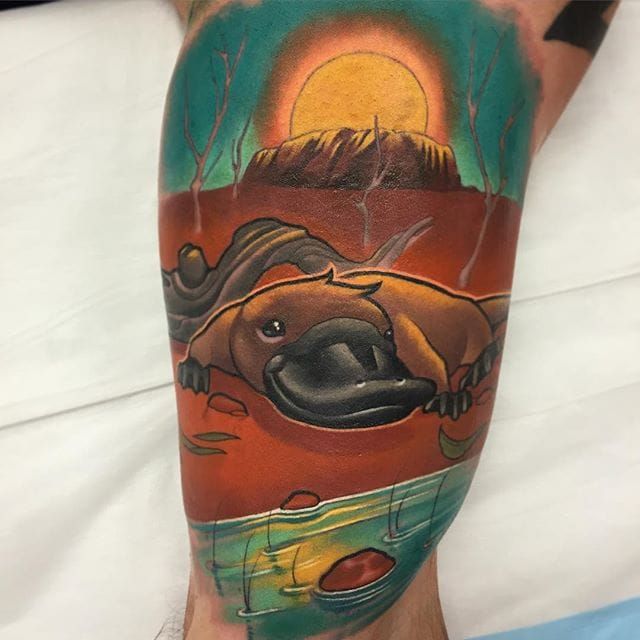
Exaggeration comes first. A new school cat has a head twice the size it should be. Its eyes take up half its face, and its grin bends its jaw. Perspective gets pushed too, so a character seems to lean out of the skin. Even a rose or a skull comes out rounder and shinier than life.
The outlines are thick and black, as in traditional tattooing. A strong outline stops colors from blurring into each other as the tattoo ages.
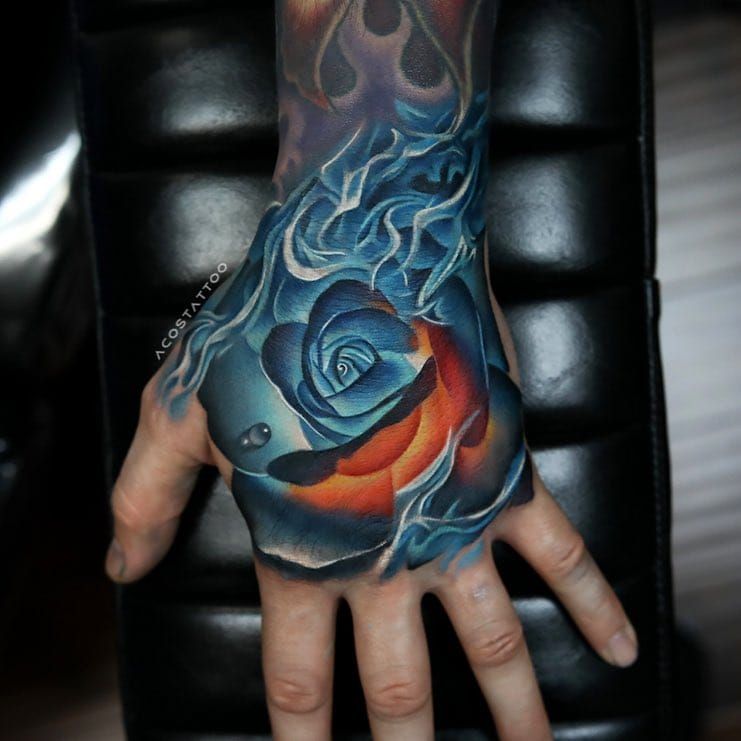
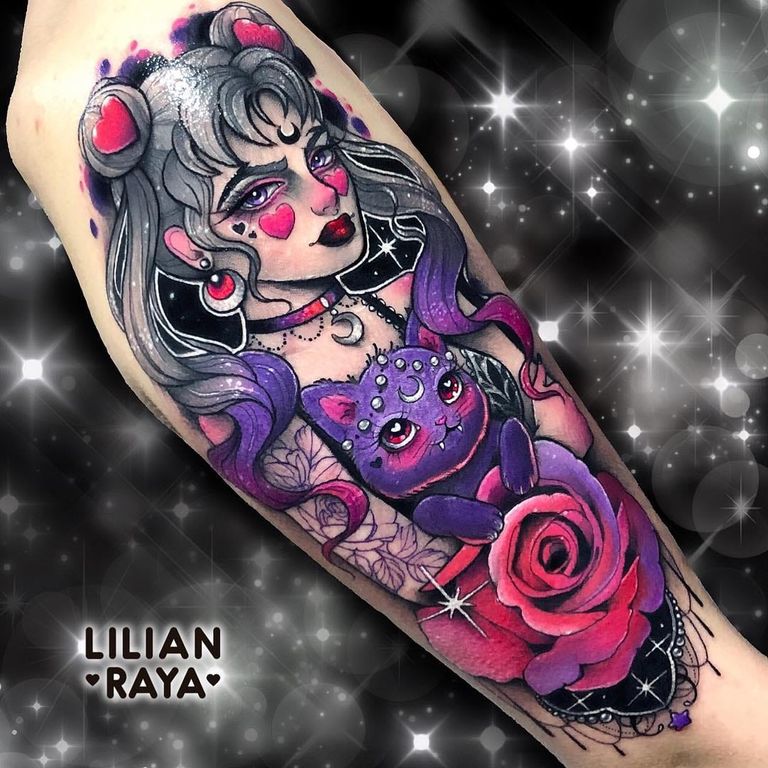
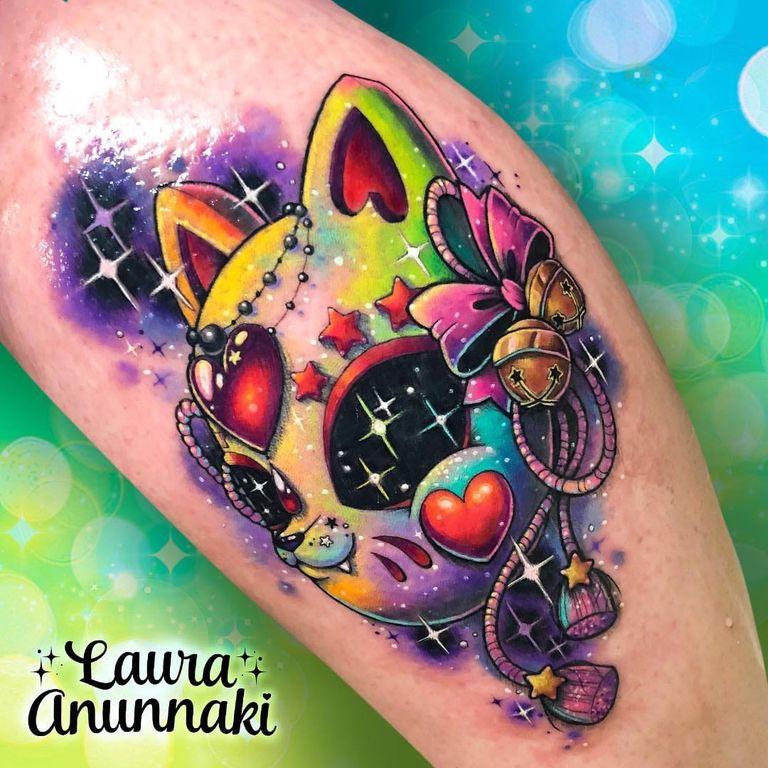
Inside the outlines, color goes everywhere: neon greens and pinks, purples, electric blues and pastels. White highlights on eyes, teeth and curves make things look wet or polished. Backgrounds are often filled too, with a burst of color, smoke, clouds or stars. That way the piece reads as a finished panel, not a sticker.
Where new school tattooing came from
Nobody can point to the first new school tattoo, and accounts disagree on when it started. Most place the style in the late 1980s and the 1990s, and name Marcus Pacheco among its early tattooers.
The style also grew from tattooers sharing more of what they knew. Through the 1970s and 1980s, many established artists guarded their techniques. The new school crowd was more open, and the craft moved faster for it. Graffiti and hip hop shaped the look as much as cartoons did.
New school vs neo-traditional vs traditional
All three use bold outlines and strong color, which is why they get mixed up. The difference is how far each one moves from a flat, simple drawing.
Traditional tattooing, or old school, is the oldest. It sticks to black, red, green and yellow, keeps shading simple and uses classic flash subjects like eagles, roses and panthers.
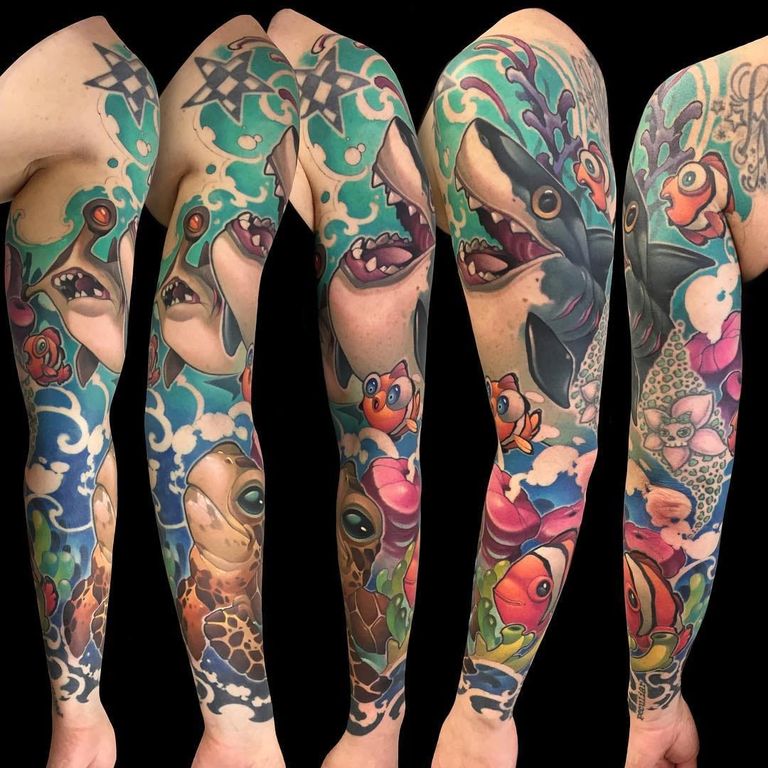
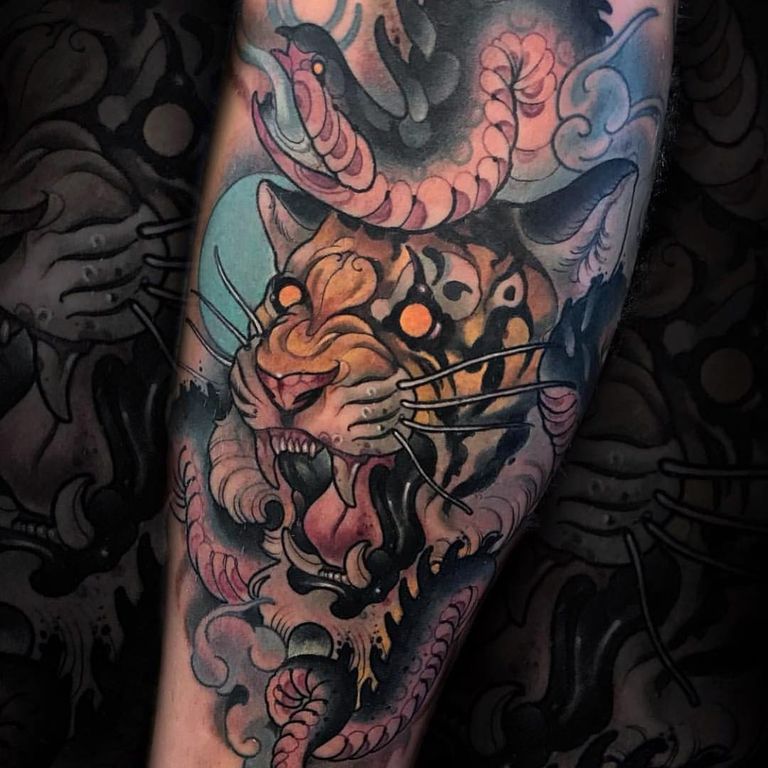
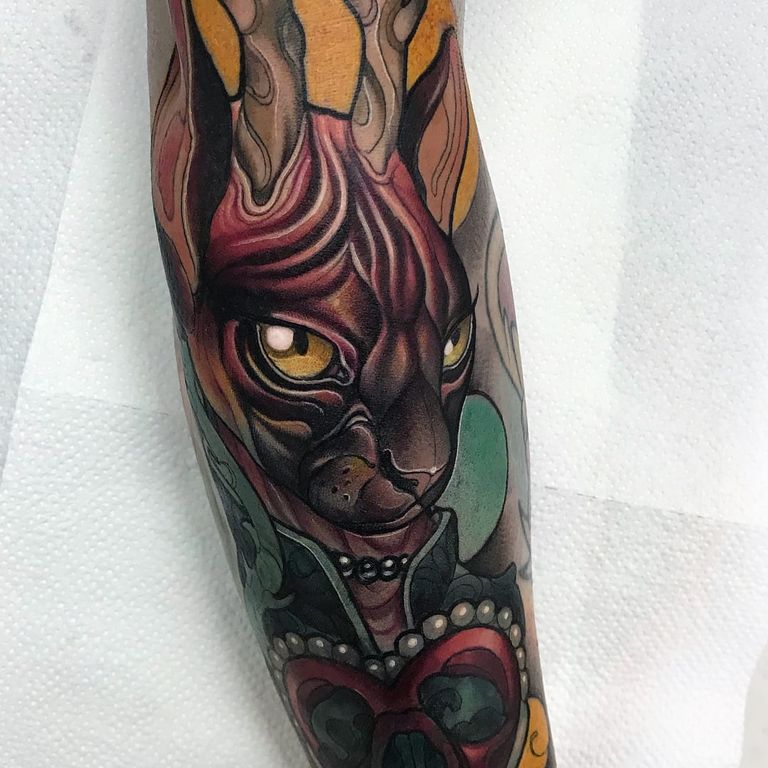
Neo-traditional keeps the heavy outline but varies the line weight, uses deeper colors and adds Art Nouveau framing. Its animals have believable anatomy. A neo-traditional fox looks like a fox, drawn beautifully.
New school keeps the outline and drops realistic proportion. The same fox gets an enormous head, glossy eyes and a neon background. If it looks like a cartoon character, it’s new school. If it looks like a decorative poster, it’s probably neo-traditional. Plenty of artists work in between.
Common new school subjects and what they mean
Most new school subjects mean whatever they mean to you. People get the cartoon they grew up with, their pet drawn as a character, or a favorite game. The style makes the result look fun instead of solemn.
Cartoons, anime and games
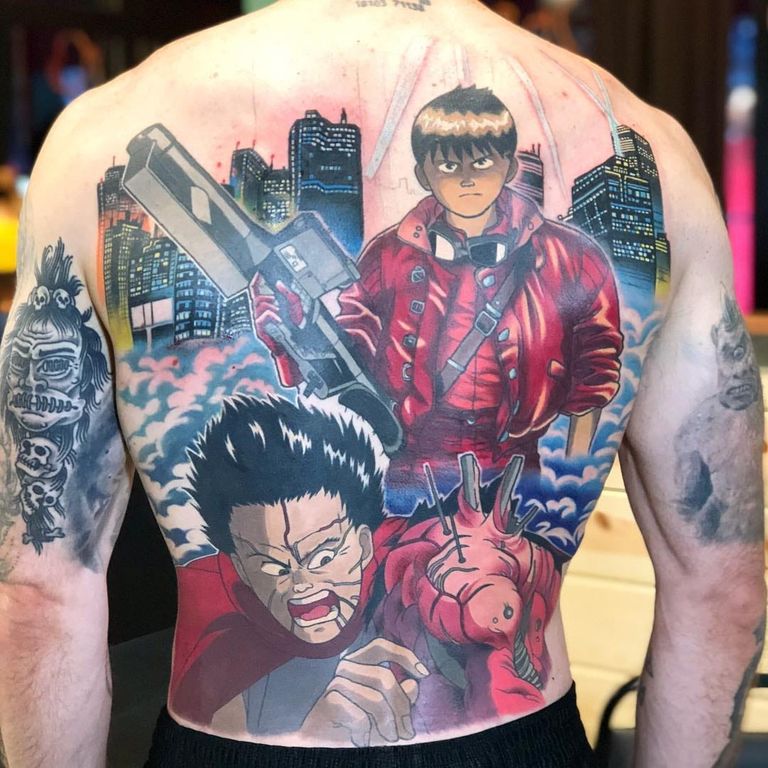
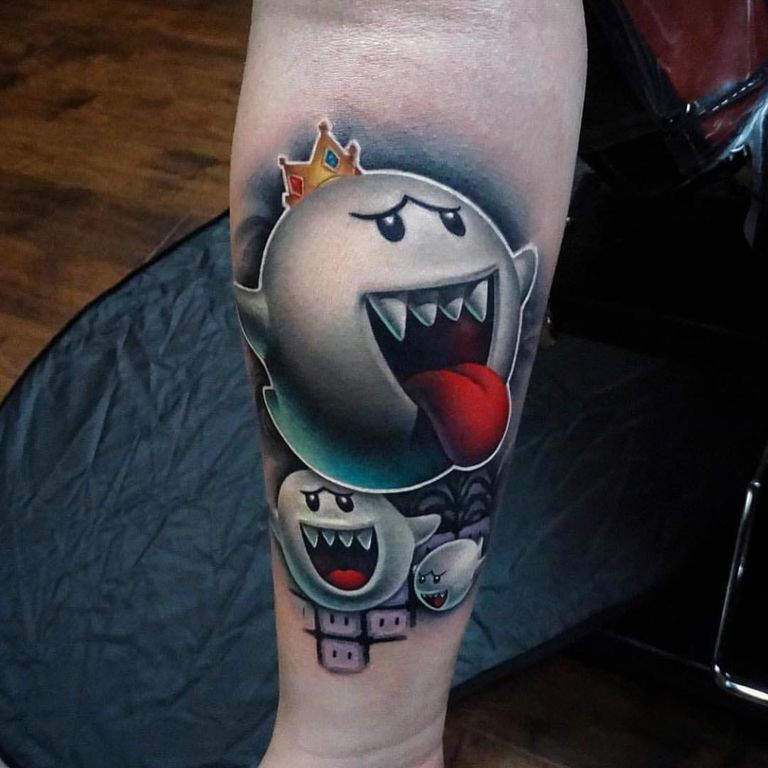
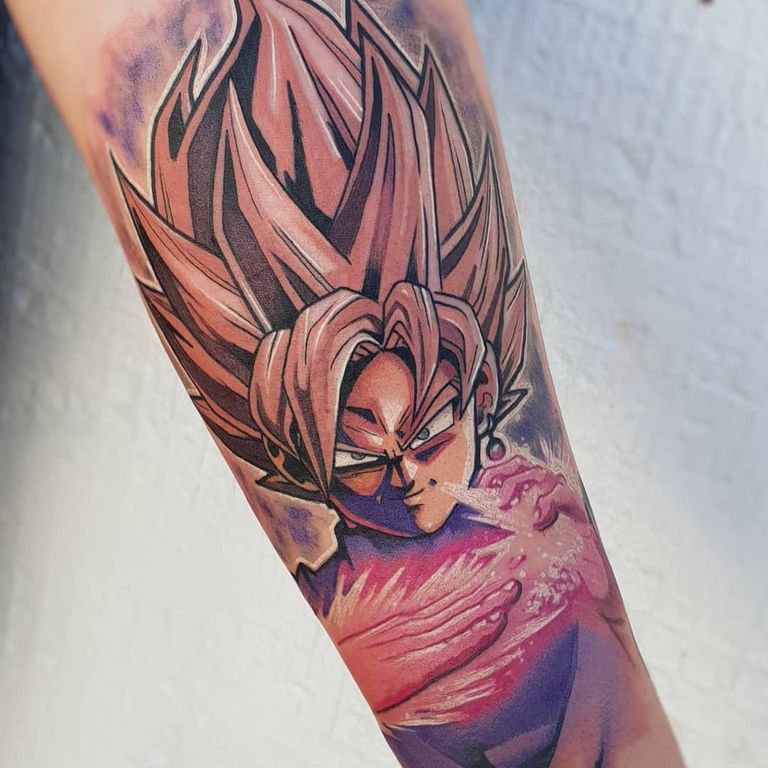
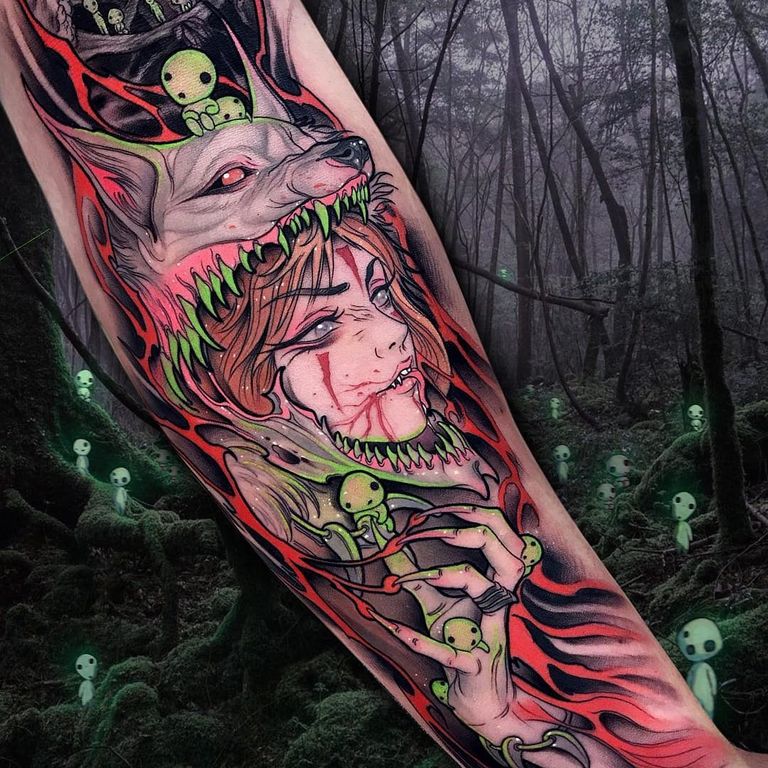
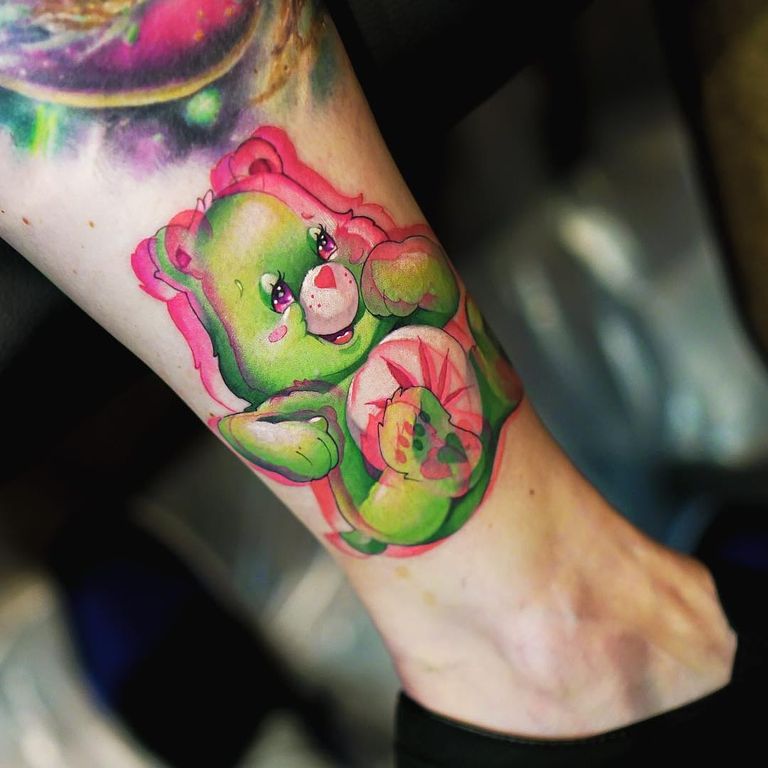
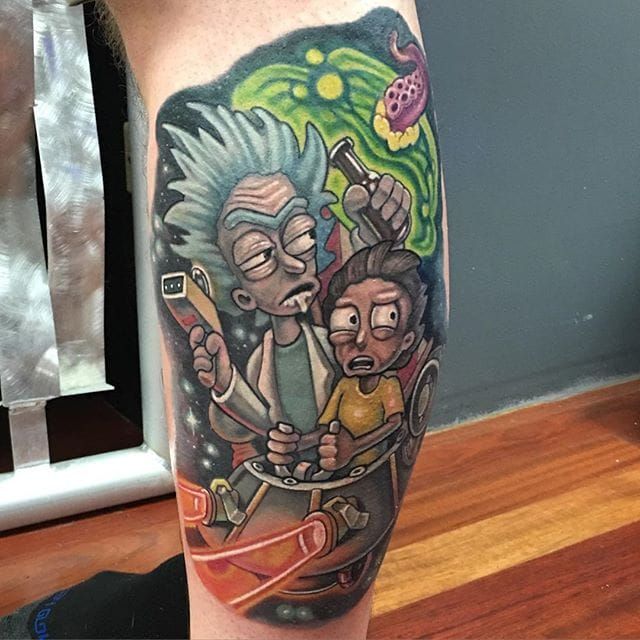
Animation is the backbone of the style, from Disney and Care Bears to Rick and Morty and, above all, anime. Akira, Dragon Ball, Sailor Moon and Studio Ghibli all turn up in this guide’s photos, next to game characters like Mario’s Boos. The ones that work are redrawn, not traced from a screenshot. A traced one looks like a decal.
Animals and pet portraits
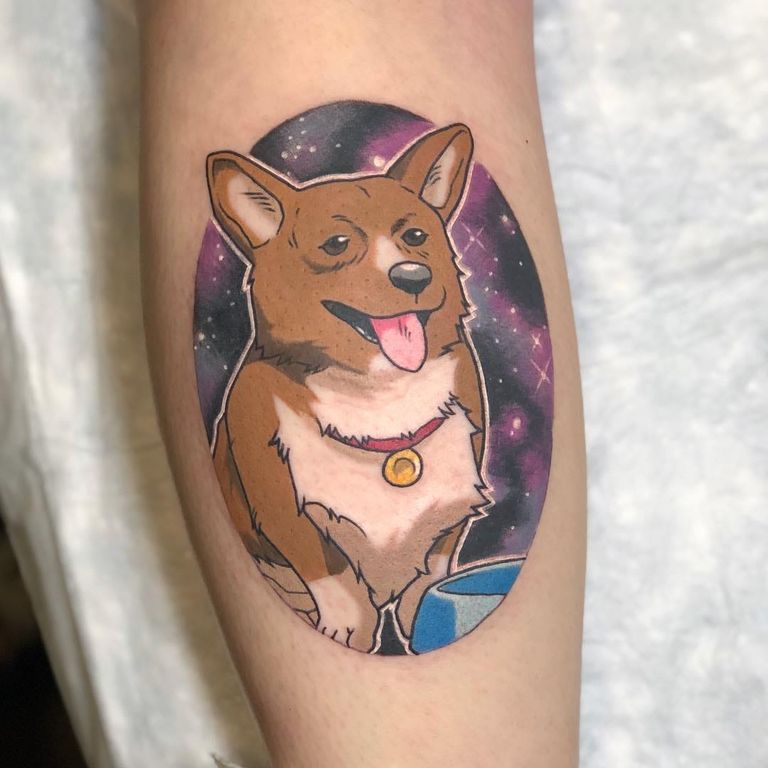
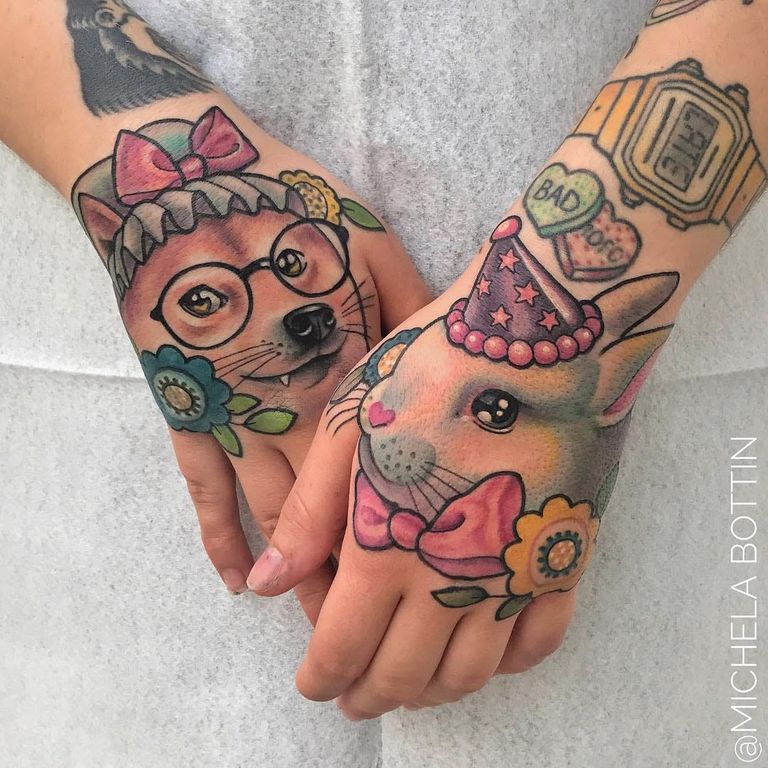
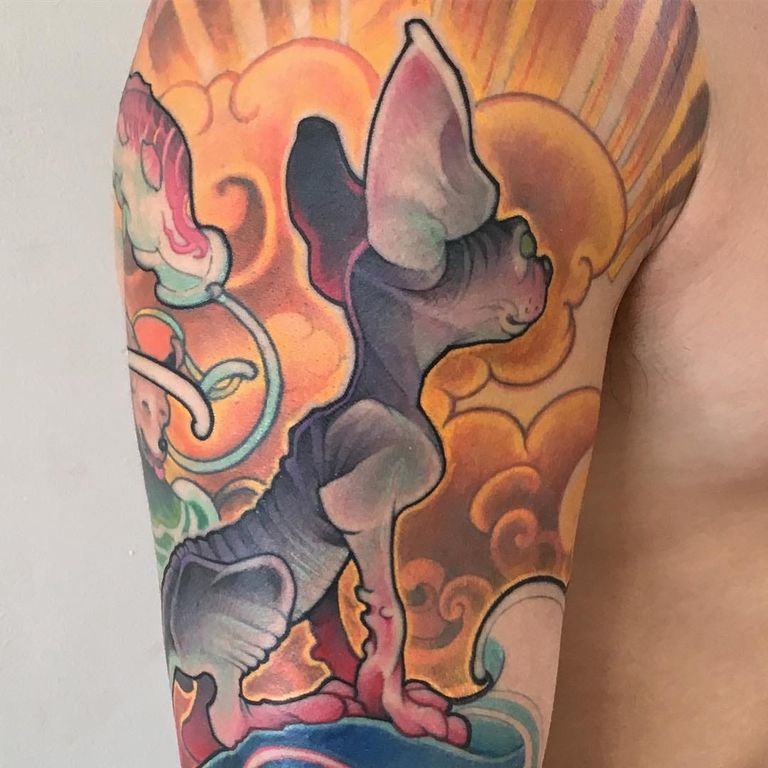
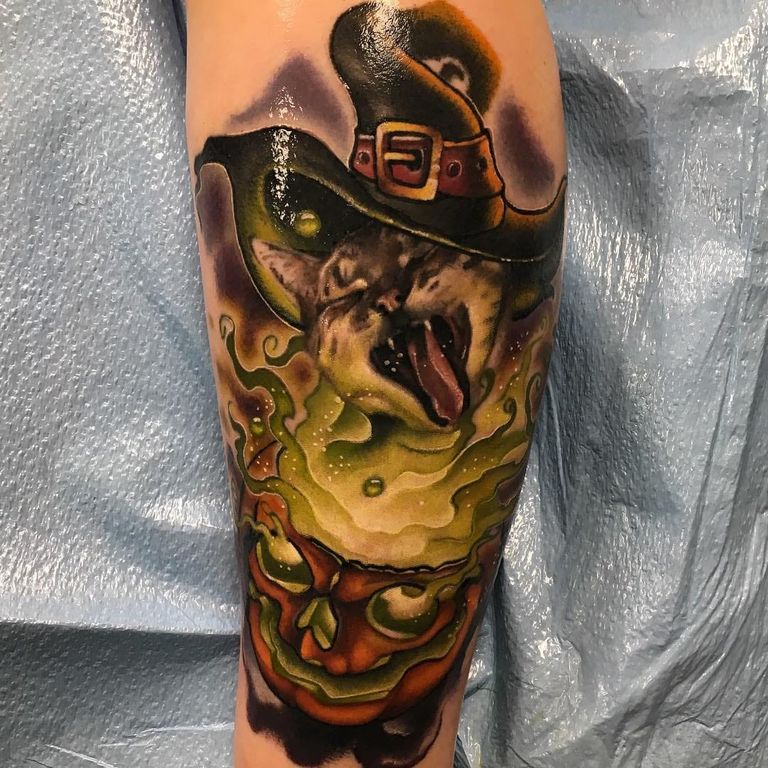
Animals suit the style, and cats are the most common subject in this guide’s photos. Exaggeration turns a pet’s personality into a character. A new school pet portrait is a caricature, not a likeness. Bring photos that show the expression you want kept, not just the clearest shot of the markings.
Japanese motifs
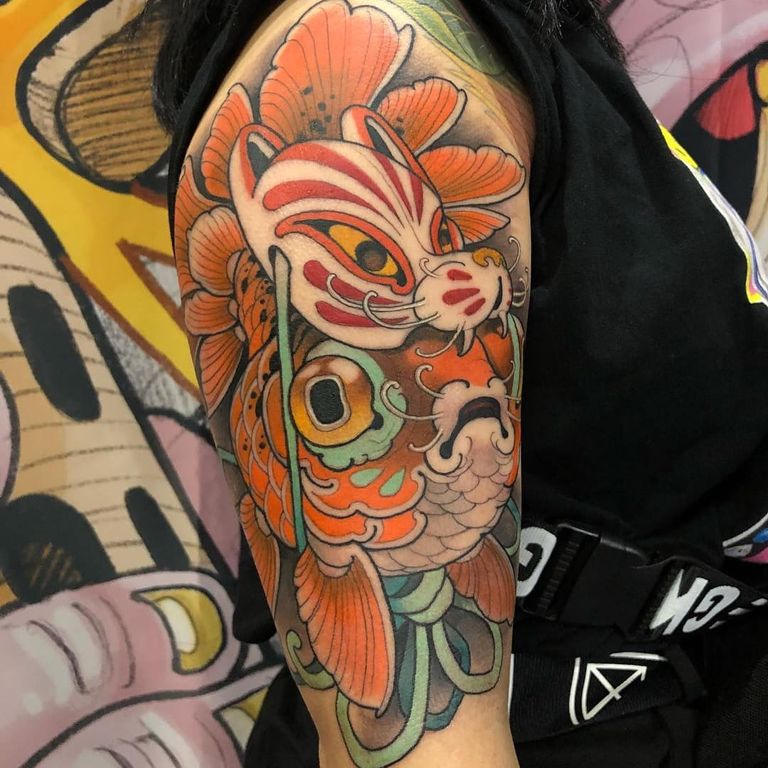
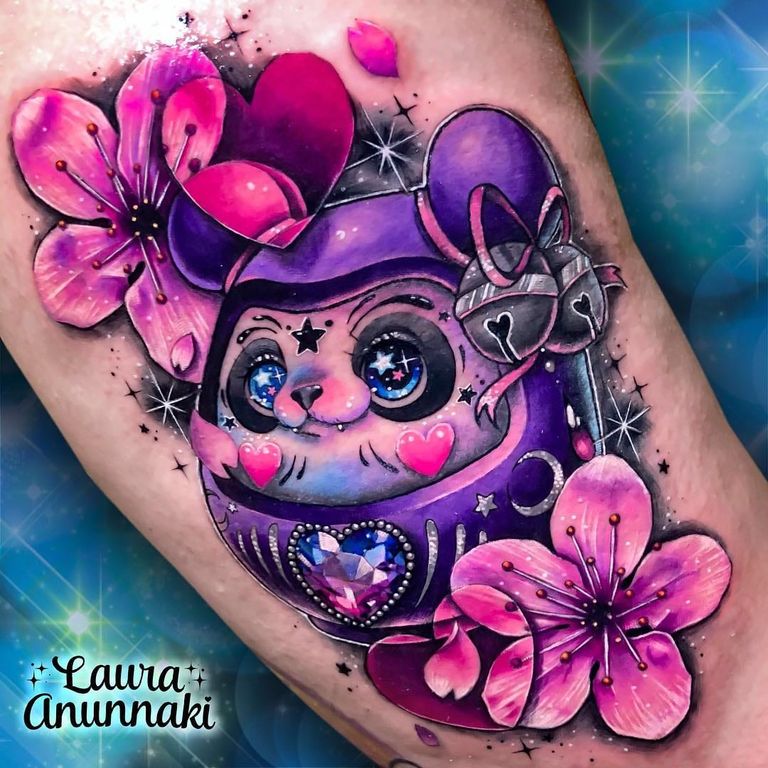
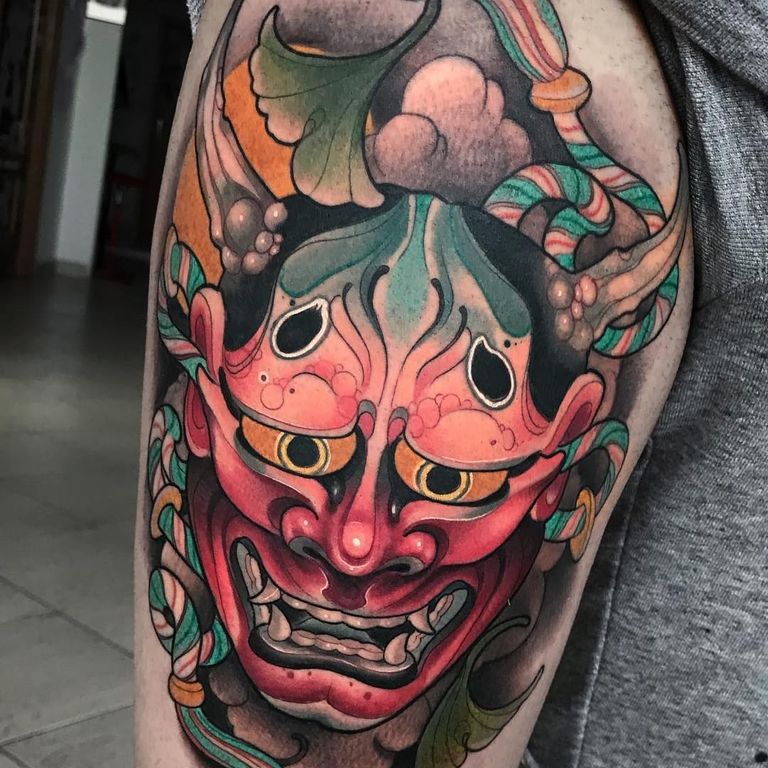
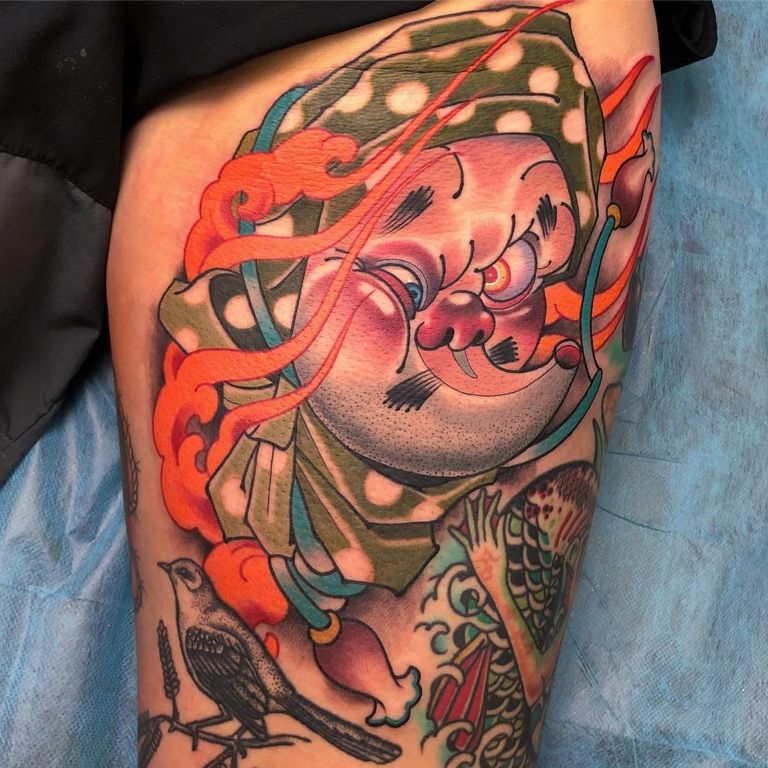
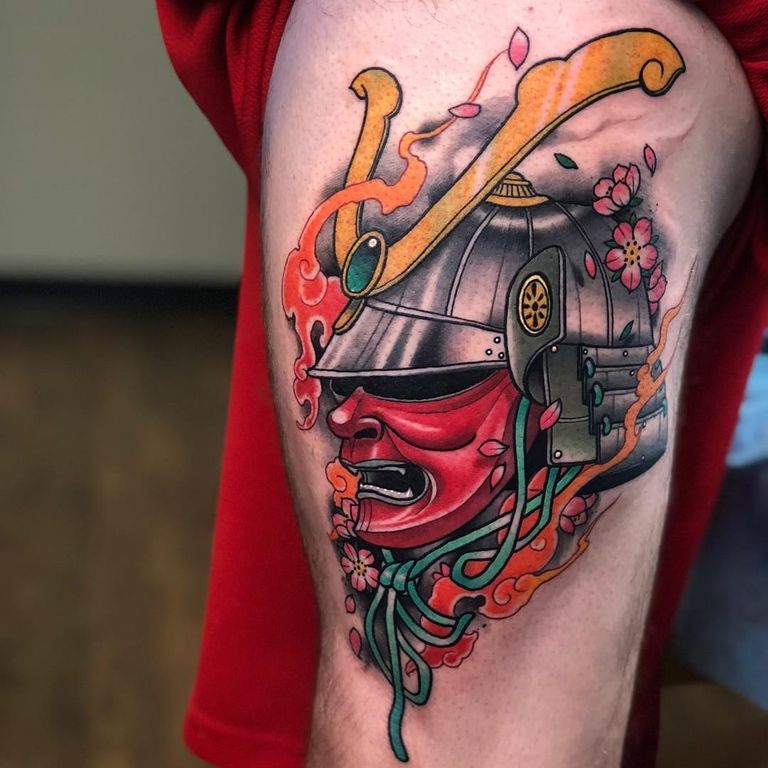
Japanese imagery reached new school through irezumi and anime, and the motifs keep their meanings. The hannya mask is a woman turned into a demon by jealousy. The daruma doll stands for perseverance and luck. The kitsune is a fox spirit tied to the Shinto deity Inari. If the meaning matters to you, tell your artist, so the details that carry it survive.
Monsters, aliens and the grotesque
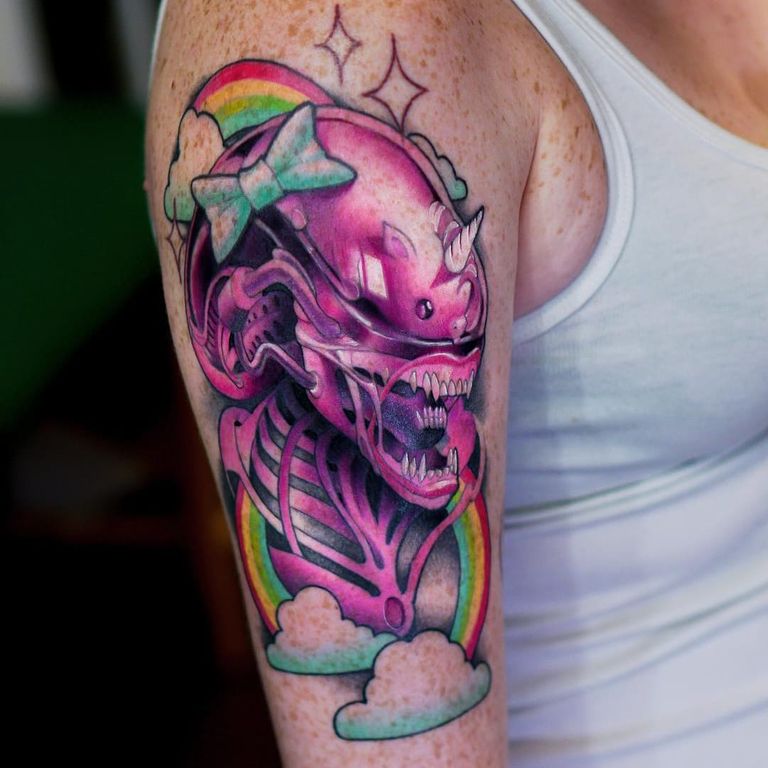
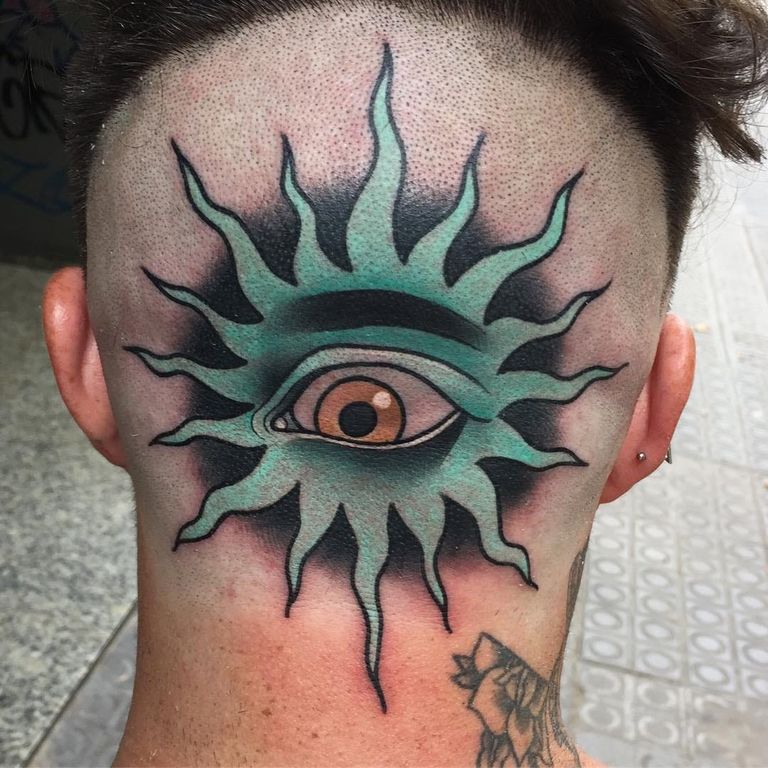
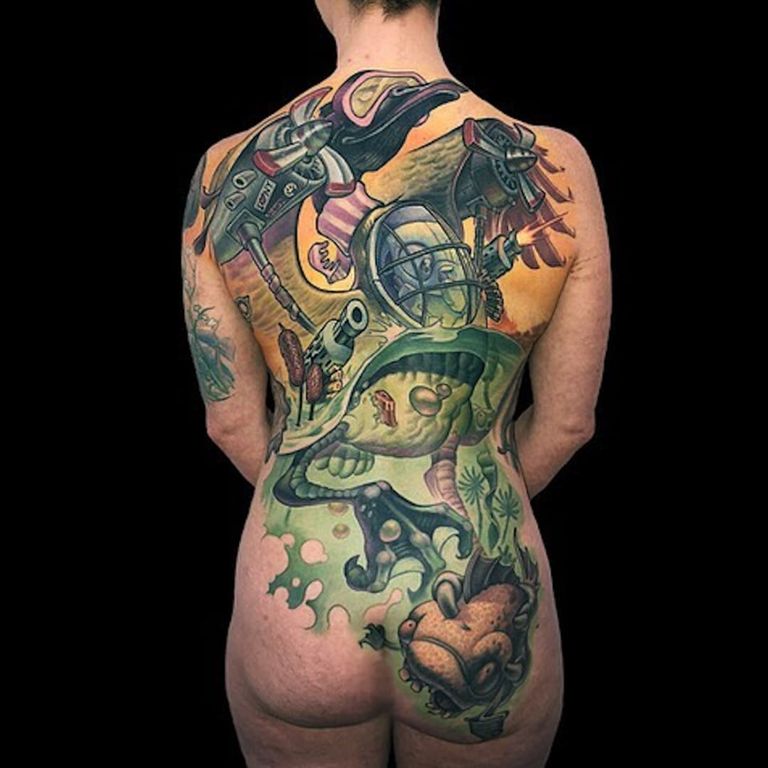
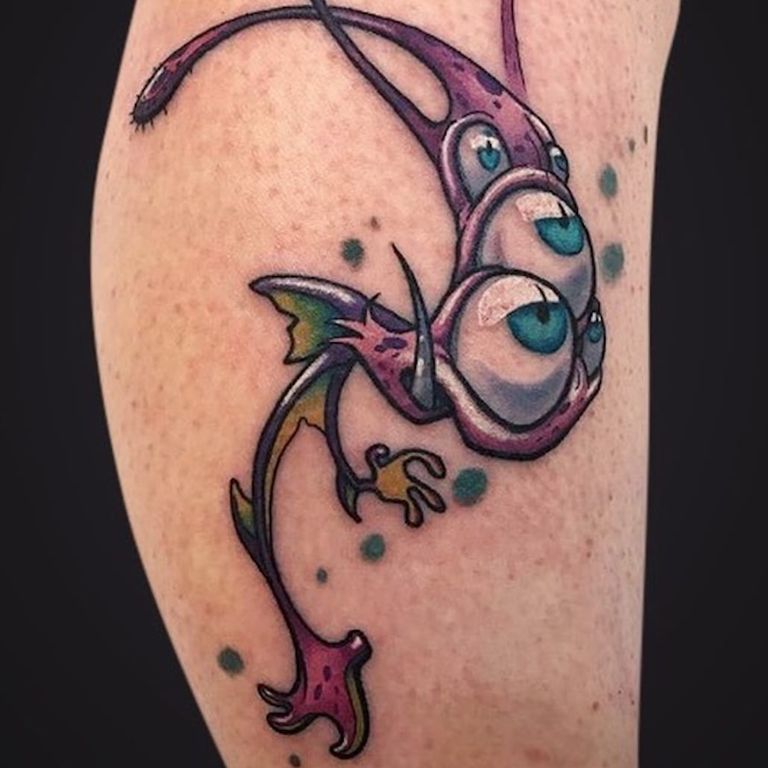
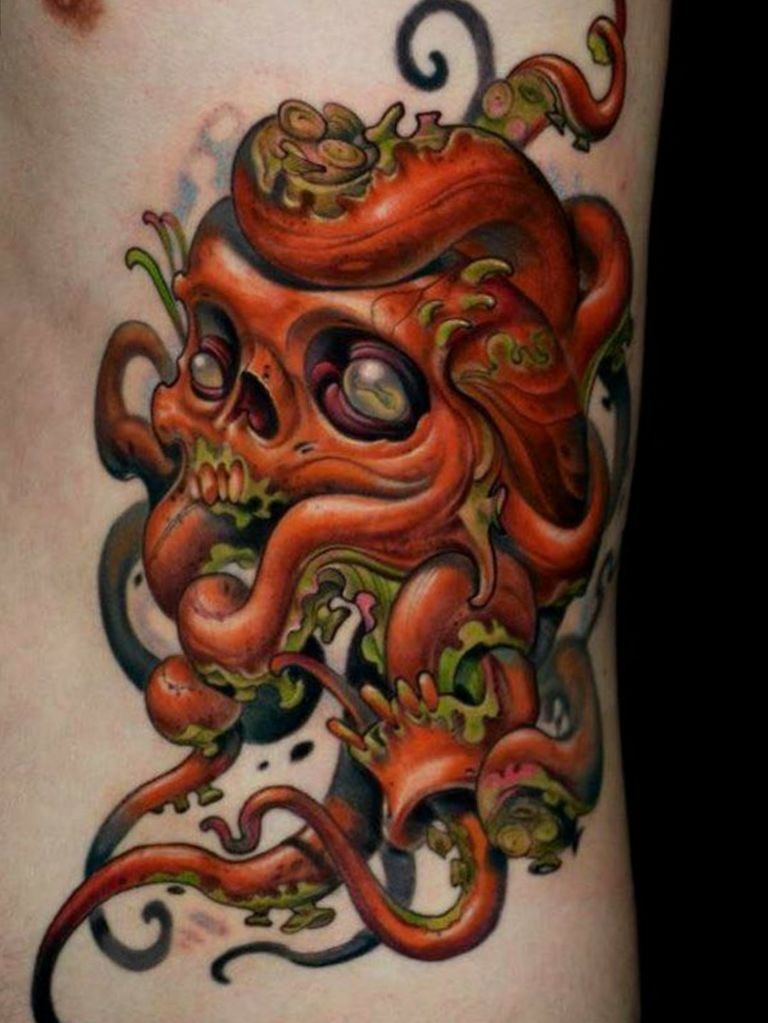
The other side of new school is gross on purpose: aliens, eyeball creatures, melting skulls and tentacles. Horror and cute often share a piece.
How new school tattoos age
Inside the outline, colors fade at different rates. Yellows and light pastels go first, while dark, saturated colors hold better. White is the weakest of all. It can fade into the skin or turn slightly yellow, so a glossy piece can go flat. Some artists redo the highlights at a later session.
UV light breaks down tattoo pigment, and neons and pastels show it first. Once the tattoo has healed, keep it covered or use a broad-spectrum sunscreen. How to protect a tattoo from the sun covers the details.
Size and placement
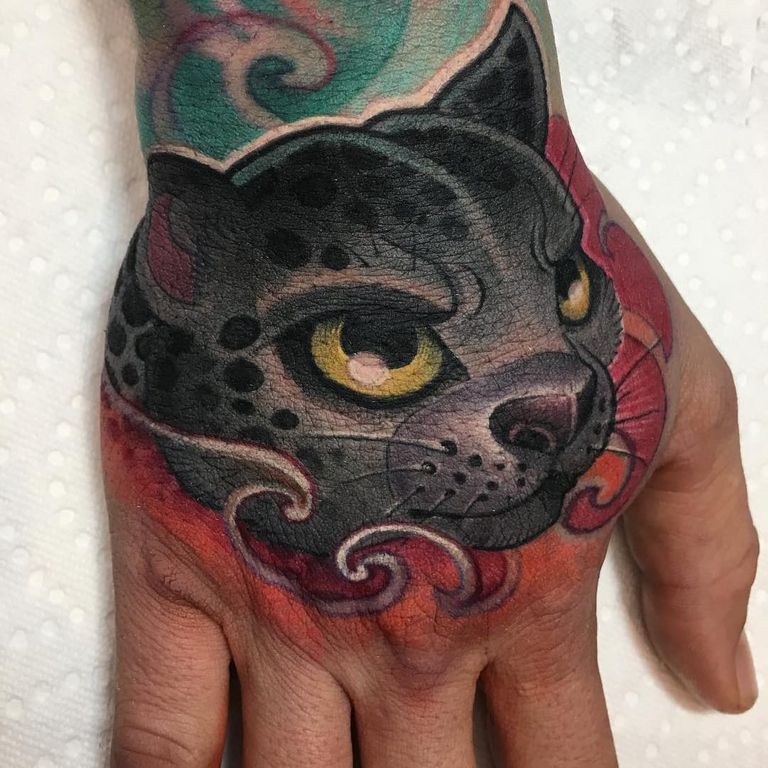
Each character carries an outline, several colors and highlights. They need space to stay apart as the tattoo ages. Forearms, calves, thighs, upper arms and backs give that space. The back of the hand can take a single head, like the cat below, but plan on touch-ups sooner there.
Choosing a new school artist
Experienced new school tattooers have a hand you can recognize. Within the style, artists lean different ways: some toward anime, some toward candy-colored kawaii, some toward neo-traditional. Pick the one whose lean matches your character.
Before you commit to a character piece, ask:
- Can I see healed pieces a year old or more?
- How big does this design need to be to hold its detail?
- What’s your touch-up policy if the highlights fade?
For character designs, look through anime tattoo ideas. Then name the character, or describe your pet, in the artist finder, and say whether you want it pushed toward anime, kawaii or neo-traditional. New school artists split along those lines.